
Greyhounds Betting in New Zealand: What Closes on 1 August 2026 and What Stays
 Available in US
Current as of October 30, 2026 · checked against the Racing Industry Act 2020 and the Amendment Act 2026.
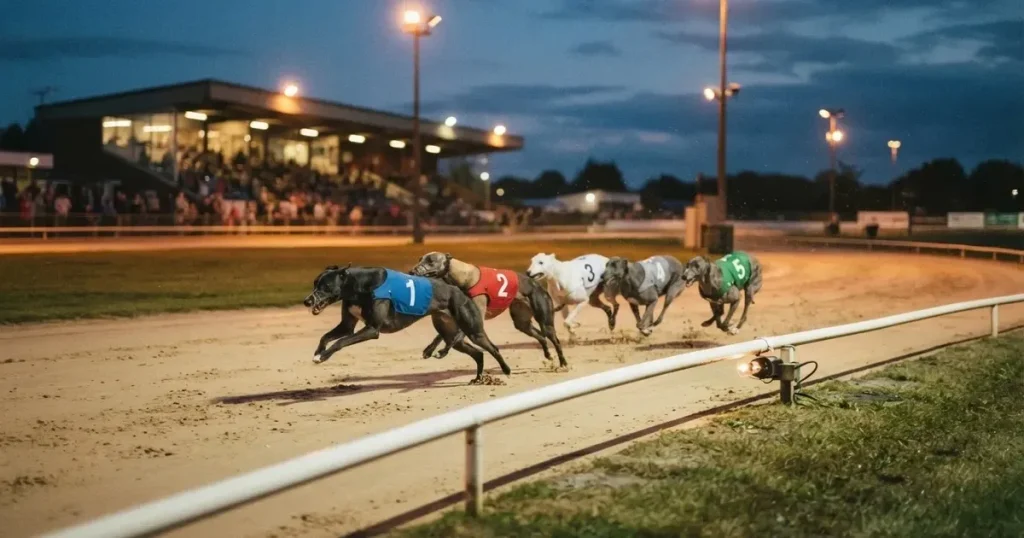
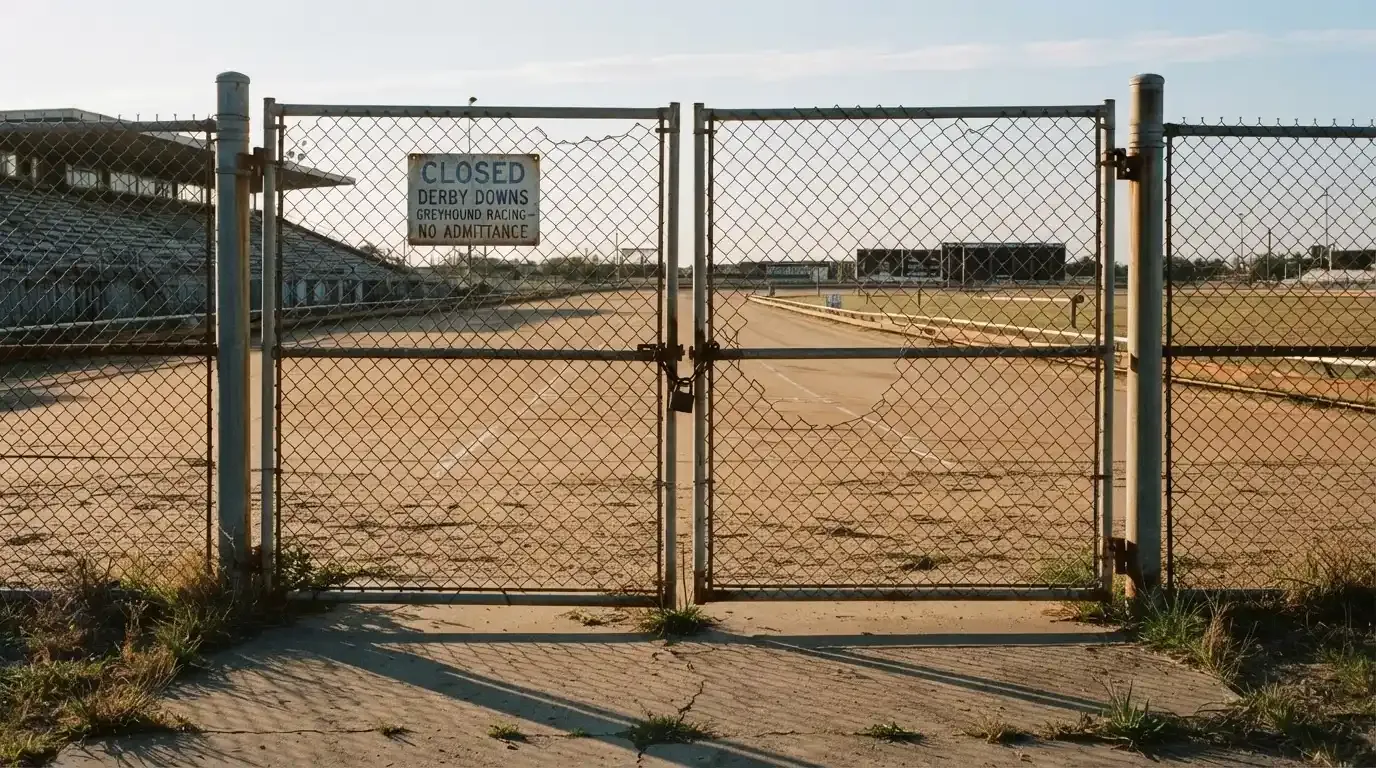
Greyhound racing in New Zealand is being shut down. The Racing Industry (Closure of Greyhound Racing Industry) Amendment Act 2026 received Royal Assent on 2 April 2026 and sets a phase-out beginning on 1 August 2026. From that date the dogs stop running in New Zealand, the wagering markets that were built around them stop forming, and a niche that has held a small but loyal slice of the New Zealand tote for decades stops existing. Anyone still looking for greyhounds betting in New Zealand after 1 August 2026 is looking for something that is no longer being offered, and a market that is no longer being formed.
The closure is not the only reason the picture is unusual. The other is the law that sits behind it. Since 28 June 2025, section 74AAA of the Racing Industry Act 2020 has made TAB NZ the only operator lawfully allowed to take racing and sports bets from a person in New Zealand. There is no licence register for bookmakers because there is only one lawful provider, and the two online brands that sit under it — TAB and Betcha — are the same operator rather than rivals. The offshore brands that New Zealand bettors see advertised in other markets cannot lawfully take their bets at all. So a page about greyhounds betting in New Zealand in 2026 is, by August, a page about a market that has been closed by statute, on a platform that never had competition in the first place.
The reading order below follows the order in which the consequences arrive. The statute and the regulator come first because they set the ceiling on what any bookmaker can offer. Safer-gambling tools follow because they are the only national framework the bettor can actually invoke. Strategy and odds come next, then the market itself, then the comparison of brands, and only at the end a back-look at what greyhound betting in New Zealand was while it lasted.
What the Law Says and What It Does to the Market
The closure of greyhound racing in New Zealand is a piece of primary legislation, not a regulator’s order. The Racing Industry (Closure of Greyhound Racing Industry) Amendment Act 2026 passed on 2 April 2026 and sets the phase-out to begin on 1 August 2026. Winston Peters had announced the policy direction on 10 December 2024; the Act gives it legal force and a date. From 1 August 2026, no licensed New Zealand greyhound meeting can be run, no New Zealand-affiliated club can field dogs under Greyhound Racing New Zealand rules, and the betting products built around those meetings have no underlying event to settle on.

The second layer is the betting monopoly that runs across all racing and sports, not just greyhounds. Section 74AAA of the Racing Industry Act 2020, inserted by the Racing Industry Amendment Act 2025, took effect on 28 June 2025 and prohibits any person other than TAB NZ from offering racing betting, sports betting or other racing or sports betting to a person in New Zealand, regardless of where that person is resident or where the operator is incorporated. The Department of Internal Affairs (DIA) is the gambling regulator under the Gambling Act 2003 and enforces the betting prohibition under section 92A of the Racing Industry Act 2020. When 74AAA came into force, DIA told unlicensed providers serving New Zealand to withdraw with immediate effect.
The consequence for the bettor is a market with no second shelf. A New Zealand resident cannot, under the law as it stands, open a racing or sports account with anyone other than TAB NZ. Offshore bookmakers that take bets from many other jurisdictions advertise to New Zealand audiences regardless, but in doing so they are breaking the law that 74AAA created. The statute targets the operator. Section 19(4) of the Gambling Act 2003, inserted in 2025, says an individual cannot be convicted simply for placing a bet with an offshore operator in breach of section 74AAA; no published penalty for a player was found. DIA’s stated risk is that offshore operators may sit in jurisdictions with minimal consumer safeguards, may not return unspent credits and may not pay out large wins. A reader who bets with an offshore brand is taking those risks on the operator’s terms and outside the New Zealand harm-minimisation framework. The law, in other words, leaves the player alone and warns them; it does not protect them.
The greyhound phase-out pulls the rug from under a specific sub-market of that monopoly. Until 1 August 2026, TAB NZ can offer fixed-odds and tote (pool) bets on New Zealand greyhound meetings at its licensed stadia and from its seven affiliated clubs: Auckland, Waikato, Whanganui, Palmerston North, Canterbury, Otago and Southland. After that date the meetings are not being run, so the bets are not being offered. The law does not geo-block offshore sites; it puts liability on the operator. But a New Zealand greyhound race that no longer exists cannot be priced anywhere, by any bookmaker, because there is no event to price. The closure of the racing is the closure of the market, full stop.
A second piece of legislation, the Online Casino Gambling Act 2026, opens online casino gambling to licensing but does not extend the betting monopoly and does not change the greyhound picture. TAB New Zealand has the right to apply for a casino licence under that Act; winning that right does not give TAB NZ any new sports or racing power, and it does not bring another bookmaker into New Zealand. Casino and betting are separate permits with separate rules; a casino licence is never a betting licence, and the page keeps them apart.
The window the law leaves open
The window between 2 April 2026 and 1 August 2026 is the period in which greyhound racing in New Zealand is both lawful to operate and unlawful to continue past the cut-off. TAB NZ’s own terms in that window govern what markets form and what bets may be placed. From 1 August 2026, the markets stop. From that date offshore operators may not take bets on New Zealand greyhound races, because there are no New Zealand greyhound races to bet on. The statute does not itself say “no offshore greyhound bets”, but the event the bet is on does not exist, and the offshore operator remains barred from offering racing or sports betting to a person in New Zealand under 74AAA regardless of the sport. There is no “last race” loophole: the Act is a closure, not a winding down of the betting product around a continuing event.
Safer Gambling Tools and Where a Punter Gets Help
The harm-minimisation framework that reaches a New Zealand bettor is the one that sits inside TAB NZ, because the monopoly makes TAB NZ the only place the framework is required. The TAB NZ apps list the safer-gambling tools a customer can set: deposit limits, time-outs and self-exclusion. An exclusion applies across both brands (TAB and Betcha) because the accounts share a wallet. The age for TAB NZ betting is 18; betting under 18 is an offence under section 89 of the Racing Industry Act 2020. Land-based casinos run a different age of 20; the two are never merged, because they are different permits under different Acts.
TAB NZ must keep the risks of problem and underage gambling minimised and pays a Problem Gambling Levy of 0.74% of its gross profits, in force from 1 July 2025 to 30 June 2028. The levy funds the national counselling and treatment services a bettor is referred to when a self-exclusion runs out or a deposit limit is not enough. The free Gambling Helpline on 0800 654 655 and the text line 8006 are the front line; Safer Gambling Aotearoa sits behind them. The same helpline and the same services are the front line for offshore betting too — there is no separate framework for a bettor using an unlicensed brand — but a self-exclusion set inside TAB NZ does not, on its own, stop a customer opening an offshore account. The offshore operator is not on the same data feed, and the offshore account sits outside the New Zealand harm-minimisation framework entirely.
There is no single national online-betting exclusion register. The register the Online Casino Gambling Act 2026 will require is for online casinos only. A punter who has excluded from TAB NZ and is still betting with offshore brands has, in plain terms, removed the only exclusion the law made available and is betting on the offshore operator’s own terms. That is the consequence of the monopoly: a single point of help exists because a single point of access exists, and a bettor who steps outside that single point loses both the betting channel and the safety net in one move.
The advertising rules around the monopoly are narrow because the audience is small. The Advertising Standards Authority’s Gambling Advertising Code applies to betting advertisements: ads must not target children (under 14) or young people (14 to under 18), judged by context, appeal and expected audience (with 25% or more of the audience counting as significant where accurate data exists), must not encourage harm, and must be truthful with terms available. There is no New Zealand equivalent of a “whistle-to-whistle” ban for betting. Because only TAB NZ may offer betting, the Code’s reach across brands is largely academic; what it polices in practice is the look of TAB NZ’s own advertising, and any affiliate or marketing partner still pointing a New Zealand audience at an offshore brand is pushing the reader toward an operator the regulator has already told to withdraw.
Predictions, Tips and the Strategies That Do Not Beat a Closing Market
Searches for “best greyhound bets today”, “greyhound betting strategy” and “greyhound betting systems that win” are the kind of queries a page like this is asked to answer. The honest answer in 2026 is that no system beats a closing market, and the only strategy that survives the closure is the one that recognises the closure is happening. The forms of analysis that work for greyhound racing in other jurisdictions — reading trap draw, pace map, sectional times, going and kennel form — assume the race is being run. From 1 August 2026 the race is not being run, so the form cycle ends, the sectional data stops accumulating, and the betting market that was built around it stops forming.
For the four months between 2 April 2026 and 1 August 2026, the racing is still happening and the analysis is still real. A punter who plans to bet on New Zealand greyhounds in that window is betting into a market that already knows the end date, which has consequences for odds. As the closure approaches, bookmakers and tote operators will price the certainty of fewer meetings ahead, and form readers have to read a form cycle that is shutting down rather than building up. A dog with strong recent form is a strong recent form in a sport that is about to stop; a dog with one or two runs left is a dog with one or two runs of evidence. The bettor who treats the next four months as ordinary racing is not reading the market the market is actually offering.
The systems that promise steady returns from greyhounds sit in the same category as the systems that promise steady returns from any sport: they describe a market in which a long sequence of bets at carefully chosen prices returns a small edge, and they require the market to keep running long enough for the edge to compound. A bookmaker’s margin sits inside every price, and a long sequence of bets at sub-margin prices loses to the margin over time. The arithmetic that underpins those systems is the same arithmetic that underpins this page’s worked example, and the result is the same: a margin is what the bookmaker keeps of every unit bet on the market, and no staking plan gets it back. Where a system claims to overcome the margin, the claim is the part that does not survive a check of the math.
Tips services and prediction sites operate on a different business model. They sell access to a tipster’s picks, and the tipster’s edge, where one exists, is paid for in subscription fees, not in bet returns. A tipster with a genuine edge is rare; a tipster with a marketed edge is common, and the difference is the part a reader cannot see from the marketing. The closure of the sport does not change that, but it does shorten the time over which any edge can be expressed, which is a real change in the calculation. A bettor paying for tips on a market that is closing in four months is paying for four months of tips, not for a system, and the price of the subscription does not fall because the racing does.
The bankroll point is the practical one. A punter who plans to bet greyhounds through the closure window is advised to size a bankroll for the window, not for an open-ended season, and is expected to expect fewer betting days, fewer meetings per day, and form that compresses into a smaller sample. A punter who plans to migrate to Australian or British greyhound meetings through an offshore account is planning to use a channel that is unlawful for the operator to offer in New Zealand under section 74AAA, that sits outside the New Zealand harm-minimisation framework, and that carries DIA’s stated risk warning about unspent credits and large-win payouts. The strategy is not the issue; the channel is.
Bet Types, Odds and What the Punter Is Actually Buying
Greyhound betting in New Zealand runs through the same bet types that the rest of the New Zealand tote and fixed-odds book runs through. TAB NZ’s published betting rules define the bet menu: Win, Place, Each Way, Quinella, Exacta, Trifecta, First Four, Double, Treble, Daily Double, Running Double, Quaddie and Big6, plus Multis and Same Game Multis (a multi whose legs come from one event). Greyhound races settle on a starting price, which is the odds on an entry in the on-course fixed-odds market when the race begins. The starting price is what the tote dividend is reconciled against and what a fixed-odds punter sees on the slip at the off.
A starting price is not the same as an early price. A bookmaker’s early price is the price on a runner when the market is open and the bets are coming in; the starting price is the price the market has settled to at the jump. For greyhounds, where the field is small and the form is short, the two can diverge, and the punter who takes an early price has locked in a number that may or may not be available at the off. The starting price matters because some bet types — notably Each Way and a range of exotic bets — settle at the starting price rather than at the price the punter took. A bettor who does not know which is which is a bettor who has not read the betting rules.
The fixed-odds book sits beside the tote. A tote (pool) bet is a bet into a pool that is divided among the winners after a takeout; the dividend is the share per winning unit. A fixed-odds bet is a bet at a price the bookmaker has set and is obliged to honour. Greyhound races in New Zealand have run on both, often with parimutuel and bookmaker betting side by side, and a bettor can be in either or both. The exotic bets (Quinella, Exacta, Trifecta, First Four, Quaddie, Big6) are tote products; their dividends are set by the pool, and a popular result pays less because more punters backed it. The Win and Place markets are available in both fixed-odds and tote form, and a punter’s choice between them is a choice between a known price and an unknown dividend.
The margin is what the bookmaker keeps of every unit bet on the market. For a two-way market at odds of 1.90 on each side, the implied probabilities add to 1 ÷ 1.90 + 1 ÷ 1.90, which is 0.5263 + 0.5263 = 1.0526. The payout share — the fraction of every unit that comes back to bettors in aggregate — is 1 ÷ 1.0526, which works out to about 0.95, or 95%. The margin is 1 − 0.95, which is 0.05, or about 5%. A market with that margin returns 95 cents of every dollar bet to the field as a whole, and keeps 5 cents of every dollar as the bookmaker’s gross. The number is the same whether the market is a head-to-head at the dogs, a Win bet on a single runner, or a Quinella at the same meeting. Different markets at the same meeting run different margins; the more outcomes the market has, the more legs the book has to price, and the larger the margin tends to be. The number is also a statistical average, not a guarantee: a market at 5% margin keeps 5 cents per dollar over many bets and many meetings; on any single bet, the payout is the price on the slip.
That is the arithmetic a system has to beat to be a system, and it is the same arithmetic a free-bet or a boosted-odds offer has to beat to be a bargain. A “boosted odds” offer moves the price on the slip up; it does not move the margin on the market down, and a boosted price at the same margin is still a market in which the bookmaker keeps its share. A “free bet” pays the winnings only (the stake is not returned) and is worth, in expected value, the free-bet amount times (odds − 1) divided by odds, times the market payout share. The expected value is smaller than the free-bet amount itself, and smaller again if the market’s payout share is below 100%. The arithmetic is the same in New Zealand as anywhere else; the difference is that in New Zealand there is one bookmaker to apply it to.
Worked example — the margin of a two-way market
Take an illustrative two-way greyhound market priced at 1.90 / 1.90 in decimal form. The implied probabilities of the two outcomes sum to about 1.053, so the payout share of every dollar bet is 1 ÷ 1.053, which is approximately 0.95, and the bookmaker’s margin is 1 − 0.95, which is approximately 0.05 — a band of roughly 4.5% to 5% on a market of this shape. The result is an average: the bookmaker keeps about 5 cents of every dollar bet on this market across many bets, while individual bets settle at their own prices. The result is sensitive to the price: a market at 1.80 / 1.80 carries a higher margin (about 11%), a market at 2.00 / 2.00 carries a lower one (exactly 0%, which is rare in practice and is going to not last if it appeared). The two-way greyhound head-to-head is one of the lower-margin markets on a meeting; the exotic pools (Quaddie, Big6) carry larger margins by design, because the takeout funds the dividend.
The Takeaway Of That Example For A Punter: lower-margin markets reward form-reading more reliably than higher-margin markets do, because the slice the book keeps is smaller and the slice that returns to the field is larger. The exotic pools are the right place to be a casual bettor chasing a big dividend; they are the wrong place to be a bettor trying to grind an edge. The arithmetic is a tool, not a tip.
The Racing Codes That Bet On in New Zealand and the Greyhound Window
New Zealand racing runs three codes: thoroughbred, harness (trots) and greyhounds. All three sit under TAB NZ for wagering purposes, and all three are subject to the same section 74AAA monopoly. Thoroughbred and harness are continuing; greyhound is the code that is closing. The greyhound meetings were run by Greyhound Racing New Zealand (GRNZ), which organised seven affiliated clubs across the country: Auckland, Waikato, Whanganui, Palmerston North, Canterbury, Otago and Southland. The clubs were the local face of the code, and the betting product wrapped around the meetings they staged. The meetings that mattered for a punter were the regular club meetings and the feature races around them; the form cycle was short, the field sizes were small (typically six to eight runners), and the winning margin in a greyhound race is rarely more than a length or two.
The international reading is worth a paragraph for a New Zealand reader who is comparing. Greyhound racing in Great Britain is regulated by the Greyhound Board of Great Britain (GBGB), which oversees 18 licensed stadia. The British product is large by New Zealand standards and continues. The Australian product is also large and continues. New Zealand’s product, by August 2026, is a market that has shut. A New Zealand punter who wants to bet on greyhound racing after 1 August 2026 has two options: bet with TAB NZ on whatever international greyhound meetings TAB NZ chooses to put on its feed (and the feed itself is the question, because TAB NZ’s own terms define the market list), or bet on offshore books that take bets from New Zealand in breach of section 74AAA and outside the New Zealand harm-minimisation framework. The third option — that the racing will continue in some form under a new statute — has not been signalled. The Act is a closure.
The racing calendar in the four-month window from 2 April 2026 to 1 August 2026 is the only New Zealand greyhound calendar that matters. Form from before the announcement of the ban is still form; form from after the announcement is form in a sport that is about to end, and the marginal value of each new run is the marginal value of one more data point in a sample that is closing. A punter who plans to bet into the window is a punter who is expected to plan around a short form cycle, a small field, and a market that is itself winding down. The same arithmetic that applies to the rest of New Zealand racing applies here: a margin in every price, a bookmaker that takes its share, a starting price that settles at the off.
Greyhound betting in New Zealand is also a category in the New Zealand betting apps. The TAB NZ app covers horse and harness racing, rugby union and rugby league and other sports, pre-match and live, and carries a 17+ App Store age rating while stating that customers must be 18 or over to bet. Betcha covers horse, greyhound and harness racing plus rugby, NRL, MMA/UFC, NBA, NFL, tennis, cricket, football, motorsports and esports. Both apps are listed under the New Zealand Racing Board as seller on the New Zealand App Store, which is the same operator group under two names. A punter with both apps is a punter with one wallet, one set of safer-gambling tools, and one customer account that crosses both.
The Brands in the Frame and the Brands Around It
The two online brands of TAB NZ are the only lawful options for a New Zealand punter. TAB is the original brand, first released as an app on 8 September 2014, and Betcha is the newer mobile-first brand, first released on 6 August 2024. Both sit under TAB New Zealand as the licensed holder; both are run in partnership with Entain under a 25-year agreement signed in 2023 that gives Entain a 50/50 share of gross profits, with at least NZ$150 million a year going to TAB NZ for the first five years, and Entain pledging a one-off NZ$100 million payment to the racing sector. The partnership is the operational reality behind the monopoly: TAB NZ holds the licence, Entain runs the platform, and the two brands are the two shopfronts.
The brands that sit outside the monopoly are reviewed here because New Zealand players meet them, and they are not ranked against TAB NZ. The framework for reviewing them is the same as for any other bookmaker, but the legal status is the headline: each of them is “not licensed in New Zealand”, and the question of how they handle a New Zealand customer is the first question to ask. Where a brand lists no licence that applies in New Zealand — or where it lists an Anjouan, Tobique or Curaçao licence that gives no right to take bets from people in New Zealand — the brand is in breach of section 74AAA if it knowingly takes such bets. The page reviews the brands on their own terms as bookmakers, and notes the New Zealand status as a separate field.
| Brand | New Zealand status | What the operator’s own terms state |
|---|---|---|
| TAB | TAB NZ brand | Run by Entain under a 25-year partnership; covers horse, harness and greyhound racing, rugby codes, NRL, NBA, NFL, cricket and other sports, pre-match and live; safer-gambling tools (deposit limits, time-outs, self-exclusion) in app; age 18 |
| Betcha | TAB NZ brand | Entain New Zealand Limited as publisher; covers horse, greyhound and harness racing, rugby, NRL, MMA/UFC, NBA, NFL, tennis, cricket, football, motorsports and esports; 18+; same wallet and exclusion as TAB |
| BetAlright | Not licensed in New Zealand | Sportsbook covers football, tennis, table tennis, basketball, ice hockey, American football and baseball; live betting and Virtual Sports sections; no New Zealand licence |
| FunBet | Not licensed in New Zealand | Sportsbook offers odds on football, ice hockey, American football, basketball, volleyball, tennis, rugby and baseball; live betting; bookmaker described as open 24/7; no New Zealand licence |
| Winz.io | Not licensed in New Zealand | Sports betting bonus promotion with separate Sportsbook T&C, Sports Rules and Bonus Terms pages; licences named are Anjouan and Tobique; holder Novatrix SRL; no New Zealand licence |
| RoyalistPlay | Not licensed in New Zealand | Live betting, sports promotions, results and schedule; top sports football, basketball, tennis, handball, ice hockey, volleyball, table tennis, plus e-sports and Predictions; licence named is Tobique e-gaming (No. 0000002), holder Novatrix SRL; no New Zealand licence |
| Telbet | Not licensed in New Zealand | Crypto casino and sportsbook; welcome offer of 200% up to 1 BTC plus 50 free spins and a 5 USDT free bet on the Russian-language site; no New Zealand licence |
| Roobet | Not licensed in New Zealand | Sportsbook covers soccer, basketball, tennis, Counter-Strike, FIFA, baseball, ice hockey, MMA and table tennis; terms require players to be 18 or older; licence named is Curaçao (OGL/2024/687/0427), holder Raw Entertainment B.V.; no New Zealand licence |
| Rooster.bet | Not licensed in New Zealand | Live, Sports Promotions, Results, Schedule, E-sports and Predictions sections; odds in six formats; licence named is Tobique e-gaming (No. 0000002), holder Novatrix SRL; no New Zealand licence |
| LegendPlay | Not licensed in New Zealand | Sports, Live Betting and Virtual Sports sections; football, tennis, basketball and ice hockey listed; licence named is Anjouan Gaming Authority; no New Zealand licence |
The table is the snapshot. What the table does not say is what to do with a brand that the table says is not licensed in New Zealand. The legal position is that such a brand is in breach of section 74AAA if it knowingly takes a bet from a person in New Zealand, and the bettor’s position is that no published penalty for the player exists, but no New Zealand complaint route or harm-minimisation framework reaches the brand either. The bettor is the party with the most information about whether they are using the brand, and the most exposure if something goes wrong.
What each brand actually offers the New Zealand reader
TAB is the wider of the two monopoly brands, the one with the longer history and the larger market list. The app covers thoroughbred, harness and greyhound racing, rugby union and league, NRL, NBA, NFL, cricket and a wider set of sports, with Trackside live race streaming and in-app betting, racing form, Blackbook and Jockey Challenge tools, and a simplified wallet. The deposit methods and limits are operator-level and come only from TAB NZ’s terms. The safer-gambling tools — deposit limits, time-outs, self-exclusion — sit inside the app, and the exclusion applies across the TAB and Betcha brands. For a punter who wants the full New Zealand product, TAB is the full product.
Betcha is the mobile-first sibling, published on the New Zealand App Store by Entain New Zealand Limited and first released on 6 August 2024. The market list is similar in shape — horse, greyhound and harness racing, rugby, NRL, MMA/UFC, NBA, NFL, tennis, cricket, football, motorsports and esports — but the presentation is built for a phone rather than a desktop, and the feature set tracks the same Entain platform underneath. The age is 18 and the wallet is shared with TAB. A punter who prefers the Betcha app is a punter who has chosen the same operator in a different wrapper, not a different operator.
BetAlright is a sportsbook that lists football, tennis, table tennis, basketball, ice hockey, American football and baseball, with Live Betting and Virtual Sports sections. It is not licensed in New Zealand, and the platform does not name a licence that applies here. A New Zealand reader who lands on it is a New Zealand reader the regulator has already told the brand to refuse, and the brand’s own terms are the only terms that apply.
FunBet is a sportsbook that lists football, ice hockey, American football, basketball, volleyball, tennis, rugby and baseball, with live betting and a bookmaker described as open 24/7. It is not licensed in New Zealand, and no New Zealand licence is named. The market list is broader than greyhound racing alone, which is the right shape for a sportsbook that has no New Zealand calendar to align to.
Winz.io is a sportsbook with a bonus promotion and three separate terms pages (Sportsbook T&C, Sports Rules and Bonus Terms). The licences named are Anjouan and Tobique, with the holder listed as Novatrix SRL; neither gives a right to take bets from people in New Zealand. A punter who bets with Winz.io is betting on the operator’s own terms and outside the New Zealand harm-minimisation framework.
RoyalistPlay is a sportsbook with live betting, sports promotions, results and schedule sections, with football, basketball, tennis, handball, ice hockey, volleyball and table tennis among the top sports, plus separate e-sports and Predictions sections. The licence named is Tobique e-gaming (No. 0000002), holder Novatrix SRL; the licence does not reach New Zealand. The Predictions section is a marketing surface, not a tipster service; the brand’s own terms are the binding document.
Telbet is a crypto casino and sportsbook. The published offer on the Russian-language site is 200% up to 1 BTC plus 50 free spins and a 5 USDT free bet. The offer is described in the brand’s own terms and is not promoted to a New Zealand audience by any lawful channel, because there is no lawful channel. The licence position is not stated for New Zealand, and a New Zealand punter is on the operator’s own terms.
Roobet is a sportsbook that lists soccer, basketball, tennis, Counter-Strike, FIFA, baseball, ice hockey, MMA and table tennis. The terms require players to be 18 or older, and the licence named is Curaçao (OGL/2024/687/0427), holder Raw Entertainment B.V. The age bar matches New Zealand’s 18+ for betting; the licence does not reach New Zealand. A bettor who wants esports markets and a crypto rails has them on Roobet’s terms, not on a New Zealand framework.
Rooster.bet is a sportsbook with Live, Sports Promotions, Results, Schedule, E-sports and Predictions sections and odds in six formats. The licence named is Tobique e-gaming (No. 0000002), holder Novatrix SRL. The platform is a multi-section sportsbook with the same kind of marketing surfaces (Predictions, Promotions) that other brands in this group run.
LegendPlay is a sportsbook with Sports, Live Betting and Virtual Sports sections, listing football, tennis, basketball and ice hockey. The licence named is Anjouan Gaming Authority, which gives no right to take bets from people in New Zealand. A New Zealand reader on LegendPlay is a reader on the operator’s own terms, with the New Zealand framework unreachable.
The choice between TAB and Betcha, for a New Zealand punter who wants to bet on greyhounds in the four-month window, is a choice of wrapper over a single operator. The choice between TAB NZ and any of the offshore brands is a choice between a regulated channel with a New Zealand harm-minimisation framework and an unregulated channel with the operator’s own terms. The greyhound window is short, the New Zealand channel is the only one with a New Zealand product, and the offshore channels are reviewed here for completeness rather than as alternatives.
What Greyhounds Betting in New Zealand Was and What It Becomes
Greyhound racing in New Zealand was a small racing code with a long history, a small but loyal betting following, and a calendar built around the seven affiliated clubs. The bets available to it were the standard New Zealand tote and fixed-odds bet menu, with the same starting-price rules, the same exotic pools, the same margin arithmetic. The form cycle was short and the field sizes were small. A punter who knew the local meetings, the local trainers and the local tracks had an edge that a national-level punter did not, and the product rewarded that knowledge the way any small-market product does.
What it becomes in 2026 is a market that is closing. The Amendment Act sets 1 August 2026 as the date the phase-out begins, and from that date the meetings stop, the betting markets around them stop, and the only greyhound racing available on a New Zealand-licensed feed is whatever international meetings TAB NZ chooses to put on its platform. The punter who planned a 2026 season around New Zealand greyhounds is planning around four months of real meetings and a market that no longer exists after that. The punter who planned a career around New Zealand greyhounds is planning around the end of a career.
The law behind the closure — section 74AAA of the Racing Industry Act 2020 — is broader than greyhounds. It makes TAB NZ the only lawful provider of racing and sports betting to people in New Zealand, and the monopoly is the framework the closure sits inside. The greyhound market closes inside the monopoly; the monopoly does not close. A New Zealand punter in 2026 has one channel for racing and sports, and the channel is closing one of its three racing codes. The arithmetic of the channel does not change; the menu does. The bet types, the odds, the starting prices, the margin in the two-way markets and the takeout in the exotic pools are the same arithmetic the rest of the New Zealand tote runs on. The change is the sport, not the math.
The offshore brands that this page reviews are reviewed because New Zealand players meet them. They are not reviewed as alternatives. The law says they cannot lawfully take a bet from a person in New Zealand; the regulator has told them to withdraw; the New Zealand harm-minimisation framework does not reach them; the operator’s own terms are the only terms that apply. A New Zealand punter who uses one of them has stepped off the regulated channel and onto the operator’s terms, and the bet is then on whatever the operator decides to do with the stake, the winnings and the data. The page describes the brands so that the reader can see the gap between the New Zealand product and the offshore product, and so that the New Zealand status field in the table is honest rather than implied.
The four-month window is the practical closing thought. A punter who plans to bet on New Zealand greyhounds in 2026 is planning for the period from 2 April 2026 (the date the Amendment Act passed) to 1 August 2026 (the date the phase-out begins), and the planning is the same as for any other closing market: a bankroll sized for the window, a form cycle that is winding down rather than building up, and a margin in every price that does not move because the sport is ending. After 1 August 2026, the New Zealand greyhound market is closed, the only lawful betting channel is the one the monopoly has always offered, and the question the page opened with — where greyhound racing can be bet on and how the odds are built — is answered by the statute and the regulator rather than by a betting app.
Frequently Asked Questions
Here are the answers to the most common questions about the greyhound betting closure in New Zealand.
How do you bet on greyhound dogs?
A greyhound bet in New Zealand is placed through TAB NZ or Betcha — the two online brands of the only provider lawfully offering racing and sports betting to people in New Zealand since 28 June 2025. The bet types are Win, Place, Each Way, Quinella, Exacta, Trifecta, First Four, Double, Treble, Daily Double, Running Double, Quaddie and Big6, plus Multis and Same Game Multis. Settling happens at the starting price, which is the on-course fixed-odds price at the off, and a starting price is the number on the slip when the race jumps.
How do you bet on greyhound racing?
A bettor on greyhound racing in New Zealand needs a TAB NZ or Betcha account (an offshore account is not lawful under section 74AAA), must be 18 or older, and must have a verified New Zealand address and ID on file. The bet is placed through the app, settles at the starting price, and pays the dividend on tote bets or the fixed-odds return on fixed-odds bets. The two brands share a wallet and a self-exclusion, so a self-exclusion set in one applies in the other.
How do you bet on greyhound racing tips?
Tips and prediction services are subscription products rather than betting products, and a tipster’s edge (where one exists) is paid for in subscription fees rather than in bet returns. The New Zealand market is small and closing on 1 August 2026, which shortens the time over which any edge can be expressed. A bettor paying for tips on a market that is closing in four months is paying for four months of tips, and the price of the subscription does not fall because the racing does.
What happens to betting on greyhound racing as the industry closes?
The Amendment Act 2026 phases out the racing from 1 August 2026, and the betting products around New Zealand greyhound meetings cease with it. From that date no New Zealand-licensed greyhound meeting is run, no TAB NZ market forms around one, and offshore operators may not take bets on New Zealand greyhound races because the races do not exist. TAB NZ may continue to offer fixed-odds and tote betting on international greyhound meetings it lists, and the rest of the New Zealand racing and sports calendar (thoroughbred, harness, rugby codes, cricket) continues unchanged.
Which bookmaker may lawfully take sports and racing bets in New Zealand?
TAB NZ, operating under the Racing Industry Act 2020 and section 74AAA in force since 28 June 2025, is the only provider lawfully allowed to take racing and sports bets from a person in New Zealand. The two online brands are TAB and Betcha, both run in partnership with Entain under a 25-year agreement signed in 2023. There is no licence register for bookmakers because there is only one lawful provider, and the Department of Internal Affairs has told unlicensed providers serving New Zealand to withdraw with immediate effect.
How is the return on a bet worked out from the stake and the odds?
For a single bet at decimal odds, the return if the bet wins is the stake multiplied by the odds; the net profit is the stake multiplied by (odds − 1). For a combination bet, the odds of the legs multiply into one price, and the return is the stake multiplied by that combined price. A market’s margin is the share of every dollar bet that the bookmaker keeps on average across many bets, and the payout share is 1 minus the margin. The numbers come from the bettor’s own slip and the operator’s published odds, and the calculation is the same for greyhound bets as for any other New Zealand racing or sports bet.
Racing – bettinginfo-nz
Content created by the «bettinginfo-nz» team
