
Basketball betting in New Zealand: the odds, the markets, and who can take your bet
 Available in US

Basketball has its own scoring rhythm — runs of three-pointers, stop-and-start fouls, four-quarter grind — and that rhythm is exactly why it suits a certain kind of wager. A bettor who likes lots of possessions, line moves between quarters, and totals that flex with the pace of play finds plenty to do. A bettor who wants the same micro-markets they get on football will find the offer thinner. This page walks through the bets that exist on basketball, how the prices are built, which operators a New Zealand punter can actually use, and what each operator’s terms say about the relevant piece of the puzzle.
_Data current as of October 30, 2026; operator status checked against the Department of Internal Affairs public register and the Racing Industry Act 2020 as amended._
What basketball betting looks like as a product
A basketball betting site is a panel of numbers, one per market. Beneath each number sits a margin — the slice the bookmaker keeps regardless of who wins — and on top of it sits the price the bettor pays. Get the relationship between those two things right and the rest of the page falls into place.
The fundamental bet types on a basketball game
A single basketball game carries enough markets to fill a long page; the ones that recur on every decent sportsbook are a small set.

- Moneyline (head-to-head). Pick the team that wins the game outright, including any overtime. Two prices, one for each side. This is the simplest market in any sport and the one with the lowest learning curve.
- Point spread (handicap). The bookmaker gives one side a head start of X points. A favourite at “-5.5” has to win by six or more for the bet to cash; the underdog at “+5.5” can lose by five and still win the bet on points. Half-points (the .5) kill the push, so the bet is either won or lost at the final score including overtime.
- Totals (over/under). A line of “220.5” means the two sides’ combined score has to be 221 points or more (over) or 220 or fewer (under). The line moves before tip-off as money comes in.
- Quarter and half markets. The same three categories above, but scoped to the first quarter, first half, or single quarters. Lines shorten because the sample is smaller; margins widen.
- Player props. Points, rebounds, assists, three-pointers made, double-doubles, player points over/under. The granular end of the offer.
- Team props. Team total over/under, race to 20 points, win the tip, biggest lead, highest-scoring quarter.
- Same-game multi. Several legs from one match combined into one betslip. If one leg voids, the bookmaker’s policy decides whether the whole slip voids or just that leg — a point worth checking before staking.
The accumulator crosses games, the single bet stays in one game, and both work the same way on the arithmetic: the decimal odds of each leg multiply into one price.
How odds are written, and what decimal odds really mean
New Zealand sportsbooks use decimal odds — $2.10, not “+110”. A decimal price already contains the stake: the number shown is what a $1 stake returns when it wins, and the rest is the profit. A $10 stake at $1.90 returns $19 ($9 profit). A $10 stake at $3.50 returns $35 ($25 profit). The arithmetic never changes; the decimal form simply front-loads the return into the displayed number, which makes mental maths simpler than with fractional prices.
A same-game multi with three legs at $1.60, $2.20 and $1.90 has a combined price of $1.60 × $2.20 × $1.90 = $6.69. A $10 stake returns $66.90 on a win — and loses the $10 on a loss.
The bookmaker’s margin, where it lives in every price
Two prices on opposite sides of a market look symmetrical to a casual eye — $1.90 and $1.90 looks like a coin flip. They are not. The bookmaker’s margin is the difference between the implied probabilities those prices encode and the 100% the two outcomes actually add up to.
Take an illustrative two-way line at decimal odds $1.90 / $1.90. The implied probability on each side is 1 ÷ $1.90 = 52.63%. Add the two sides together: 52.63% + 52.63% = 105.26%. The bookmaker’s margin on every dollar staked is the 5.26% over round. Stated from the other side: the payout share is roughly 94.74%. On a real moneyline the margin runs anywhere from about 2% on a high-liquidity NBA spread market to 8–10% on an obscure league; on player props and quarter markets it climbs higher again.
A punchy line on a popular game is rarely a gift; it is usually a thinner margin competing for volume. A flat line on a niche game is rarely a sign of sharper work; it is usually a quiet market the bookmaker is happy to book without watching closely.
Basketball-specific markets worth knowing
Basketball has markets that almost no other sport carries. Race to X points lets a bettor back whichever side hits 10, 15 or 20 points first. Highest-scoring quarter and first to score 10 work the same way. 3×3 basketball has a slightly different point value: a field goal is one point inside the arc and two beyond, a free throw is one, and games are played to 21 or after a 10-minute clock. The men and women’s World Tours for 3×3 sit alongside the NBA, EuroLeague and NBL on the bigger sportsbooks.
Why basketball suits live betting differently from football
Basketball has no clock running continuously — the clock stops on every foul, every made basket in the last two minutes, every timeout, every dead-ball situation. The pulse is choppy rather than flowing, and live markets reset at the whistle more often than they reset at a natural break. A live bettor who likes to wait for a run of points can usually find a window; a live bettor who wants continuous flow finds the rhythms unfamiliar at first. Markets live and die fast, often before the in-running price catches up to what has just happened on court.
Which basketball tournaments and competitions to bet on
A basketball sportsbook in 2026 covers a dozen competitions at minimum, and the depth of the offer varies wildly. The big-five basketball leagues worldwide are the NBA (United States and Canada), EuroLeague (top European clubs), the Spanish ACB, the Italian LBA, and the Greek Basket League. Outside that top tier sits a long tail: the NBL (Australia and New Zealand), the Israeli Super League, the Turkish BSL, the German BBL, the French LNB Pro A, the Chinese CBA, the Filipino PBA, the Korean KBL, the Japanese B.League, the Brazilian NBB, the Argentine Liga Nacional.
Federation basketball — FIBA — runs the EuroBasket, the FIBA Basketball World Cup, the AmeriCup, the AfroBasket, the Asia Cup. Three-on-three has its own World Tour and World Championship under FIBA’s 3×3 banner, and 3×3 has been an Olympic event since Tokyo 2020. The NBL and the Breakers (the New Zealand franchise) carry the most local interest for a New Zealand punter.
Fixture density and how it shapes the offer
The NBA plays 82 regular-season games per team, then four rounds of playoffs. From late October to mid-June there is an NBA game, on average, every night of the week, and the basketball sportsbook is deepest for that league by an order of magnitude. EuroLeague runs from October to May with two games per matchweek. The NBL runs roughly the same Northern Hemisphere calendar, October to March. Federation events come in short bursts — three weeks for a EuroBasket, two for a World Cup group stage.
Fixture density determines what the bookmaker can staff. A sport with a game a night gets tighter lines, more props, more live markets. A sport with one game a week gets wider lines and fewer markets. The basketball proposition at a typical sportsbook is roughly: NBA deep, EuroLeague deep, NBL moderate, everything else light.
Game length and why it matters for totals
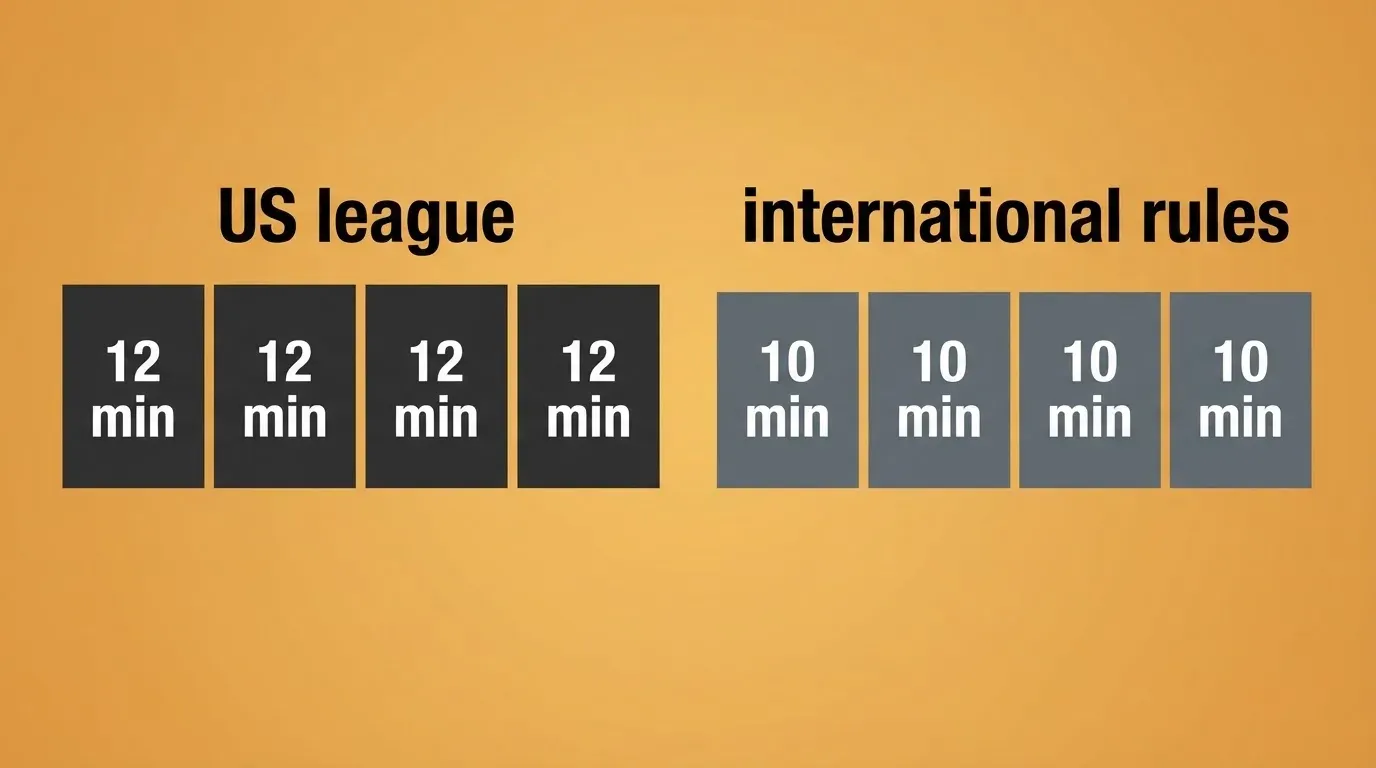
An NBA game runs 48 minutes of regulation plus whatever overtime follows; a FIBA game runs 40 minutes plus overtime. Overtime is five minutes long at almost every level. The total-points line scales with this: NBA games routinely post totals in the 220–235 range; EuroLeague games sit in the 155–175 range; 3×3 games score in the high teens or low twenties. A bettor who treats totals as a “pace of game” bet rather than a “predict the score” bet is closer to the right mental model.
How matchups shape the line
Back-to-backs (teams playing on consecutive nights) move NBA totals by 3–6 points because tired legs shoot worse and turn the ball over more. Rest advantage matters more in basketball than in football because five-man rotations are short and minutes concentrate. A team on a three-game road trip faces the scheduling disadvantage of a tired top of the rotation; that disadvantage has shown up in the totals and the spread for decades.
Ranking the New Zealand basketball betting market in 2026
There is, in the strict legal sense, one basketball betting operator in New Zealand — the TAB NZ group, which runs the TAB brand and the Betcha brand. Every other operator reviewed below says, somewhere in its own terms, that it does not hold a licence to take bets from people in New Zealand. The ten-operator “ranking” below is not a horse race. It is a shortlist of brands a New Zealand punter will encounter, each placed against the same assessment criteria, and each marked for whether its offer is available in New Zealand under local law.
1. TAB (tab.co.nz) — the lawful baseline for basketball
TAB NZ runs the only online sports and racing service lawfully offered to people in New Zealand under section 74AAA of the Racing Industry Act 2020 (in force 28 June 2025). Its basketball coverage runs from NBA down to NBL and selected international events, with fixed-odds betting, a tote (pool) product on bigger meetings, and the same-game-multi tool that brings several legs from one match onto one slip. The mobile app — first released 8 September 2014 — combines pre-match and live betting with safer-gambling tools (deposit limits, time-outs, self-exclusion) and a simplified wallet for deposits and withdrawals. The minimum age is 18, and the App Store listing states a 17+ rating while repeating that customers must be 18 or over to bet. Help is listed inside the app: 0800 654 655, or text 8006.
What sets TAB apart is the licence status and the harm-minimisation framework that comes with it. A bet placed with TAB NZ has a New Zealand complaints route; a deposit-limit decision is enforced across both TAB brands; the operator pays the Problem Gambling Levy and reports to the Department of Internal Affairs. None of that exists on the other nine brands.
Where TAB may fall short for some punters is depth: the NBA market on TAB NZ is solid but not as deep as a specialist offshore book; live in-play markets scale with what TAB NZ publishes; and the SGM product is younger than the established ones on the offshore shops. That is the trade — the lawful option, slightly lighter on the offer than the books that are not.
2. Betcha (betcha.co.nz) — the newer face of the same group
Betcha is the second brand of TAB NZ, published on the New Zealand App Store by Entain New Zealand Limited and first released 6 August 2024. Its basketball coverage sits alongside horse, greyhound and harness racing, the NRL, MMA and UFC, the NFL, the NBA, tennis, cricket, football, motorsports and esports. A self-exclusion decision on Betcha applies to TAB as well; both apps pull from the same wallet under the same New Zealand harm-minimisation policy.
What sets Betcha apart in this ranking is not the licence — it is the same one — it is the product positioning. Entain built Betcha as a more modern, app-first brand; the interface leans harder into same-game multis and in-play markets than the longer-established TAB app. For a basketball punter who likes player props and SGM legs, Betcha’s price layout is closer to what an offshore bookmaker offers, while the regulatory framework stays local.
The line to draw between TAB and Betcha is the operator group, not the brand: punters who treat them as rivals are missing the trick. The two apps share licence, identity verification, complaints and harm-minimisation; the only thing that differs is the product surface.
3. Thunderpick (Thunderpick.io) — esports-first, with a basketball sportsbook behind it
Thunderpick is built first as an esports platform — CS2, League of Legends, Dota 2 and Valorant are the headline products — and the sportsbook sits behind that. The sportsbook offers a cash-out feature and markets from the Champions League to the NFL; basketball is on the schedule without being the centrepiece. The brand names a Curaçao licence (OGL/2024/677/0722) under Paloma Media B.V., which is not authorised to accept bets from New Zealanders.
What sets Thunderpick apart in this ranking is the cash-out feature on a brand that crosses esports and traditional sport. A basketball punter who wants cash-out, who plays esports alongside, and who is outside the New Zealand jurisdiction — or willing to use a VPN to bypass the local restriction — finds a more product-rich book than most.
Where Thunderpick fails the New Zealand test is the licence: it is not licensed for New Zealand, the Department of Internal Affairs’ consumer warnings apply, and there is no New Zealand complaints route if a payout stalls.
4. RoyalistPlay (Royalistplay.com) — a sportsbook with the standard shortlist of sports
RoyalistPlay offers live betting, sports promotions, results and a schedule. Football, basketball, tennis, handball, ice hockey, volleyball and table tennis sit on the top-sports list, with separate e-sports and Predictions sections. The brand names a Tobique Gaming Commission e-gaming licence (No. 0000002) under Novatrix SRL, which is not authorised to accept bets from New Zealanders.
What sets RoyalistPlay apart in this ranking is the breadth of the sportsbook: a basketball punter who also follows volleyball, handball or table tennis at a serious level finds those leagues covered here. The Predictions section is a value-add if it covers basketball outright.
The trade is the same offshore limitation: no New Zealand licence, no local complaints route, no DIA framework.
5. Golden Panda — a sportsbook bolted onto a casino brand
Golden Panda’s sports section splits into a sportsbook, esports and virtual sports, with a casino, live casino, crash games, rewards, cashback, a VIP Club, Golden Goals and Prediction Markets sitting alongside. Basketball is on the sportsbook schedule. The brand names no licence that applies in New Zealand.
What sets Golden Panda apart is the casino-sports crossover: a single account carries a bet on a basketball game and a slot bet, and the wallet is shared. The Golden Goals and Prediction Markets promotions are a feature, not a separate product.
The same offshore caveat applies: no New Zealand licence, no local complaints route, no harm-minimisation framework.
6. FunBet (Funbet.com) — pre-match and live, with a 24/7 bookmaker claim
FunBet’s sportsbook covers football, ice hockey, American football, basketball, volleyball, tennis, rugby and baseball, with live betting and a stated 24/7 bookmaker. Basketball is on the schedule without being the flagship. The brand names no licence that applies in New Zealand.
What sets FunBet apart in this ranking is the rugby coverage: a New Zealand punter who follows rugby union at club and international level, and who wants a basketball bet on the same slip, finds both on FunBet’s list. The 24/7 framing is a product promise, not a licence feature.
The same offshore caveat applies as on the others in this group: no New Zealand licence, no local complaints route.
7. BigClash (Bigclash.com) — pre-match, live, virtual, esports all in one
BigClash offers pre-match and live sports betting across international and local leagues, plus virtual sports and esports betting on FPS and MOBA titles. Basketball sits on the schedule inside the international league list. The brand names a Curaçao licence (8048/JAZ), which is not authorised to accept bets from New Zealanders.
What sets BigClash apart is the spread across pre-match, live, virtual and esports from a single account. A bettor who likes to switch between a basketball live bet, a virtual football bet, and a CS2 bet without leaving the platform finds that crossover here.
The same offshore caveat applies: no New Zealand licence, no local complaints route.
8. 22Bet — a deep market catalogue per event
22Bet offers over 30 market types per event, including 1X2, Double Chance, totals, both teams to score, correct score and HT-FT, plus tennis game, set and handicap markets. Basketball coverage carries that depth across the major leagues. The brand names a Curaçao licence (8048/JAZ) under TechSolutions Group N.V., which gives no right to take bets from people in New Zealand.
What sets 22Bet apart in this ranking is market depth: when the standard moneyline-spread-totals-player-prop quartet is not enough, 22Bet carries quarter lines, race-to-X markets, and exotic combinations. A sharp bettor who shops for niche markets finds a longer list here than on most offshore books.
The trade is the offshore position: no New Zealand licence, no local complaints route.
9. Sportaza (Sportaza.com) — cash out, bet builder, and interval markets
Sportaza offers cash out before an event or market is finalised, a Bet Builder (with the stated rule that if one selection is void the whole betslip is void), multiples, Asian lines and interval markets in 1, 5, 10 or 15 minute ranges. Basketball coverage runs across the major leagues. The brand names an Anjouan licence (ALSI-202606064-FI2), which is not authorised to accept bets from New Zealanders.
What sets Sportaza apart is the cash-out tool combined with short-interval markets: a basketball punter who wants to close a position mid-quarter, or build a bet across several props, finds both on one platform. The bet-builder void rule is worth reading carefully before staking.
The offshore caveat applies: no New Zealand licence, no local complaints route.
10. Spinbara (Spinbara.com) — bonus-heavy headline, sportsbook on the side
Spinbara advertises a first-deposit bonus of 100% up to €100 and a sport-crypto welcome bonus of 100% up to 200 USDT, alongside a casino welcome bonus of 100% up to €500 plus 200 free spins. The sportsbook carries basketball across the major leagues. The brand names no licence that applies in New Zealand.
What sets Spinbara apart in this ranking is the headline bonus structure — three welcome packages stacked together. A bonus-heavy bettor may find a bigger headline number here than on the leaner sports-first books.
The trade is two-fold. The wagering conditions on those bonuses are the real cost — turnover, minimum odds, deadlines and capped free-bet winnings all sit in the small print.
How basketball betting fits inside New Zealand law in 2026
The starting position in New Zealand is simple and unusual: there is one lawful operator. Every other operator listed above names, somewhere in its own terms, that it does not hold a New Zealand licence, because there is no such licence available to apply for. The legal frame is worth knowing in full before laying down any stake.
The statute that reserves betting to TAB NZ
The Racing Industry Act 2020 establishes TAB NZ as the sole provider of racing and sports betting in New Zealand. The Racing Industry Amendment Act 2025 inserted section 74AAA: no person other than TAB NZ may offer racing betting, sports betting or other racing or sports betting to a person in New Zealand, regardless of where that person is resident or incorporated. The amendment took effect on 28 June 2025, and the Department of Internal Affairs told providers serving New Zealand to withdraw with immediate effect. There is no licence to apply for and no licence register for bookmakers, because there is only one lawful provider.
TAB NZ runs the operation under a 25-year partnership with Entain signed in 2023. The deal gives Entain a 50/50 share of gross profits, with at least NZ$150 million a year going to TAB NZ for the first five years, and a one-off NZ$100 million payment from Entain to the racing sector. The law targets the offshore operator; section 19(4) of the Gambling Act 2003 (inserted in 2025) says an individual may not be convicted for placing a bet with an offshore operator in breach of section 74AAA. No published penalty for a player was found.
What may be bet on, and under what licence
Racing and sports betting from TAB NZ only. TAB NZ takes fixed-odds and tote (pool) bets. Bets such as Win, Place, Each Way, Quinella, Exacta, Trifecta, First Four, Double, Treble, Daily Double, Running Double, Quaddie and Big6, and Multis and Same Game Multis, are defined in the TAB NZ published betting rules. No lawful New Zealand betting exchange exists, and spread betting is outside TAB NZ’s sports-betting definition.
The Online Casino Gambling Act 2026 licenses online casino gambling only and does not license sports betting. TAB New Zealand winning the right to apply for a casino licence does not extend the betting monopoly. Greyhound racing is closing in stages from 1 August 2026, and from that date offshore operators may not take bets on greyhound races either.
Virtual (computer-simulated) sport is treated by the 2026 online casino law as casino gambling. Whether esports betting is “sports betting” under the Racing Industry Act is not established. No statutory restriction on in-play basketball markets has been published.
What an offshore bookmaker does and does not promise a New Zealand punter
Offshore brands sit outside the New Zealand harm-minimisation framework. The Department of Internal Affairs warns that overseas operators may be in jurisdictions with minimal consumer safeguards, may not return unspent credits, and may not pay out large wins. New Zealand does not block bookmaker sites, but the law puts liability on the offshore operator that chooses to serve a New Zealand address. A player complaint to the Department of Internal Affairs will reach the offshore licence, not a New Zealand regulator; a self-exclusion request from TAB NZ does not extend to the offshore brands.
A tax payment by an offshore operator does not make it lawful. The overseas online gambling duty of 12% (rising to 16% from 1 January 2027) is a separate instrument from the section 74AAA prohibition and a duty being payable is not a sign the offer is legal in New Zealand. Safe wording: TAB NZ and Betcha are the only lawful option, with New Zealand harm-minimisation tools, regulator oversight and a complaints framework; offshore brands are unlawful for the operator to serve New Zealand, with no New Zealand complaints route and the DIA’s stated risks.
Responsible gambling for basketball bettors in New Zealand
The harm-minimisation framework is part of what the lawful operator delivers and what the offshore brands do not. The following sits inside the section 74AAA regime and the Gambling Act 2003 as administered by the Department of Internal Affairs.
Tools available through TAB NZ
The TAB app carries deposit limits, time-outs and self-exclusion. A deposit-limit decision caps the amount a punter can load into the wallet across a stated period; a time-out suspends the account for a chosen window; a self-exclusion closes the account and bars re-opening for the chosen exclusion period. An exclusion on TAB applies across both of TAB NZ’s online brands (TAB and Betcha), so a self-excluded punter is not simply able to walk across to the sister app. The 0.74% Problem Gambling Levy is paid by TAB NZ in force from 1 July 2025 to 30 June 2028.
Help available outside the operator
The free Gambling Helpline on 0800 654 655, or text 8006, is run independently of TAB NZ. Safer Gambling Aotearoa is the harm-minimisation public body. A punter who is worried about their own play, or someone else’s, can ring the helpline without the call showing up on a TAB NZ account statement. Land-based casino entry is 20; the betting age is 18, and the gap matters: a punter who can enter a casino is not necessarily able to bet on basketball.
What offshore brands do not offer
An offshore bookmaker does not publish a New Zealand self-exclusion register. A “responsible gambling” page on an offshore site is operator-level — it sets the operator’s own rules, but no New Zealand regulator audits the page, no New Zealand helpline is listed, and no New Zealand complaints route exists. The first bet on an offshore brand is a decision to leave the New Zealand harm-minimisation framework behind.
Betting on basketball from a mobile device in New Zealand
Basketball betting is a phone-first product in 2026: pre-game browsing is done on the train, in-play bets are placed from the couch with one hand on the remote and one on the phone, and the betslip confirmation needs to fit a five-inch screen.
The TAB NZ app for basketball
The TAB app — first released 8 September 2014 — covers horse and harness racing, rugby union, rugby league and other sports, with pre-match and live betting the two main modes. Blackbook and Jockey Challenge are racing-specific tools and do not apply to basketball, but the simplified wallet for deposits and withdrawals does, and so does the safer-gambling menu. The app carries a 17+ App Store rating while stating that customers must be 18 or over to bet. Trackside live race streaming with in-app betting is a racing feature; the equivalent for basketball is the in-play markets on the NBA, the NBL and the international leagues, which are reachable from the same interface.
Betcha, the newer app
Betcha, first released 6 August 2024, leans harder into the multi-leg product and the in-play markets. The sports menu is wider on the surface — NBA, NFL, NRL, MMA/UFC, tennis, cricket, football, motorsports and esports sit alongside racing — and the screen flow is built for a punter who bets by tapping one leg after another onto a slip. The same safer-gambling tools (deposit limits, time-outs, self-exclusion) are wired in across both TAB NZ brands.
Offshore mobile products
The offshore brands carry native apps in their own jurisdictions; some publish iOS or Android APKs through their own download pages and others lean on the browser version for users outside their app-store geographies. A punter outside New Zealand who uses one of these apps for live basketball betting treats it as a standard app: Touch ID to log in, slip on the right, stake and confirm. A punter in New Zealand running that same app uses a product that does not recognise the New Zealand licence regime and does not list the New Zealand helpline.
Live basketball betting and the cash-out question
Live betting on basketball is a distinct product, not just a checkbox on the pre-match menu. The whole game is full of micro-breaks — every foul, every made basket in the last two minutes, every timeout stops the clock — and the price quote resets at the whistle more than at any natural interval.
How live basketball markets work
A live NBA game on a typical sportsbook offers: next basket, next points (next 1, next 5, next 10), race to 20 in the current quarter, current-quarter total over/under, current-quarter moneyline, and team totals as the game unfolds. The price on each resets at the whistle; the bettor who wants to lock in a position before the next possession can usually stake inside the same window. Live margins are wider than pre-match margins because the data feed takes a beat to confirm what just happened.
Cash out as a closing tool
Sportaza’s cash-out feature closes a position before an event or market is finalised, and Thunderpick’s sportsbook carries cash-out across sports. A basketball punter who opens a four-leg multi and wants to lock in profit (or limit loss) at half-time finds cash-out a useful tool — but the cash-out price is not the same as the underlying market price; the bookmaker’s margin is wider on cash-out than on a normal bet.
Live betting strategy, briefly
The standard advice — bet on what you saw, not on what you think is coming — applies harder in basketball than in football because of the choppy clock. A bettor who waits for a confirmed 6-0 run before backing the trailing team to win the quarter is closer to the right approach than a bettor who reads the live stream and tries to project the next 30 seconds of play. Live arbitrage between sportsbooks exists but is fleeting and competitive; it is not the kind of edge a casual punter finds by accident.
Basketball betting tips, predictions and the strategy shelf
“Basketball betting tips” and “basketball betting predictions” are the most-searched phrases inside the basketball betting cluster for New Zealand — and the ones that carry the most risk of misleading the punter who reads them.
What a tip actually is
A tip is a prediction, dressed up as analysis. A tipster site publishes a pick for tonight’s games, names a side or a total, often attaches a star rating, and posts the result in a tracker the next day. The track record is the product, but a tipster who picks 100 favourites at decimal odds of 1.10 wins 90% of the time and loses the punter’s money across the cycle. Tipsters are not bad people; the format rewards popularity, not edge. The punter’s job is to read the track record with a calculator, not with excitement.
What a system is, and what a strategy is
A system is a rule you apply to every bet regardless of the tip. The simplest example is flat staking: same dollar amount per bet, never mind the price or the confidence. A more involved example is Kelly staking in fractional form: stake size equals edge divided by (decimal odds minus 1). Both are mechanical; neither tells the punter which side to take.
A strategy is a filter on the offers: pick the books with the thinnest margin, stake only when the price beats the closing line by enough, refuse bonuses with turnover requirements that exceed the deposit by more than X times. A strategy does not pick winners; it changes the price the punter pays for the bets they planned to place anyway.
Stat-driven basketball betting, honestly
Player efficiency rating, true shooting percentage, pace-adjusted offensive and defensive ratings, and effective field-goal percentage are the building blocks of advanced basketball stats. They help a punter decide whether a total of 220.5 is high or low for a specific matchup; they do not tell the punter who wins. A bettor who reads the stats as “this team is better” is doing what every fan does; a bettor who reads them as “the total line is mispriced by 2 points in this pace matchup” is doing something different.
The bankroll discipline that holds the rest together
Basketball has 82 games in an NBA season. A punter who stakes on all 82 burns the variance; a punter who stakes on 30 of them — the ones where the line is mispriced by enough to make a Kelly-sized stake positive — compounds slowly. Bankroll discipline is the strategy that runs in the background, not the headline pick on tonight’s game.
The arithmetic of a basketball bet in 2026
The numbers on a basketball sportsbook turn on three quantities: the stake, the decimal price, and the margin inside the price. Writing them out once makes the rest of the conversation intelligible.
What a winning bet pays back
A winning bet’s return is stake multiplied by the decimal odds. Net profit is return minus the stake. A $50 stake at decimal odds of $2.40 returns $120 and leaves a $70 net profit. A $50 stake at decimal odds of $1.70 returns $85 and leaves a $35 net profit. That is the whole arithmetic — and the same rule applies to a combination bet, where the decimal odds of each leg multiply into one combined price before the stake multiplies that single combined number.
What the bookmaker’s margin looks like in the prices
The margin is the difference between the implied probabilities of every outcome on one market and the 100% the outcomes actually add up to. Take an illustrative two-way line at decimal odds $1.90 / $1.90: the implied probability of each side is 1 ÷ $1.90 = 52.63%. Added together, the two sides sum to 105.26%, and the 5.26% above 100% is the bookmaker’s margin. On any market with three or more outcomes, the same logic scales: sum the reciprocals of the decimal odds and subtract 100% to get the margin.
On a real basketball moneyline the margin runs anywhere from about 2% on a high-liquidity NBA spread market to 8–10% on an obscure league; on player props and quarter markets the margin climbs higher. The punchy price on a popular game is rarely a gift — it is usually a thinner margin competing for volume. A flat line on a niche game is rarely a sign of sharper work — it is usually a quiet market the bookmaker is happy to book without watching closely. State the result as a band with its condition: on a typical NBA two-way market the margin sits roughly in the 4–6% range; on a niche league the same calculation can clear 8%.
Clearing a basketball-themed bonus, the arithmetic of it
Bonuses are not a separate market — they sit on top of the market and ask the punter to multiply their turnover before withdrawing. The required turnover is the bonus base multiplied by the wagering factor (the base is the bonus, or bonus plus deposit depending on the offer). Bets at or above the minimum price count; bets below the minimum often do not. The expected cost of clearing the bonus is the required turnover multiplied by the margin of the market the offer targets — and that cost is what turns a “free” bonus into a discount at best and a net loss at worst.
For a basketball-themed bonus of NZ$100 with a 6x wagering requirement on the bonus only, and a market margin of 5%, the required turnover is NZ$600, the expected cost of clearing is NZ$30 (5% of NZ$600), and the punter who clears the bonus at average cost pockets NZ$70 net of the bonus amount — not the NZ$100 the headline promised. Add a minimum-price rule (say 1.80), and the punter who hedges by betting on longshots forfeits progress. The arithmetic never softens the headline.
What a free bet is actually worth
A free bet whose stake is not paid back with the win is worth free-bet amount × (odds − 1) ÷ odds × payout share of the market. The stake is gone the moment the punter places the free bet; the value sits in the profit component, scaled by the market’s payout share. A NZ$20 free bet at decimal odds of $3.00, on a market with a 95% payout share, is worth roughly $9.50 — well under the headline NZ$20. The marketing word “free” hides the stake haircut, and the arithmetic above is what puts it right.
The deeper ball: what a New Zealand punter ought to ask before staking
Basketball looks like a deep market and is one, but the depth is unevenly distributed: the NBA is several times deeper than the next most-covered basketball league, and the prop markets on a Tuesday NBA slate are wider than the entire offer on a Sunday afternoon Greek League game. The smart punt before staking is to size the bet to the depth of the offer, not to the depth of the punter’s confidence.
Comparing offers across the ten operators in this ranking
The table below sets each operator against the same matters: who they are, where they stand on New Zealand law, and what their own terms say about the basketball betting piece of the puzzle. A dash in a cell means the operator’s terms did not cover that matter specifically, not that the matter is absent from the product.
| Brand | New Zealand status | Basketball offer and relevant terms |
|---|---|---|
| TAB | TAB NZ brand; lawful provider under section 74AAA | TAB NZ publishes its basketball markets, with fixed-odds and same-game multi offerings, the safer-gambling tools noted in the responsible gambling section, and a minimum betting age of 18 |
| Betcha | TAB NZ brand; lawful provider under section 74AAA | Betcha carries basketball alongside racing and a wider sport menu including NBA, NRL, MMA/UFC, NFL, tennis, cricket, football, motorsports and esports, with a self-exclusion rule that applies across both TAB NZ brands |
| Thunderpick | Not licensed in New Zealand (Curaçao licence only) | Esports-first brand with a sportsbook behind; the sportsbook offers a cash-out feature and markets from the Champions League to the NFL, with basketball on the schedule |
| RoyalistPlay | Not licensed in New Zealand (Tobique Gaming Commission e-gaming licence only) | Sportsbook covers live betting, sports promotions, results and a schedule, with basketball among the top sports plus e-sports and Predictions sections |
| Golden Panda | Not licensed in New Zealand | Sports section splits into sportsbook, esports and virtual sports, with casino, live casino, crash games, rewards, cashback, a VIP Club, Golden Goals and Prediction Markets sitting alongside |
| FunBet | Not licensed in New Zealand | Sportsbook covers football, ice hockey, American football, basketball, volleyball, tennis, rugby and baseball, with live betting and a stated 24/7 bookmaker |
| BigClash | Not licensed in New Zealand (Curaçao licence only) | Pre-match and live sports betting across international and local leagues, plus virtual sports and esports on FPS and MOBA titles, with basketball on the schedule |
| 22Bet | Not licensed in New Zealand (Curaçao licence only) | Over 30 market types per event including 1X2, Double Chance, totals, both teams to score, correct score and HT-FT, with basketball carrying the depth across the major leagues |
| Sportaza | Not licensed in New Zealand (Anjouan licence only) | Cash out before settlement, Bet Builder (with a stated rule that one void leg voids the whole slip), multiples, Asian lines and interval markets in 1, 5, 10 or 15 minute ranges |
| Spinbara | Not licensed in New Zealand | First deposit bonus of 100% up to €100, sport-crypto welcome bonus of 100% up to 200 USDT, plus a casino welcome bonus of 100% up to €500 plus 200 free spins, with basketball in the sportsbook |
The shape the table draws is exactly the one the law establishes: two lawful rows at the top (TAB and Betcha) and eight offshore rows below, each with its own licence that gives no right to take bets from people in New Zealand. The basketball column varies — some offer props, some offer only the majors — and a punter who wants to combine basketball with another sport (rugby, cricket, MMA) finds different shortlists.
What the row gaps really mean
A dash in a cell above is not “the operator does not offer this” — it is “the operator’s own terms did not publish a clear statement on this.” A bettor who wants the exact answer ought to open the operator’s terms page before staking, because the published terms are the contract. Two operators in this ranking — 22Bet and Sportaza — published specific statements on cash-out or bet-builder mechanics; the others did not. That is information, not absence.
The position this page takes
For a New Zealand punter, the lawful route is TAB NZ through either TAB or Betcha. The offshore brands offer more markets at tighter margins; the trade is the New Zealand harm-minimisation framework, the complaints route, and the section 74AAA position that running an offshore book to take bets from people in New Zealand is unlawful for the operator. The page does not recommend that a punter break section 74AAA on the operator side. It also does not recommend the offshore brands for a New Zealand reader; the DIA’s own warnings about minimal consumer safeguards, unspent credits and unpaid large wins are not optimistic reading. A New Zealand punter who is sizing up basketball betting in 2026 ought to know both sides of this and pick with eyes open.
Frequently asked questions
How do basketball betting odds work?
Basketball betting odds are written as decimal numbers that already include the stake. A $2.10 price means a $1 stake returns $2.10 when it wins, and the rest is profit. Multiply the stake by the decimal odds to get the return, subtract the stake to get the profit. The margin is hidden inside the price: take an illustrative two-way market at $1.90 / $1.90 and the implied probabilities add up to 105.26%, leaving a 5.26% margin on every dollar staked. The same arithmetic works for any decimal price on any basketball market.
How does basketball betting work?
A basketball sportsbook lays out markets for one or many games, the punter chooses what to back (a side, a total, a player prop or several legs combined), enters a stake, and the bet is settled at the final whistle plus any overtime. The simplest bet is the moneyline (pick the winner). The most common is the point spread or the total. Same-game multis combine several legs from one match into one slip. Decimal prices multiply the stake into the return. Live markets run in the course of the game with a wider margin and faster price moves.
How does sports betting work for basketball specifically?
The four core markets are moneyline (winner), point spread (handicap), total (over/under), and player props. Each game carries them, and the larger basketball leagues (NBA, EuroLeague, NBL) carry extras like quarter lines, race-to-X markets and team totals. The game itself is four 12-minute quarters in the NBA, four 10-minute quarters in FIBA, plus overtime. Overtime counts on all main markets unless a market says otherwise, and that detail is worth checking before placing a bet that hinges on the spread at the buzzer.
Which bookmaker may lawfully take sports and racing bets in New Zealand?
Since 28 June 2025, only TAB NZ may offer racing or sports betting to a person in New Zealand. TAB NZ operates through two online brands — TAB and Betcha — both licensed under section 74AAA of the Racing Industry Act 2020. The offshore brands reviewed on this page (Thunderpick, RoyalistPlay, Golden Panda, FunBet, BigClash, 22Bet, Sportaza and Spinbara) name their own overseas licences, none of which gives the right to take bets from people in New Zealand, and the Department of Internal Affairs has told such operators to stop serving New Zealand.
How is the return on a bet worked out from the stake and the odds?
The return on a winning bet is the stake multiplied by the decimal odds. Net profit is the return minus the stake. A NZ$50 stake at $2.40 returns NZ$120 and leaves NZ$70 in profit; a NZ$50 stake at $1.70 returns NZ$85 and leaves NZ$35 in profit. Combination bets work the same way, only the legs multiply into one combined price before the stake multiplies that single combined number. The arithmetic does not change from market to market.
What is the bookmaker’s margin and how can it be seen in the odds?
The margin is the slice of every dollar staked the bookmaker keeps on average, regardless of who wins. It is hidden inside the prices: take the reciprocal of each decimal odds, sum them across all outcomes on one market, and subtract 100%. Take an illustrative two-way line at $1.90 / $1.90: each side implies 52.63%, the two sides sum to 105.26%, and the 5.26% above 100% is the margin. A thinner margin means a sharper price for the punter; a thicker margin means a duller price. State it as a band: on a typical NBA two-way market the margin sits roughly in the 4–6% range, and on a niche league the same calculation can clear 8%.
US sports – bettinginfo-nz
Content created by the «bettinginfo-nz» team
