
MMA betting in New Zealand in 2026: the legal map, the odds and the field behind both
 Available in US
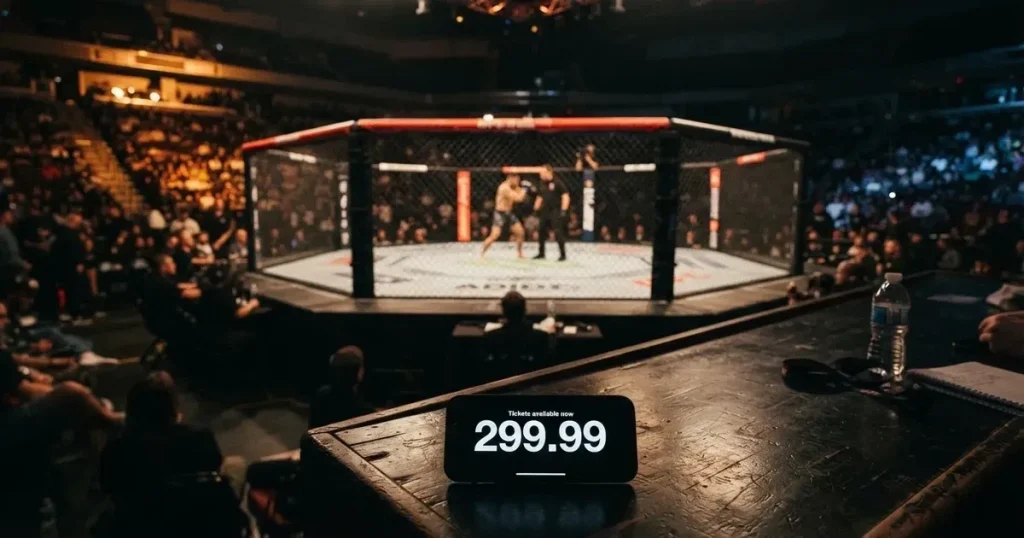
Mixed martial arts has become one of the more popular combat-sports markets in New Zealand, and the way it is bet on here is unlike the way it is bet on almost anywhere else. A single statutory change on 28 June 2025 collapsed what had been a small but active offshore-facing market into a monopoly held by one operator group. The result is that a person in New Zealand who wants a bet on a UFC card now faces a narrower choice and a sharper question: is the local-only option enough, and what does the rest of the field actually look like for comparison’s sake?
This page walks through that landscape. It covers how MMA odds are built and how the margin inside them is read, what types of bets an MMA card supports and how each is settled, the field of events and divisions the UFC and other promotions run, and how New Zealand’s monopoly and harm-minimisation framework sit on top of all of it. The offshore brands at the bottom of the page are described for what they offer, not as options a New Zealand reader can lawfully use — and that gap is the central thing the rest of the page explains.
Current as of October 30, 2026. Licence and monopoly claims verified against the Racing Industry Act 2020 (as amended in 2025), the Department of Internal Affairs’ published positions, and the operators’ own terms.
How MMA odds are built and what the margin inside them actually means
Every price on an MMA card is a decimal. The figure on the screen is the multiplier of the stake a winning bet pays back — $2.10 returns $2.10 for every $1 staked, including the original dollar. A $10 bet at $2.50 returns $25, of which $15 is net profit.
Two prices on the same fight sit in the market like ends of a seesaw. The shorter the favourite (the smaller the odds), the heavier the favourite must be priced. A $1.40 favourite tells the market that book is offering a thin payout on a heavy favourite — the kind of line a punter laying a big stake wants on a “perceived lock”, and the kind of line that goes wrong the one time the underdog lands a clean shot.
How the book keeps its share of the market is what the margin is. It is calculated from every outcome on a market at once, and it is the only number that tells the punter how generous the book is being on this card overall. If a two-way market sits at $1.90 and $1.90, the arithmetic runs: payout share per outcome = 1 ÷ (1/1.90 + 1/1.90) = 1 ÷ 1.0526 = 95.0%, and the margin = 1 − 95.0% = 5.0%. The market gives back 95 cents of every dollar wagered, on average, and keeps 5 cents. Push the prices out to $2.00 and $2.00 and the margin falls: payout share = 1 ÷ (1/2.00 + 1/2.00) = 1 ÷ 1.00 = 100.0%, margin = 0.0%. Pull them in to $1.80 and $1.80 and it widens sharply: payout share = 1 ÷ (1/1.80 + 1/1.80) = 1 ÷ 1.1111 = 90.0%, margin = 10.0%.
The same idea, with more outcomes, holds for a method-of-victory market (KO/TKO, submission, decision) and for over-under round totals. Each adds a third or fourth price to the sum, and the margin comes out of all the implied probabilities together. Cards with a deep method-of-victory market and round totals tend to carry a higher margin than a pure moneyline market — the more legs the book offers, the more it can keep on the lines it is least confident pricing.
This is also why boosted-odds and “best odds guaranteed” banners require a second look. The boost moves one number up; it does nothing to the market’s margin unless every other price moves with it. A favourite pushed from $1.50 to $1.70 sits on top of a card whose other lines still carry whatever margin the book chose to put on them.
A closing line is the price the book settles on once the market is at its sharpest — typically minutes before the cage door closes. For a punter trying to read the market, the closing line is the most useful snapshot: it is what the book’s risk team has agreed is fair, and any price meaningfully different from it a minute before the fight is the price worth questioning.
How to read an MMA card: divisions, methods of victory, and the markets that hang off each
Eleven weight divisions make up the UFC’s senior structure — eight for men, three for women. Beneath that sits a wider ecosystem of promotions (Bellator, ONE Championship, PFL, regional shows) and, on the major cards, a market list that grows more crowded the further into the card the matchup sits.

The main-line market is the moneyline: pick the winner. From there, methods of victory — KO/TKO, submission, and decision — are priced individually, often with sub-methods (e.g. submission by rear-naked choke). Round totals (over/under 1.5 rounds, 2.5 rounds), “fight to go the distance”, “inside the distance”, and fighter-specific markets (will the fighter land a takedown, will the fight end in the first round) round out a typical card.
One quirk of MMA markets is that draw is priced. A fight can be scored a draw — three judges or one can call it even under the 10-point must system — and most books price the draw outcome alongside the two fighter outcomes. Because actual draws are rare (a fraction of one percent of UFC bouts), draw lines tend to be generous in absolute terms (often $5.00 or longer) and remain a market in which the book keeps a particularly wide margin.
How the round scoring works matters for reading decisions. Under the 10-point must system, three judges score each round individually: the round winner gets 10 points, the loser 9 or fewer, and an even round is scored 10–10. The fight goes the distance for a non-title bout to a maximum of three rounds; a title bout can run to five rounds. A non-title bout can finish in three methods (KO/TKO, submission, decision) and a title bout the same; everything else — disqualification, no contest — carries a defined result. Under the Unified Rules of mixed martial arts, a bout ends in disqualification if an intentional foul incapacitates a fighter and in a no contest if an unintentional foul incapacitates a fighter. A decision can be unanimous, majority, or split, and a draw can also be unanimous, majority, or split.
The competitive structure means an MMA card has more live markets per fight than most team sports. A UFC main card can carry 200+ markets across five fights. The same card, on the same evening, offered by two different books will not carry identical market lists — books cut their work where they do not expect action. For a punter choosing a book, this matters more than the headline price on the favourite: a book offering 80 markets on a main card versus 200 is offering a less analysable product, and the cost of that gap shows up in markets cut shallow rather than in any single decimal.
What you can bet on: accumulator, same-game multi, and the multi bet mechanics
The three bet types MMA punters use most are single, multi (accumulator), and same-game multi. They differ in how their legs combine and how the risk compounds.
A single bet prices one outcome. A multi (also called an accumulator or parlay) prices several outcomes: each leg’s odds multiply into one combined price. The payouts compound, but so does the risk — every leg has to land for the bet to win, and the more legs added, the more chances there are for one to go wrong.
A same-game multi (SGM) is a multi whose legs all come from one event. For an MMA card, this is where most of the punter interest lives: a moneyline combined with a method of victory, a round total combined with how the fight ends. The constraint is that legs cannot be correlated against each other (the book rejects two legs whose outcomes strongly imply each other, like a heavy favourite to win and a same-fight “fight goes to decision” leg at long odds); the second constraint is that the book’s margin stacks onto every leg, so a four-leg SGM on one fight typically carries a higher combined margin than four singles on four different fights with the same per-leg prices.
A bet builder is the same thing under a different name. Some books call the product Bet Builder, others Same Game Multi, others Request-a-Bet. The mechanic — pick several outcomes, get a combined price, all legs must win — is identical.
The free-bet / bonus-bet mechanic runs across all three. Where a book offers a “bonus bet” promotion, the stake of the bonus bet is not paid back with a winning return: a $10 bonus bet at $3.00 returns $30 in cash (the $30 includes the stake on the calculator but the book keeps the $10), so the effective value of the bonus bet on this wager is $20 in real winnings. This is important for assessing offers — the headline “bet $10 win $30” reads better than it pays.
The calculator behind all of this is straightforward but worth being explicit about. For a winning single: return = stake × odds; net profit = stake × (odds − 1). For a winning two-leg multi: return = stake × (odds_leg1 × odds_leg2); net profit = return − stake. The punter who writes the multi out by hand is rarely tricked; the punter who takes the book-calculated combined price at face value is.
UFC, Bellator, PFL, ONE — and what the New Zealand viewer can actually see live
The Ultimate Fighting Championship was founded on 12 November 1993, when UFC 1 was held at McNichols Sports Arena in Denver, Colorado. Since then, the UFC has consolidated most of the top-tier MMA at the global level, with regional promotions filling the mid-card and developmental slots. Bellator, ONE Championship, and the PFL (which runs a season-and-playoff format) sit beneath the UFC for name recognition but do stage fights that move lines on New Zealand books.
A weekly calendar on TAB NZ’s MMA section carries a mix: UFC Fight Night cards most weeks, the occasional UFC PPV card, and whatever regional show is on the schedule — frequently an Ares Fighting Championship or Brave CF event, and increasingly Contender Series fights whose fighters turn up on the main UFC roster a season later.
Where a viewer in New Zealand can actually watch the fights live has shifted. UFC Fight Pass streams most international shows live, but UFC PPV events on ESPN+ in the United States require a separate PPV purchase beyond the subscription. Australia’s Main Event carries PPV in that market. For New Zealand, the cleanest legal route is UFC Fight Pass, with PPV events as buy-ins. Bellator and ONE stream on their respective platforms (Showtime for the bulk of Bellator’s recent run in the US, ONE on the ONE app and YouTube).
A live-streaming market and a live-betting market are two different products. The first is a video feed; the second is a price being refreshed as the fight unfolds. TAB NZ’s apps list live betting, and any statutory restriction on in-play markets is not established — the published rules permit in-play betting on the listed sports. The offshore brands in the table at the foot of this page describe their own in-play product in their terms; how each one performs in the live market is for the punter to verify before staking.
Who may lawfully take sports bets in New Zealand
Since an amendment to the Racing Industry Act 2020 took effect on 28 June 2025, the Department of Internal Affairs reads the law as allowing TAB NZ (and its online sister brand Betcha) to be the only operators that may take online sports and racing bets from people in New Zealand. The change was effected by the Racing Industry Amendment Act 2025 inserting section 74AAA into the principal Act. There is no licence to apply for, and no licence register for bookmakers, because there is only this one lawful provider. DIA told providers serving New Zealand to withdraw with immediate effect.
TAB NZ operates under a long-term commercial partnership with Entain. The partnership agreement, signed in 2023, runs for 25 years, with at least $150 million a year going to TAB NZ for the first five years, a 50/50 share of gross profits between the two, and Entain pledging a one-off $100 million payment to the racing sector. Betcha is Entain NZ’s online sports and racing product for the New Zealand market, released in August 2024, and is one of the two brands that may lawfully take online sports and racing bets from people in New Zealand under section 74AAA.
TAB and Betcha are two brands of the same operator group. They are not rival bookmakers, and the page presents them as one — with the brand comparison sitting on what each product prioritises (TAB NZ as the racing-anchored mainline product, Betcha as the same group with a newer front-end and broader coverage of North American sports). The TAB NZ app has been on the New Zealand App Store since 8 September 2014 under the seller name New Zealand Racing Board.
For everything below the monopoly, the legal position is straight. New Zealand does not geo-block offshore websites — there is no payment-blocking order and no bank obligation so far identified — but it puts liability on the operator serving New Zealand residents. New Zealand law targets the operator, not the individual: section 19(4) of the Gambling Act 2003, inserted in 2025, says an individual may not be convicted for placing a bet with an offshore betting operator in breach of section 74AAA. DIA’s published position warns players of the risks of betting with overseas operators: those operators may be in jurisdictions with minimal consumer safeguards, may not return unspent credits, and may not pay out large wins. No published penalty for a player was found.
What the offshore brands at the foot of this page offer is thus framed as a comparison, not a route. Several of them list MMA in their sportsbook; none of them is licensed in New Zealand; the absence of a New Zealand complaints route or harm-minimisation framework means a problem with one of these brands falls outside any New Zealand regulator.
How the harm-minimisation framework actually works in practice
The age for TAB NZ betting is 18. Betting under 18 is an offence under section 89 of the Racing Industry Act 2020 (land-based casinos are 20 — a different threshold, not to be confused). TAB NZ accounts need a verified New Zealand address and ID.
The platform protection tools TAB NZ provides in its app are deposit limits (set by the punter, enforced by the platform), time-outs (a temporary block, the punter sets the duration), and self-exclusion (a longer block, the punter sets the duration, applies across both TAB and Betcha because they share the underlying TAB NZ identity). TAB NZ also lists the free New Zealand Gambling Helpline at 0800 654 655 and the text line at 8006, run by Safer Gambling Aotearoa. There is no single national online-betting exclusion register: the register the casino law will require is for online casinos only and does not extend to betting.
The Problem Gambling Levy on TAB NZ’s gross takings is 0.74%, in force from 1 July 2025 to 30 June 2028. The levy funds treatment services and the helpline. None of this extends to an offshore brand — a player who self-excludes from TAB NZ is not excluded from an offshore book, and an offshore book has no obligation under New Zealand law to honour that exclusion.
A practical note on offshore harm-minimisation: most offshore books carry some combination of deposit limits, time-outs, and self-exclusion in their own tooling. These are operator-level, enforced only by the offshore operator, and reach only as far as the account. A punter who wants harm-minimisation that survives a brand switching (an important step in moving away from problem gambling) needs a New Zealand-anchored framework — and that means TAB NZ or Betcha, or a clinical service outside the betting product. The Gambling Helpline at 0800 654 655 works for the latter.
For advertising, the ASA’s Gambling Advertising Code sets the rules: ads must not target children (under 14) or young people (14 to under 18), judged by context, appeal and expected audience (with 25% or more of the audience counting as significant where accurate audience data exists), must not encourage harm, and must be truthful with terms available. The advertising framing around TAB NZ’s products, the bonus-bet promotions in particular, sits within this code.
Crypto, anonymity, and what the offshore books that advertise “Bitcoin MMA betting” actually offer
Several of the offshore brands in the table at the foot of this page run on crypto rails. Thunderpick, for example, is esports-first — covering CS2, League of Legends, Dota 2 and Valorant — and its sportsbook offers a cash-out feature and markets from the Champions League to the NFL. Crypto is the unit of account on these books, not a payment-method afterthought: deposits and withdrawals run on the blockchain, balances display in coin, and the promos can be paid in coin.
What crypto does for the punter and what it does for the framework are two different questions. On the punter side, it speeds cross-border settlement and removes some banking friction. On the framework side, New Zealand has no published rule on crypto use for betting; nothing states a rule on VPN use either. TAB NZ’s account opening requires a verified New Zealand address — the only practical anchor back into the New Zealand harm-minimisation framework — and crypto-funded accounts on offshore books do not, by themselves, deliver that anchor. The enforcement question is the operator’s, not the punter’s: section 74AAA targets the operator serving New Zealand, not the individual punter.
A related framing: “anonymity” in this context is mostly pseudonymity. The blockchain ledger is public; the on-chain addresses are not tied by the book to a person’s name, but the moment a withdrawal lands in a New Zealand bank account the chain has a name attached again. What crypto-funded offshore books actually deliver is a privacy layer from the betting product back to a public identity, not anonymity in any stronger sense. A punter who needs that layer has reason enough to think twice about whether they ought to be betting at all.
The broader question is the simplest one: does the offshore book with crypto rails give the punter anything TAB NZ does not? TAB NZ takes card and bank deposits and processes withdrawals back through the same rails, with a 17+ App Store age rating and 18+ on the betting side. The crypto offshore book adds coin-balance and a wider sportsbook (esports is the most obvious differential), and removes the verified-identity anchor the New Zealand harm-minimisation framework relies on. For punters with a reason to be off the New Zealand framework, this is the entire calculation, and the page does not pretend it is a clearer trade than that.
Live betting, cash out, and where the market in a fight actually sits
Live betting on MMA differs from live betting on football or tennis because the action is structured into rounds with a defined start and end. The book refreshes prices between rounds in response to damage landed, takedowns completed, and momentum. Inside a round, prices move on a one-minute refresh cycle at best, and most books freeze outright once the round is underway.
What makes live MMA workable is the round-based structure. Punters who watched the first round know who is winning on the cards, who is landing cleanly, who is tiring. The market at the start of round two reflects that. The market fifteen seconds before round two ends carries its own weight — close-out bets land harder than early-round bets.
Cash out is the bookmaker feature that lets the punter close a bet mid-event at a price the book calculates. For an MMA multi-bet where several legs have already landed, the cash-out price the book offers for the live final leg reflects the book taking the other side of the punter’s position. The price is rarely generous — the margin built into live cash-out is wider than the pre-match margin — but the punter who does not want to sweat the last leg takes what the book offers, or holds.
The combination of live betting, cash-out, and a deep pre-match market is what separates a competitive book from a thin one. TAB NZ’s apps list live betting and the market depths published for major UFC events are competitive with the offshore books that claim “best live” in their copy. The actual differentiation shows up on a card the punter is choosing to bet on: a card that has 30 markets with TAB NZ and 200 markets with an offshore book is not a market with 30 — it is a market the same book is willing to price into live.
Predictions, “tips”, and what they actually cost the punter
Tipping services and “best bets today” articles sit on top of every MMA event. They run on the same premise the rest of the prediction industry runs on: a tipster with a model picks a side, the punter follows. The market rarely cooperates long enough for the tipster to keep the edge.
The honest framing is the one most tipster sites themselves do not publish. After fees, a tipster charging $50/month for a year ($600) needs the punter to clear $600 in expected value above the takeout on the markets they tip. The takeout on a deep MMA card sits somewhere between 5% and 12%, meaning the punter needs an edge the average punter does not develop on bets the book alone lets the punter place. Free tipster content (and a great deal of it) sits with affiliate links the tipster is paid on — meaning the tipster is paid whether the tip wins or loses, and the punter’s expected value on the tip is the affiliate’s commission away from zero at best.
None of this means prediction is impossible or models don’t work. It means the punter choosing to follow one is paying for an edge that has to clear the takeout on the markets the model prices into, and the takeout on MMA sits higher than on, say, football 1X2 because MMA markets are thinner and the margin the book keeps reflects that.
The page’s recommendation is not against modelling — a punter who develops their own reads takes the analytical work seriously and turns a hobby into something that may pay for itself. The recommendation is against the tipster-as-service model: where the cost of the subscription has to come back as expected value above the takeout, and where the tipster is paid by the affiliate either way.
A secondary point on “today’s fights” lists: every fight has a morning-of line and a closing line, and the punter who bets early takes the morning line. By the time the closing line is in, almost all the information the morning punter did not have is priced. The punter who bets morning takes the price the book is willing to offer when the market is at its thinnest — and that price carries the heaviest implied margin.
The New Zealand vs offshore comparison: ten operators reviewed
The comparison below covers TAB and Betcha (the two lawful brands under New Zealand’s section 74AAA framework) and eight offshore operators New Zealand players will meet through channels advertising MMA markets. Each offshore brand is marked “not licensed in New Zealand”: only TAB NZ may offer sports betting to a person in New Zealand, and the offshore brands carry none of the New Zealand harm-minimisation or complaints framework. The column “what the operator’s own terms state on the key’s subject” reflects what each operator publishes about MMA specifically, because the MMA roster, market depth, and live-betting coverage vary widely between otherwise similar sportsbooks.
| Brand | New Zealand status | What the operator’s own terms state on the key’s subject |
|---|---|---|
| TAB | Licensed operator under section 74AAA of the Racing Industry Act 2020. New Zealand’s monopoly provider of racing and sports betting; no licence register exists because only one lawful operator. | The TAB NZ app carries a 17+ App Store age rating with 18+ for betting. Sports coverage spans horse and harness racing, rugby union and rugby league, pre-match and live. Includes Trackside live race streaming with in-app betting, racing form, Blackbook and Jockey Challenge tools, and a simplified wallet for deposits and withdrawals. |
| Betcha | Licensed operator under section 74AAA of the Racing Industry Act 2020 — one of the two online brands of TAB NZ, run by Entain NZ. | Covers horse, greyhound and harness racing, plus rugby, NRL, MMA/UFC, NBA, NFL, tennis, cricket, football, motorsports and esports. First released on the New Zealand App Store on 6 August 2024. |
| Alawin | Not licensed in New Zealand. | Sportsbook covers football, tennis, table tennis, basketball, ice hockey, American football and baseball. Live Betting, Virtual Sports, and esports also offered. MMA is not named on the home page sports list. |
| FunBet | Not licensed in New Zealand. | Sportsbook offers odds on football, ice hockey, American football, basketball, volleyball, tennis, rugby and baseball, with live betting, described as open 24/7. MMA is not named on the home page sports list. |
| LegendPlay | Not licensed in New Zealand. Names an Anjouan Gaming Authority licence, which gives no right to take bets from people in New Zealand. | Sportsbook has Sports, Live Betting and Virtual Sports sections, with football, tennis, basketball and ice hockey listed. MMA is not named on the home page sports list. |
| Thunderpick | Not licensed in New Zealand. Names a Curaçao licence (OGL/2024/677/0722), holder Paloma Media B.V. | Esports-first, covering CS2, League of Legends, Dota 2 and Valorant. Sportsbook offers a cash-out feature and markets from the Champions League to the NFL. MMA is not named on the home page sports list. |
| Rabona | Not licensed in New Zealand. Names a Curaçao licence, which gives no right to take bets from people in New Zealand. | Six-year-old sportsbook (launched 23 December 2019 as the sixth online sportsbook of the Soft2Bet group). MMA market depth not confirmed. |
| RTbet | Not licensed in New Zealand. Names a Curaçao licence, which gives no right to take bets from people in New Zealand. | Sportsbook covers football, tennis, table tennis, basketball, ice hockey, American football and baseball, with live betting and virtual sports. MMA is not named on the home page sports list. |
| Glorion | Not licensed in New Zealand. Names no licence that applies in New Zealand. | Offers pre-match and live betting, virtual sports, horse racing and esports, with markets grouped into popular, niche, indoor and outdoor sports plus entertainment events such as award shows and elections. MMA is not named on the home page sports list. |
| BetNinja | Not licensed in New Zealand. Names a licence from the Union of the Comoros, which gives no right to take bets from people in New Zealand. | Advertises a casino welcome of EUR 1,000 bonus and 100 free spins, and a sports offer of a 100% match up to EUR 100 on the first deposit. MMA market depth not confirmed. |
What the table shows is that TAB NZ and Betcha carry MMA/UFC explicitly in their terms, and that the offshore brands’ sportsbooks vary widely in MMA coverage but do not, in the materials reviewed, name MMA on their home pages. The punter who wants to bet on a UFC card has no listed alternative under New Zealand law — the offshore comparison here is a description of what the alternative field looks like, not a route to it.
TAB NZ — the lawful monopoly on this side of the Tasman
TAB NZ is the racing and sports betting monopoly in New Zealand under section 74AAA of the Racing Industry Act 2020, in force since 28 June 2025. The platform has been on the New Zealand App Store since 8 September 2014 under the seller name New Zealand Racing Board. Its app carries horse and harness racing, rugby union and rugby league, plus other sports, pre-match and live; live betting is listed; Trackside carries live race streaming with in-app betting; racing form, Blackbook and Jockey Challenge tools sit beside the simplified wallet that handles deposits and withdrawals.
The harm-minimisation tools TAB NZ provides are platform-level: deposit limits, time-outs, self-exclusion, and the New Zealand Gambling Helpline (0800 654 655, text 8006). The exclusion spans both TAB and Betcha.
What this gives the MMA punter is the only lawful New Zealand route, with New Zealand harm-minimisation tools, regulator oversight, and a complaints framework that actually reaches the operator. What it does not give is competitive market pressure on the price — a single operator is the only place to bet, so the margin on the MMA card sits where the operator chooses to put it. The punter who wants a deeper market (more method-of-victory sub-markets, more round totals) finds a thinner product than an offshore book with the same card; the punter who values the framework gets what TAB NZ and Betcha provide and nothing else does.
For the MMA card specifically, the market the punter actually wants on TAB NZ is the same market any other book prices: a moneyline, methods of victory, round totals, fighter-specific markets. The closing line on the favourite on a UFC main event tends to sit on the leaner side of the offshore books that price the same fight, because TAB NZ has neither the market depth nor the round-the-clock risk team those offshore books carry. A closing price of $1.45 on a heavy favourite versus an offshore book at $1.50 reflects TAB NZ’s pricing discipline, not necessarily generosity.
The verdict: TAB NZ is the lawful MMA route for a New Zealand punter, and it pairs the only lawful-route label with the only New Zealand harm-minimisation framework that reaches the punter. The cost of that pairing is the absence of market pressure on the margin, and the punter who wants the deepest market on a UFC card will look elsewhere knowing what “elsewhere” legally and practically means.
Betcha — the same operator group, a different front end
Betcha is the second of TAB NZ’s two lawful online brands, run by Entain NZ. First released on the New Zealand App Store on 6 August 2024, Betcha covers horse, greyhound and harness racing plus rugby, NRL, MMA/UFC, NBA, NFL, tennis, cricket, football, motorsports and esports. The product is newer than TAB NZ’s and the front-end carries North American sports more prominently.
What this gives the MMA punter is a different interface to the same underlying bookmaker group. The market list is shared at the operator level — TAB and Betcha show the same lines for the same events; the differentiation is the surface, not the substance. Betcha’s broader coverage of NBA, NFL, and cricket means it carries more sports on the same page; the MMA/UFC market sits with the same depth and the same closing-line discipline as on TAB NZ.
The harm-minimisation tools are also shared: deposit limits, time-outs, and self-exclusion apply across both brands because TAB NZ sits behind both. The exclusion is the operator’s, the harm-minimisation is the framework’s, and the difference between the two brands reads as design choice rather than as a different product.
The verdict: Betcha is TAB NZ’s newer brand for the same operator group, and the punter choosing between the two is choosing a front-end rather than a bookmaker. For the MMA punter, the answer tends to be the product whose interface handles the markets the punter actually uses most — TAB NZ for racing-first punters, Betcha for those whose calendar is heavier on the North American codes. The MMA market itself is the same.
Alawin — not licensed in New Zealand, football-leaning sportsbook
Alawin’s sportsbook covers football, tennis, table tennis, basketball, ice hockey, American football and baseball, with Live Betting, Virtual Sports and esports also offered. The home page does not name MMA in its sports list, and the materials consulted do not state a market depth for MMA at the operator.
A punter who wants MMA on this platform needs to check the live market list, which is where most sportsbooks that have MMA bury it. A book that does not name MMA on its home page is not necessarily absent from the market — many offshore books carry a thin MMA line that opens close to the event and closes fast, and the punter who finds it is betting into a thin market.
This operator sits outside New Zealand’s harm-minimisation framework. The player who self-excludes at TAB NZ is not excluded here, the New Zealand complaints route does not reach the operator, and the operator does not name a licence that applies in New Zealand. The cost of using Alawin for MMA from New Zealand is the absence of every protection a New Zealand punter gets at TAB NZ and Betcha.
The verdict: Alawin is a football-leaning sportsbook that does not name MMA on its home page and whose MMA market depth the materials consulted do not establish. For a New Zealand punter, it sits outside the lawful route by definition, and the page presents it for what the operator publishes, not as an option.
FunBet — not licensed in New Zealand, broad sport coverage
FunBet’s sportsbook offers odds on football, ice hockey, American football, basketball, volleyball, tennis, rugby and baseball, with live betting, and is described on its home page as a bookmaker open 24/7. MMA does not appear on the home page sports list, and market depth for MMA at the operator is not stated in the materials consulted.
The 24/7 framing is unusual — most online books operate continuously but few put it in the headline copy. A 24/7 book is not necessarily a deeper book: it is a book that markets itself as available, and availability is not the same as market depth.
This book falls outside New Zealand’s harm-minimisation framework. The punter who has self-excluded at TAB NZ is not excluded here, and no New Zealand complaints route reaches the operator.
The verdict: FunBet is a broad-coverage book that does not advertise MMA and whose MMA market depth the materials consulted do not establish. For a New Zealand punter, the offering sits outside the lawful route; the page describes what the operator publishes.
LegendPlay — not licensed in New Zealand, mainstream sportsbook
LegendPlay’s sportsbook has Sports, Live Betting and Virtual Sports sections, with football, tennis, basketball and ice hockey listed. The home page does not list MMA. The operator names an Anjouan Gaming Authority licence in its published terms — a licence that offers no right to take bets from people in New Zealand.
Anjouan (officially the Union of the Comoros, Anjouan office) is one of several small-jurisdiction licences the offshore industry uses. It does not extend consumer protection to a New Zealand punter: there is no Anjouan-New Zealand dispute-resolution route, no New Zealand harm-minimisation framework reaching the operator, and no obligation on the operator to honour a New Zealand self-exclusion.
The verdict: LegendPlay is a mainstream offshore sportsbook naming an Anjouan licence, which offers no right to take bets from people in New Zealand. For a New Zealand punter, the offering sits outside the lawful route.
Thunderpick — not licensed in New Zealand, esports-first sportsbook
Thunderpick is esports-first, covering CS2, League of Legends, Dota 2 and Valorant. Its sportsbook offers a cash-out feature and markets from the Champions League to the NFL. The operator names a Curaçao licence (OGL/2024/677/0722), holder Paloma Media B.V. — a licence that does not authorise taking bets from people in New Zealand.
Where Thunderpick is interesting is on the esports/UFC overlap and the cash-out feature. Cash out is the closer the punter takes mid-event at the book’s calculated price. The book has the feature explicitly in its terms; how generous the cash-out prices are on a UFC card is for the punter to verify by watching one.
The esports-first framing is also worth flagging: Thunderpick’s centre of gravity is on CS2, LoL, Dota 2, and Valorant. The UFC market on the same book is a complement to the esports offering, not the platform’s reason for existing. A punter who wants the deepest UFC market will rarely find it on an esports-first book.
The verdict: Thunderpick is an esports-first operator whose sportsbook carries cash-out and mainstream sports markets. For a New Zealand punter, the offering sits outside the lawful route, and the operator’s esports-first product is the main draw rather than the UFC.
Rabona — not licensed in New Zealand, six-year-old sportsbook
Rabona launched on 23 December 2019 as the sixth online sportsbook of the Soft2Bet group. The operator names a Curaçao licence. MMA market depth at the operator is not stated in the materials consulted.
Soft2Bet is one of the larger white-label sportsbook groups operating offshore, running multiple brands under a single B2B platform. The brands differ in branding and front-end but share the same underlying risk and trading operation. For the punter, this means the closing lines on a UFC event at Rabona are likely to be close to the closing lines on a sister Soft2Bet brand the same night — the market, not the brand, sets most of the close.
This operator is outside New Zealand’s harm-minimisation framework. This operator provides no New Zealand complaints route.
The verdict: Rabona is a six-year-old offshore sportsbook under the Soft2Bet group, and its MMA market depth the materials consulted do not establish.
RTbet — not licensed in New Zealand, mainstream sports coverage
RTbet’s sportsbook covers football, tennis, table tennis, basketball, ice hockey, American football and baseball, with live betting and virtual sports. The operator names a Curaçao licence in its terms. MMA is not named on the home page sports list.
The coverage pattern is mainstream football-first with the standard cross-sport offering: tennis, table tennis, basketball, ice hockey, American football, baseball. MMA is the kind of sport that sits below the fold on these books — present in the live market, not advertised on the home page.
The book runs outside New Zealand’s harm-minimisation framework. This operator provides no New Zealand complaints route.
The verdict: RTbet is a mainstream offshore sportsbook covering the standard North American and European codes.
Glorion — not licensed in New Zealand, broad market grouping
Glorion offers pre-match and live betting, virtual sports, horse racing and esports, with markets grouped into popular, niche, indoor and outdoor sports plus entertainment events such as award shows and elections. The operator names no licence that applies in New Zealand.
The market-grouping copy is the interesting bit: most sportsbooks group into “popular” and “other” with a list of 10 sports. Glorion markets a deliberate “popular / niche / indoor / outdoor / entertainment” categorisation that includes award shows and elections. A book that prices award shows and elections can probably also price MMA — but the explicit MMA line at the operator is not stated in the materials consulted.
The book runs outside New Zealand’s harm-minimisation framework. This operator provides no New Zealand complaints route.
The verdict: Glorion is a broad-coverage offshore book that explicitly markets entertainment-event markets and groups its sports into four categories. MMA is not named on the home page sports list.
BetNinja — not licensed in New Zealand, casino-anchored product
BetNinja advertises a casino welcome of EUR 1,000 bonus and 100 free spins, and a sports offer of a 100% match up to EUR 100 on the first deposit. The operator names a Union of the Comoros licence.
The dominant offering on the page is casino — the bonus headline is the casino offer. A book whose home page leads with the casino is a book whose primary product is not the sportsbook. The sportsbook exists, and is offered to the same customer, but the punter who arrives at BetNinja for MMA is arriving at a casino-first product.
The operator’s licence (Union of the Comoros) is one of the small-jurisdiction licences the offshore industry uses. It does not authorise taking bets from people in New Zealand.
The verdict: BetNinja is a casino-anchored product with a sportsbook on the side, offered under a Union of the Comoros licence. This brand is not licensed in New Zealand and offers no local harm-minimisation framework.
How taxes, withdrawals, and the everyday mechanics sit on top of MMA betting in New Zealand
For the player, Inland Revenue guidance is that recreational gambling winnings are generally not taxable. Prize money from TAB horse, dog, and trotting races is not taxable. A person who bets as a business is a different case — that is a matter for the person’s accountant or for Inland Revenue directly, not for a page like this one.
TAB NZ pays the Problem Gambling Levy (0.74% of gross takings, from 1 July 2025 to 30 June 2028). On the operator side, overseas operators supplying New Zealand residents pay online gambling duty (12% of profits from 1 July 2024, rising to 16% from 1 January 2027). The point-of-consumption charge on offshore racing and sports bets ceased on 30 June 2026.
What this means for the punter is that TAB NZ’s price is the price; there is no consumption tax on the bet to build into the margin. The offshore operator’s price includes a duty the operator pays to New Zealand if the bet is taken from a New Zealand resident — but a duty being payable does not make the offer lawful, and the page does not write that tax payment makes an offshore brand legal.
Withdrawals from TAB NZ and Betcha run through the same rails the deposit landed on. There is no statutory rule on payment-blocking, no bank obligation to refuse withdrawals to offshore books, and no rule on crypto use either way. What the offshore books offer on the withdrawal side is varied and operator-specific — the punter choosing to use one needs to verify the withdrawal path on the operator’s terms before staking.
MMA betting in New Zealand: practical takeaways
The lawful route for an MMA punter in New Zealand is TAB NZ and Betcha, run by the same operator group. What that delivers is the only New Zealand harm-minimisation framework that reaches the punter, regulator oversight, and a complaints framework that works. What it does not deliver is the deepest market on a UFC card. The trade-off is the trade-off the law creates, and the punter who wants the deepest market is choosing between fewer-markets-on-the-lawful-side and more-markets-outside-it.
Odds and margin remain the operator’s choice, and the punter’s first read on a card is the closing line: the favourite’s price, the underdog’s price, and the margin implied by both. The market’s margin is the only number that tells the punter how generous the book is being on the card as a whole, and the same method of calculation works on a three-way market (a moneyline with a draw line) and on the over/under round total.
For prediction services, the arithmetic against the takeout is the arithmetic the marketing copy omits. A subscription that has to clear its cost out of expected value above the takeout on MMA markets is a subscription that needs an edge most punters do not develop. The page neither recommends nor rejects tipster services — it puts the arithmetic on the table and lets the punter run it themselves.
On offshore brands: the field is wide, the licences are mostly small-jurisdiction (Curaçao, Anjouan, Union of the Comoros), and the MMA market depth is variable. None of them are lawful in New Zealand; all of them sit outside the New Zealand harm-minimisation framework. They are described here for comparison’s sake. The punter who uses one of them from New Zealand is doing so under their own judgement.
The page’s closing position is the page’s first position restated: New Zealand punter who wants to bet on MMA has a single lawful option, and the rest of the field is described for what the operators publish, not as a route. The arithmetic on odds is unchanged.
Frequently asked questions about MMA betting in New Zealand
How does MMA betting work?
MMA betting works the same way as betting on any other sport: a punter picks an outcome, stakes an amount, and the book settles on the result at decimal odds. The MMA card carries a moneyline on each fight, method-of-victory markets, round totals, and fighter-specific markets. Under the 10-point must system, three judges score each round — the round winner gets 10, the loser 9 or fewer, and a 10–10 even round scores both fighters even. A non-title bout normally goes three rounds and a title bout can run to five.
How do I bet on MMA?
A punter in New Zealand opens an account at TAB NZ or Betcha (the two lawful brands under section 74AAA of the Racing Industry Act 2020, in force since 28 June 2025), deposits through the operator’s accepted methods, picks the market on the card, enters the stake on the bet slip, and submits. A winning bet pays back stake × decimal odds. The TAB NZ app carries a 17+ App Store age rating with 18+ for betting, and a verified New Zealand address and ID are required to open an account.
How do I bet on MMA fights in particular?
MMA fights are priced per card. The punter picks the fight, picks the market (moneyline, method of victory, round total), and enters the stake. Live betting between rounds is supported by TAB NZ’s app; in-round betting is typically frozen. The deeper markets — sub-methods of victory, exact round of finish — sit on the main card and thin out fast once the undercard begins.
Which bookmaker may lawfully take sports and racing bets in New Zealand?
Since 28 June 2025, when the Racing Industry Amendment Act 2025 took effect and inserted section 74AAA into the Racing Industry Act 2020, TAB NZ (through its two online brands, TAB and Betcha) is the only provider lawfully offering racing and sports betting to people in New Zealand. The Department of Internal Affairs told providers serving New Zealand to withdraw with immediate effect. There is no licence to apply for and no licence register for bookmakers, because there is only this one lawful provider.
How is the return on a bet worked out from the stake and the odds?
For a winning single bet, return = stake × decimal odds, and net profit = stake × (decimal odds − 1). For a winning two-leg multi, return = stake × (odds of leg 1 × odds of leg 2), and net profit = return − stake. A free bet whose stake is not paid back yields a return equal to free-bet amount × (odds − 1), with the stake kept by the book — so the “real” value of the free bet is smaller than the headline price.
What is the bookmaker’s margin and how can it be seen in the odds?
The margin is the share of every unit staked that the book keeps. It is calculated from every outcome on a market together: payout share = 1 ÷ (sum of 1/odds across all outcomes), and margin = 1 − payout share. At $1.90 and $1.90 on a two-way market, payout share is 95.0% and margin is 5.0%. At $1.80 and $1.80, payout share is 90.0% and margin is 10.0%. A market with a wider margin keeps more of every dollar wagered, on average, regardless of which outcome lands.
Tennis, golf & more – bettinginfo-nz
Content created by the «bettinginfo-nz» team
