
Online betting in New Zealand, 2026: a guide to the legal landscape and the brands
 Available in US
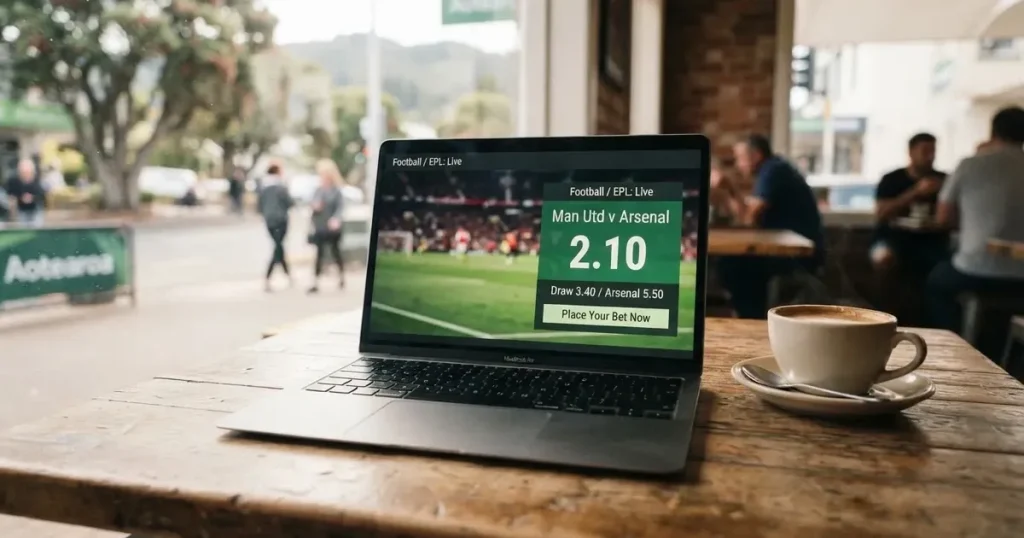
Picking a betting site in New Zealand in 2026 is a smaller decision than it looks. Section 74AAA of the Racing Industry Act 2020, in force since 28 June 2025, names TAB New Zealand as the only person who may offer racing or sports betting to a person in New Zealand, no matter where that operator is resident or incorporated. Two online brands answer to that body: TAB and Betcha, both run for TAB NZ by Entain. Every other brand a New Zealand reader meets online — Glorion, RoyalistPlay, Sportaza, Telbet, Alawin, FunBet, BetNinja, 22Bet — falls outside the framework, accepts New Zealand customers under a foreign licence, and carries no New Zealand harm-minimisation or complaints route. The choice the law sets is not between ten bookmakers; it is between TAB NZ’s two products and the offshore alternatives, with the offshore path sitting in a legal grey zone the regulator has flagged and the player is left to navigate alone.
This page lays out what that means in practice. The first half walks through the legal frame, the responsible-gambling tools, the bonus mechanics, the mobile apps, live betting, bet types, the sports calendars, the newcomer brands and how an account is opened. The second half reviews each operator against the same criteria, then closes with a comparison table and an FAQ. Each foreign brand is marked “not licensed in New Zealand” in the ranking, and that label is descriptive, not editorial: an offshore brand is not illegal for the player, but it is also not covered by New Zealand’s harm-minimisation framework, and a payout dispute goes through the operator’s own jurisdiction rather than through the Department of Internal Affairs.
Data current as of October 30, 2026, licence status verified against the Department of Internal Affairs registers and each operator’s terms page.
Crypto and anonymity at New Zealand-facing bookmakers
The crypto question in New Zealand comes with a built-in contradiction. TAB NZ, the only lawful online bookmaker for people in New Zealand, runs a fiat-only wallet: deposits go in through bank, card or the in-app payment methods its terms list, and withdrawals go back to the same name. There is no Bitcoin, no USDT, no on-ramp inside the TAB or Betcha app, and a verified New Zealand address and identity are part of opening any TAB NZ account — the very thing pseudonymous betting is designed to avoid.

Offshore, the picture flips. Telbet styles itself a “crypto casino and sportsbook” and headlines a 200% bonus up to 1 BTC plus 50 free spins on its main offer, with a 5 USDT free bet on its Russian-language site. Thunderpick runs on the Curaçao register under OGL/2024/677/0722 and is built around wallet-to-wallet deposits. Roobet, Roobet’s own terms put it under Curaçao licence OGL/2024/687/0427, settles in crypto, and does not ask for an address. FunBet, a Soft2Bet-group offshoot, accepts the same wallet-style deposits and carries a 24/7 sportsbook with live odds on football, basketball, tennis, rugby and the rest. Each of these sits outside the Racing Industry Act 2020 because it takes bets from people in New Zealand, the very thing section 74AAA bars. The Department of Internal Affairs told such providers to withdraw with immediate effect when the law changed in 2025, and the consumer warning in its guidance is plain: an overseas operator may not pay out a large win, may not return unspent credit, and sits in a jurisdiction with minimal consumer safeguards.
The asymmetry has a price. A crypto deposit on an offshore book removes the bank statement and the card audit trail from the wager, which is the feature the marketing sells. It also removes the dispute route the deposit is otherwise designed to support. New Zealand banks and card issuers have a chargeback and a complaints path; a wallet-to-wallet transfer has neither. If the operator declines a withdrawal, freezes the account after a winning slip, or simply stops answering support, the recourse is whatever the operator’s own licence regulator (Anjouan, Curaçao, Tobique) offers on paper, and there is no New Zealand body the player can write to. TAB NZ, by contrast, accepts the New Zealand identity checks the law expects, holds Problem Gambling Levy-funded harm-minimisation tools inside its apps, and answers to the Department of Internal Affairs if something goes wrong on its side.
The honest framing in 2026 is this: crypto-friendly offshore books are not a parallel option. They are an option for a New Zealand reader willing to step outside the only protected route the law provides. The price of the privacy is the protection, and the protection is the reason section 74AAA exists at all.
Bonuses, free bets and what an offer really costs
The “free bet” is the most expensive word in the industry, and a New Zealand reader sees it more than once on each betting page they open. TAB NZ’s mobile app lists a Mega Multi bonus of up to $50 in Bonus Cash when a multi of four or more legs falls short by a set number of legs, plus the option to back runners to Place Extra — up to tenth place in selected races — and “bonus bets” promotions on the racing side. New customers receive Bonus Cash that the app splits across multiple bets rather than crediting to the wallet. None of this is a cash bonus the punter can withdraw the moment the credit lands: every cent of Bonus Cash has the terms the app’s T&Cs attach, and reading those terms is the line between keeping a credit and forfeiting it.

The terms that matter, and the ones the marketing copy hides, fall into a handful of categories. The first is the wagering multiple: the bonus base (Bonus Cash, or Bonus Cash plus deposit where the offer is deposit-gated) has to be turned over a set number of times before the winnings become withdrawable cash. The second is the minimum price: only settled bets at or above a stated decimal odds count toward that turnover, and a single line below the threshold is excluded from the count. The third is the deadline: a bonus is cleared in days, not weeks, and the credits expire if the wagering isn’t complete in time. The fourth is the stake rule: a free bet’s stake is usually not paid back with a win, so the headline payout is the returns minus the value of the free bet the reader “spent”. The fifth is the cap on free-bet winnings: a free bet on an Under 18 favourite might cap the payout at $200 or $500 in cash, with anything over returned as bonus credit or voided. Golden Panda’s bonus terms, last updated 31 August 2026, go further: bonus funds cannot be used at all while the player has an open casino or sports bet on the account, which means a reader who settles in the middle of a market has to clear the settled position before the bonus becomes live again.
The arithmetic behind a “free bet” is the part the marketing copy skips. Take a $10 free bet at $3.50 on a market whose bookmaker margin is 6%. The expected value is not $35 minus $10; it is the bonus amount multiplied by (odds minus 1) divided by odds, scaled by the market’s payout share. On a $3.50 line in a 94%-payout market, the expected value of that free bet sits close to $18.50 before any minimum-price or settlement rule is applied, and below it once those terms bite. A punt that wins bigger than expected still has the cap sitting on top, and a punt that loses carries the full stake. A punter who claims four $10 free bets without thinking about price and margin is paying the bookmaker 6% on each rollover for the privilege of being credited with $40 of bonus value. The “free” is in the name; the cost is in the turnover. TAB NZ’s own Bonus Cash terms, plain in the app’s T&Cs, are no exception.
Offshore, the bonus structure runs heavier and the conditions run tighter. The Telbet 200% up to 1 BTC headline reads as advertising, not arithmetic: the bonus sits behind a wagering requirement measured in the same units a Bitcoin balance lives in, and the rollover is what the welcome page does not advertise. Sportaza, holding an Anjouan licence in its footer and a Tobique number in its terms, runs parallel welcome packages on casino and sports. RoyalistPlay, 22Bet, Boomerang Bet, LunuBet each list a multi-part welcome offer gated by deposit, and each punter who claims the offer accepts the wagering factor the operator’s T&Cs name. The pattern is the same across the offshore shelf: larger headline number, steeper clearing requirement, fewer overlapping protections. A $10 free bet at TAB NZ clears through a regulator who can be written to if something goes wrong; the same bet at an offshore brand clears through the operator’s own jurisdiction, with the dispute route the licence regulator provides.
The plain reader-facing rule is this. Read the wagering multiple first: a 5x turnover on the bonus is a different offer from a 35x turnover on bonus plus deposit, even when the headline says the same number. Read the minimum price second: an offer that turns over only on bets at $1.80 or higher narrows the markets the punter can clear on. Read the deadline third: a 7-day window is a sprint, a 30-day window is a marathon. Read the cap on free-bet winnings fourth: a $200 ceiling on a $10 free bet at $10 odds cuts the expected value to $200, not the $100 the reader saw in their head. Read the rules on what settles against the bonus last — Golden Panda’s restriction on concurrent sports bets is a real surprise to a reader who didn’t see the line. After all of that, compare the expected cost of the rollover against the expected value of the bonus: the page’s job is to spell out what each one costs, not to push either button.
Mobile apps, browsers and the iPhone/Android split
TAB NZ’s app, “TAB – Racing & Sports Betting”, is published on the New Zealand App Store under the seller name New Zealand Racing Board. It first released on 8 September 2014 and has been updated since. The 17+ App Store age rating sits one notch above the 18+ minimum that customers must meet to bet, an Apple-side cautionary flag; the in-app age gate is the harder line. The app covers thoroughbred and harness racing, rugby union, rugby league and a wider sports menu, runs pre-match and live markets, and lists Trackside live race streaming with in-app betting, racing form, Blackbook and Jockey Challenge tools, plus a simplified wallet for deposits and withdrawals. Same Race Multis, Same Game Multis, one-tap Popular Multis, the Place Extra option and the Mega Multi bonus all sit inside the app rather than the browser, and the design is the iPhone-first version that Entain rolled out under the long-term partnership that took effect in 2023.
Betcha, the second TAB NZ brand, sits in the same ecosystem under a different visual identity. Released on 6 August 2024 and published by Entain New Zealand Limited on the New Zealand App Store, it is the iPhone-led answer to the question “what does a TAB NZ product aimed at a younger mobile punter look like”. The same Racing Industry Act 2020 frame applies, the same Entain operator runs it under the same 25-year agreement, and the same New Zealand identity checks gate the account. The brands are complements, not rivals: TAB is the established brand with the racing form and the harness meeting schedules, Betcha is the brand that leans on the same-game multi and the social-share mechanic, and a punter who has accounts at both is moving money inside a single operator group.
Offshore, the mobile path is browser-first and app-store-fragile. Sportsbooks licensed in Curaçao, Anjouan or Tobique often ship Progressive Web Apps that live in the browser and pin to the home screen, sidestepping Apple and Google restrictions on real-money betting apps in their home jurisdictions. Roobet, Thunderpick, FunBet and Telbet each push the browser route because the App Store review process for a Curaçao-licensed operator is not predictable and the apps that exist under those brands are often affiliate or odds-tracking companions rather than the betting client itself. BillyBets’ cashier page lists New Zealand in its country selector but shows only Euro in the currency filter — a New Zealand punter can register, but the dollar default is missing. Boomerang Bet and LunuBet, accepting customers aged 18 and over, run a fiat cashier and the same browser-led flow. Each of these is reachable from a New Zealand IP address; none of them carries a New Zealand App Store listing the way TAB and Betcha do.
The Android picture is its own riddle. Google Play’s policy on real-money gambling apps varies by jurisdiction, and a Curaçao-licensed book is rarely the subject of a country-specific whitelist. The result is that an Android user in New Zealand downloads TAB and Betcha through the standard Play Store search, downloads some offshore brands through the same route (the brands with a Play-published client), and downloads others by sideloading the APK from the operator’s own page. The “install the APK manually” path is itself a signal that the operator is operating around the app-store controls the major New Zealand-licensed brand never has to think about. A reader who treats the install path as a marker of legitimacy is reading it the wrong way: an offshore brand’s APK is the consequence of the offshore licence, not a sign of trust.
The live-betting experience is the one place the offshore shelf sometimes outpaces the local one. A Curaçao-licensed book with a 24/7 sportsbook (FunBet is the cleanest example: live betting and an open 24/7 schedule published on the home page) runs more live markets per fixture than TAB NZ’s racing-led menu. Rugby union, the All Blacks’ bread and butter, gets live coverage on TAB’s app and on the offshore shelf in equal measure; the niche sports — MMA regional cards, second-tier European basketball, esports ladders — look very different on each side. TAB NZ’s live menu is curated for a New Zealand punter’s week, the offshore menu is curated for a global punters’ 24-hour clock. A mobile reader who bets on a Tuesday-night NBA game at 9 a.m. New Zealand time finds the offshore shelf is open when the TAB is closed; a reader who bets on a Saturday Trentham race meeting finds the TAB is open and the offshore shelf is uninterested.
Live betting, cash out, and the markets that move
Live betting at TAB NZ sits inside the racing and sports app the way the racing form sits inside it: as a core feature, not an add-on. The published menu runs pre-match and live on the racing codes (thoroughbred and harness, with greyhound running off from 1 August 2026 as the code closes) and on a wider sports menu that has rugby union and rugby league at the top of the bill. In-play markets on rugby test matches and Super Rugby Pacific fixtures are the staple; the All Blacks in a Bledisloe test or a Warriors NRL match tends to get a deeper live menu than a midweek Super Rugby dead-rubber. Cash Out, advertised as the tool that lets a punter settle a bet before the event finishes, is built into the bet slip and runs against the live price; the same mechanic on a Same Game Multi gives the multi a live price that closes off leg by leg as the event unfolds.
Offshore, the live betting menu runs deeper and the cash-out pricing runs tighter. FunBet’s home page headlines the 24/7 live bookmaker: live odds on football, ice hockey, American football, basketball, volleyball, tennis, rugby and baseball, settled second by second. Roobet and Thunderpick push the same cursor-pricing model, with esports ladders feeding a live menu a New Zealand reader will not find at TAB. The trade is favourable on niche markets, unfavourable on the standards: an offshore live price on a Super Rugby Pacific head-to-head carries the offshore margin layer (typically 6%–8% on mainstream markets) plus the offshore operator’s risk model, while the TAB live price carries TAB’s own margin and the New Zealand oversight the law provides. A New Zealand punter comparing the two finds TAB’s price usually slightly better on rugby union (where TAB pools its knowledge with the racing book) and the offshore shelf usually better on basketball, MMA, esports and a dozen secondary markets TAB leaves to the international books.
The cash-out mechanic deserves its own close reading. A cash-out price is the operator’s mid-market on the unmatched bet at a moment in time; it is rarely the same as the “true” price a sharper book will quote, because the operator keeps a margin even on its own exit. A cash-out on a Same Game Multi at TAB is priced off the legs of the multi and the live state of each leg; a cash-out on a multi at an offshore book is priced off the same legs but with the offshore margin in front. The punter who cashes out early takes the cash-out quote, not the value of the bet at settlement; the punter who lets the bet run keeps the value but accepts the risk that the next leg fails. The two outcomes match on average only if the cash-out is fairly priced, and a fair cash-out is rare on a platform whose margin is already 6% before cash-out is taken into account.
The quirk that catches readers, on TAB and offshore alike, is the abandoned-match rule. A live bet on a rugby union match, a multi-leg SGM or an in-running football market settles as void if the event is abandoned before the completion rule the operator names; the cash-out quote disappears with the fixture. The next move is the operator’s T&Cs, not the punter’s expectation. The same rule applies on the offshore shelf but through the offshore operator’s terms, not the New Zealand regulator; a punt that is voided by the Curaçao operator’s house rules stays voided.
Bet types, odds and how a price is built
Decimal odds are the house language in New Zealand. A $10 bet at $2.10 returns $21 ($10 stake plus $11 profit) when the bet wins; the same bet at $4.50 returns $45 ($10 stake plus $35 profit); a Same Game Multi with three legs at $1.80, $2.20 and $1.95 multiplies into a single price of $7.72, on which the same $10 returns $77.20. The multiplication is the heart of the multi: each leg’s price carries its own margin, the legs multiply, and the margin compounds. A punter who takes three legs of $1.80 (each at a 6% margin) into a multi gets a $7.72 line whose compounded margin is closer to 17% than to 6%. The marketing call of “Bigger multi, bigger payout” is correct on the arithmetic; the missing word is “and bigger margin too”.
The bookmaker’s margin is the percent of every dollar bet on a market that the book keeps, on average, across all outcomes. It is what sits inside every price a punter sees, regardless of which side they back. A bookmaker offering $1.85 / $1.95 on a two-outcome market keeps a margin of (1/1.85 + 1/1.95) inverted — the payout share is roughly 95%, so the margin is 5%. A bookmaker offering $1.70 / $2.20 keeps roughly 6.5% of every dollar bet. A bookmaker offering $1.50 / $2.80 keeps closer to 13%. The lower the margin, the better the prices across both sides; the higher the margin, the better the headline favourites look, the worse the underdogs look, and the harder the book works to balance the book.
A New Zealand reader sees three margin profiles in 2026. TAB NZ’s margin on racing markets sits lower than the offshore shelf because the betting pool (tote) is run alongside the fixed-odds book; the published Win and Place pools pay a dividend that is the inverse of the betting weight, so the more punters back the favourite, the smaller the favourite’s payout, and the bigger the outsider’s. Offshore books’ margin on rugby union and rugby league head-to-heads sits in the 5%–7% band on the well-telecast fixtures and climbs to 10%–12% on the second-tier matches. Esports and MMA markets on the offshore shelf sit deep in the 8%–12% band because the pricing is less efficient; the same markets on TAB NZ’s menu are either narrower or absent, because TAB’s menu is curated for a New Zealand punter’s interests, not a global punters’ interests.
The headline price on the favourite is rarely the price the bookmaker keeps the smallest margin on. A bookmaker offering $1.20 on a hot favourite and $5.50 on the underdog has a margin of around 5%, but the punter backing the favourite gets the worse of the two prices because their expected value is much closer to the margin at that end. A back-to-back: a $1.20 favourite at 5% margin and a $2.10 favourite at 7% margin both look like favourites; the difference is that the $2.10 line is offering more value to the punter if the model thinks the favourite is closer to $1.80 than to $2.10. The margin is an average; the value is at the edges.
A combination bet, the multi, illustrates the compounding. A $10 multi at $7.72 in a market whose underlying margins on the three legs were 6% has a compounded margin that works out to roughly 17%. The punter who backs all three singles at $10 each at the same prices still pays only the 6% on each leg; the punter who backs the multi pays the compounded margin. The headline payout looks bigger on the multi because the multi-line looks bigger; the expected value is the same only if the compounded margin is the same. It isn’t, and the punter who learns the compounding rule learns where the multi’s value is, and where it isn’t.
Sports and tournaments the New Zealand punter actually bets on
Racing is the heartland. Thoroughbred, harness (trots) and greyhound meetings run year-round across the New Zealand tracks (Trentham, Ellerslie, Riccarton, Addington, Awapuni, Te Rapa, Tauranga, Rotorua, Wanganui, Hawera, Otaki, Matamata, Ruakaka, Pukekohe) and the major Australian meetings (Melbourne Cup day at Flemington, the Cox Plate at Moonee Valley, the Golden Slipper at Rosehill, the Melbourne Cup Carnival in November). Greyhound racing is closing in stages from 1 August 2026, so a reader whose year has been built around the dogs has to recalibrate. TAB NZ’s app covers the racing codes the law allows; the Place Extra option backs runners to finish up to tenth in selected races, and the Win, Place, Quinella, Exacta, Trifecta, First4, Double, Treble, Daily Double, Running Double, Quaddie and Big6 bet types are the racing-side menu. Offshore books cover the same meetings but at the offshore margin and without the New Zealand dividend structure: the tote is a New Zealand product, not an international one.
Rugby union is the second pillar. The All Blacks in Bledisloe and November tests, Super Rugby Pacific, the NPC, the Ranfurly Shield challenges, the Rugby Championship, the Rugby World Cup (the next edition plays in Australia in 2026+2), and the British & Irish Lions tours carry the deepest pre-match and live markets on TAB NZ and the offshore shelf. Rugby league runs NRL (the Warriors are the New Zealand anchor) and Super League, plus the State of Origin and the Four Nations; the markets are slimmer than rugby union’s but live betting on the Warriors’ Friday-night fixtures is a regular feature. Both codes carry Same Game Multis at TAB NZ — try-scorer markets, first-to-score, half-time/full-time doubles — that the offshore shelf usually matches in number of legs but not always in depth.
Cricket has the Black Caps’ summer (home tests and ODIs against Australia, England, India, Pakistan, Sri Lanka, South Africa and the West Indies), the white-ball tours to the subcontinent, the IPL (with a handful of New Zealand players contracted at franchise level), and the Big Bash League in the Australian summer. The Indian Premier League carries the deepest live menu on the offshore shelf; TAB NZ’s menu is slightly narrower but prices are competitive on the team markets (top batsman, top bowler, method of dismissal) where the model is shaped by New Zealand player availability. Cricket in-play is a live cricket betting niche that the offshore shelf leans into with player-specific markets: total runs at the fall of the next wicket, method of next dismissal, partnership over/under.
Netball runs the ANZ Premiership, the Cadbury Netball Series and the Silver Ferns’ internationals; basketball runs the NBL (the New Zealand Breakers are the domestic anchor) and the NBA (the offshore shelf carries the deeper menu, especially on player props); football runs the A-League Men and Women, the OFC Champions League and the English Premier League (the offshore shelf runs the deepest live menu, with player props, shots on target, and a wider match-result market); rugby sevens runs the HSBC SVNS World Series with stops in Dubai, Cape Town, Hamilton, Vancouver, Hong Kong, Singapore, Madrid and the season final; MMA and UFC run the offshore shelf mostly, with TAB NZ picking up the bigger numbered cards.
Esports sits in its own bracket. League of Legends Worlds, the Dota 2 International, CS2’s Majors, VALORANT Champions Tour and the various smaller ladders carry deep menus on Thunderpick, Roobet, FunBet and the rest of the crypto-friendly shelf. Whether esports betting is “sports betting” under the Racing Industry Act 2020 is not established in law, so TAB NZ keeps a narrow menu in this niche; the offshore shelf is the only place a New Zealand reader gets the volume of markets. A reader who bets on League of Legends or CS2 regularly finds the offshore shelf is the only shelf that runs the ladders the reader follows.
New bookmakers and what “new” actually means in 2026
The word “new” means three different things in New Zealand online betting in 2026, and confusing them is the most common mistake a reader can make. The first is “new this year at TAB NZ”: Betcha is the live example, launched on 6 August 2024 as the second mobile-first brand of the TAB NZ group, run by Entain New Zealand Limited, same Racing Industry Act frame as TAB, same New Zealand identity checks, same New Zealand harm-minimisation tools, same Problem Gambling Levy contribution. The second is “new to the offshore shelf”: RoyalistPlay, Telbet, Alawin, FunBet, BetNinja, BillyBets, Boomerang Bet, LunuBet, SpinBetter, Golden Panda each fit the “new online betting site” frame for a reader browsing the offshore market this year, each has its own licence and its own welcome offer, each takes New Zealand customers under the offshore flag. The third is “newly arrived in New Zealand”: a brand that was offshore-only a year ago and now lists New Zealand as a country on its cashier; BillyBets’ cashier page lists New Zealand in its country selector and Euro as the only currency, the kind of half-arrival a reader recognises.
The first label is the safer. Betcha’s “newness” is the launch of a brand inside the only New Zealand operator group that exists, with the New Zealand oversight that implies. The second label is a marketing label, and the marketing copy hides a truth the regulator has stated plainly. The Department of Internal Affairs, in the same notice that took effect on 28 June 2025, told providers serving New Zealand to withdraw with immediate effect. A brand that lists New Zealand as an accepted country in 2026 is a brand the regulator has told to withdraw. The third label is the most misleading: a brand’s country selector is not the same as a licence for that country, and the cashier page’s currency options are a payment-method matter, not a legal-status matter.
A New Zealand reader comparing two offshore brands for “newness” is better off comparing the licence instead. RoyalistPlay names its Tobique Gaming Commission e-gaming licence (No. 0000002) through Novatrix SRL; Sportaza names an Anjouan licence (ALSI-202606064-FI2) in its footer and a Tobique number in its terms section 1.4; BetNinja names the Union of the Comoros; Thunderpick names the Curaçao Gaming Authority (OGL/2024/677/0722) under Paloma Media B.V.; Roobet names the Curaçao licence OGL/2024/687/0427 under Raw Entertainment B.V.; Baji names the Anjouan licence (ALSI-202410030-FI1) under Northern Lights Limited Holdings Limited; SpinBetter names an Anjouan licence (ALSI-202607036-FI2) under 3-102-955890 LIMITADA; Rabona debuted on 23 December 2019 as the sixth Soft2Bet sportsbook. None of these licences authorises the operator to offer services to New Zealand residents. A “new” offshore brand and a “new” New Zealand brand are different products under different rules; the newness is the only thing they share.
How online betting works in New Zealand, step by step
Account opening at TAB NZ follows a New Zealand identity-checked path. The app asks for a verified New Zealand address, name and date of birth; the credit check and address check run through standard New Zealand identity checks, and a person under 18 cannot open an account (the criminal offence for betting under 18 sits in section 89 of the Racing Industry Act 2020). Once the account is open, the punter deposits through the wallet inside the app: bank, card or the in-app payment methods the operator’s terms list. Withdrawals go back to the same name on the same methods, with the operator’s own processing time and limits. Safer-gambling tools — deposit limits, time-outs and self-exclusion — sit inside the account settings, and an exclusion applies across both TAB and Betcha because they share an operator and a registry.
The first bet follows the racing or sports menu the punter has chosen. A racing bet follows the bet type the punter has chosen (Win, Place, Quinella, Exacta, Trifecta, First4, Double, Treble, Daily Double, Running Double, Quaddie, Big6), the stake the punter has entered, and the book type (fixed-odds or tote). A sports bet follows the market the punter has chosen (head-to-head, line, total, player prop, same-game-multi leg), the price the punter has accepted, and the stake. The bet slip aggregates the bet and shows the stake, the potential return and the maximum payout the operator’s limits allow. A bet is confirmed only when the slip is confirmed; an unconfirmed bet is a reservation, not a placement, and the price moves in the meantime.
A winning bet settles through the slip’s settlement rules. A racing win pays the dividend at the time the race finishes; a sports head-to-head pays at the time the result is official; an Exacta pays in the order it paid; a Same Game Multi pays once the final leg settles. A multibet with abandoned or voided legs settles at the reduced price the rules name; a multibet with a single losing leg loses the entire stake. A winning bet adds the return to the wallet; a losing bet removes only the stake from the pre-bet wallet. The Betcha and TAB wallets share the operator’s New Zealand ledger, so a winning bet at one settles into a balance the other can use.
Bonus credits are a parallel flow. The Mega Multi Bonus Cash lands in the wallet as Bonus Cash, split across multiple bets the operator names, and the turnover terms start the day the credit lands. A punter who keeps a Bonus Cash balance unused past the deadline loses the credit; a punter who uses Bonus Cash on a bet that loses has lost the bonus, not the cash balance; a punter who uses Bonus Cash on a winning bet has the profit added to the wallet, less the terms the operator’s T&Cs name. The cash flow is the punter’s, the bonus flow is the operator’s, and the two rarely mix. New customers receive Bonus Cash that the app splits across multiple bets by default, a design choice that pushes the punter to read the terms before any leg is placed.
The offshore shelf has the same skeleton with a different frame. Account opening asks for an email, a username and a password, not a New Zealand address; deposit goes through card, e-wallet or crypto; the bet slip looks the same but carries the offshore operator’s maximum-payout rule and the offshore margin. Bonus credits work through the offshore operator’s T&Cs, often with a wagering multiple that is steeper than TAB NZ’s and a minimum-price rule that is narrower. Withdrawal goes back to the same channel, with limits the operator’s T&Cs name, on a processing time the operator sets. A disputed bet goes through the operator’s customer support, then through the offshore regulator named in the T&Cs (Anjouan, Curaçao, Tobique, Comoros), and through no New Zealand body at any stage. That is the difference a New Zealand reader feels when something goes wrong.
Top 10 online betting brands operating in or for New Zealand, ranked
The two lawful brands of TAB NZ come first; the offshore shelf comes after them, ranked by the same criteria (market depth, bonus terms, mobile experience, safer-gambling tools, payment coverage) with the New Zealand licence line clearly marked on each. The ranking is a comparison of how each brand presents itself on its own page; it is not a recommendation, and the offshore brands are reviewed as offshore brands — none of them can lawfully take a bet from a person in New Zealand, and the ranking does not change that fact.
1. TAB — the established racing and sports book of TAB NZ
TAB sits at the top of the New Zealand bookmaker list because it is the only lawful one for racing and sports betting for people in New Zealand under section 74AAA of the Racing Industry Act 2020. The Racing Industry Amendment Act 2025 inserted section 74AAA, in force since 28 June 2025, and the Department of Internal Affairs told unlicensed providers to withdraw with immediate effect. TAB’s racing menu covers thoroughbred and harness meetings across New Zealand and Australia, with Place Extra running to tenth place in selected races, the full racing bet-type suite (Win, Place, Quinella, Exacta, Trifecta, First4, Double, Treble, Daily Double, Running Double, Quaddie, Big6), and Trackside live streaming with in-app betting on every meeting that has a TV crew. The sports menu runs rugby union, rugby league, cricket, football, basketball, netball and the rest, with pre-match and live markets and Same Game Multis on rugby and football. The app, published under New Zealand Racing Board, has been on the New Zealand App Store since 8 September 2014.
The Entain partnership sits behind TAB. The 25-year agreement, signed in 2023, gives Entain a 50/50 share of gross profits, with at least $150 million a year going to TAB NZ for the first five years, and a one-off $100 million payment from Entain to the racing sector. Entain is the technology partner, the operator of the betting platform, and the same operator that runs Betcha. The financial structure matters because the racing industry — the codes the Racing Industry Act 2020 was written to fund — has the new money flowing in. The Mega Multi bonus, up to $50 in Bonus Cash on a four-or-more-leg multi that falls short by a set number of legs, is a TAB product; the Place Extra option is a TAB product; the racing dividend is a TAB product. None of these exists on the offshore shelf.
The safer-gambling tools are the part the marketing copy underplays. Deposit limits, time-outs and self-exclusion sit inside the account settings; an exclusion applies across both TAB and Betcha. The free Gambling Helpline (0800 654 655, text 8006) is listed inside the app; the Problem Gambling Levy (0.74% of betting revenue, in force from 1 July 2025 to 30 June 2028) funds the harm-minimisation work. The age gate is 18 (the App Store rating is 17+, an Apple-side flag; the in-app rule is the harder line). Inland Revenue treats recreational gambling winnings — including TAB horse, dog and trotting race prize money — as generally not taxable; a punter who bets as a business is a different case and needs to talk to Inland Revenue or an accountant. None of this protects a punter from losing; it does protect a punter from an offshore operator’s house rules.
The verdict on TAB sits on the Racing Industry Act frame. TAB is the only lawful option for a New Zealand punter who bets on a Saturday Trentham meeting, a Bledisloe test, a Warriors NRL game or a Melbourne Cup field, with the New Zealand oversight that implies. The Mega Multi bonus and the racing dividend are real features, not market copy; the harm-minimisation tools sit inside the app, not in a T&C page the punter has to ask for. A punter who compares the TAB price on a hot favourite against an offshore book finds the TAB price usually wins; a punter who compares the TAB live menu on a Tuesday-night NBA game against the offshore book finds the offshore menu usually wins. The book is the New Zealand book, and the New Zealand book is what a New Zealand punter can read in a court of law if something goes wrong. The drawback is the same as the price of using any local monopoly: the menu is curated for a New Zealand punters’ interests, and the niche sports sit thinner than the offshore shelf.
2. Betcha — TAB NZ’s mobile-first brand for the rugby and racing punter
Betcha is the second lawful option for a New Zealand punter, and it is not a rival of TAB. The same Racing Industry Act 2020 frame applies, the same Entain operator runs both brands, and the wallet is shared inside the TAB NZ group. Betcha launched on 6 August 2024, was published by Entain New Zealand Limited on the New Zealand App Store, and is the iPhone-first answer to the question of what a TAB NZ product aimed at the kind of punter who shares a Same Game Multi on WhatsApp looks like. Same Game Multis, Popular Multis one-tap from the home screen, the Mega Multi bonus structure, and the place-to-tenth Place Extra option all sit inside the Betcha experience the same way they sit inside TAB; the visual identity and the social-share mechanic are what change.
The product’s distinguishing mark is its iPhone-led design. A punter opens Betcha, picks a Super Rugby Pacific head-to-head, picks two or three player props, watches the Same Game Multi price tick up leg by leg, and shares the slip to a chat without leaving the app. The bet builder experience is the headline, not the racing side, and a punter who has a TAB account for the Saturday meeting and a Betcha account for the Friday-night Warriors game is using both halves of the operator’s product range without crossing operators at all.
The safer-gambling tools are the same as TAB’s: deposit limits, time-outs, self-exclusion across brands, the Gambling Helpline number inside the app, the New Zealand identity checks, the 18+ gate. The Mega Multi bonus carries the same terms it carries under TAB, because it is the same product. Payouts run through the same TAB NZ ledger, with the same operator’s processing time. A winning bet at Betcha and a winning bet at TAB settle the same way; the brand on the slip is the only thing that changes.
The verdict on Betcha is shorter than the verdict on TAB. Betcha is the same TAB NZ product in a younger wrapper: the same Racing Industry Act frame, the same Entain operator, the same Mega Multi bonus, the same New Zealand identity checks, the same Harm Minimisation tools, the same Problem Gambling Levy contribution. The brand is the choice a younger mobile-first punter makes when the racing form is not the reason they opened the app. The drawback is the same as TAB’s: niche sports sit thinner than the offshore shelf, and the iPhone-led design favours the iOS reader over the Android reader. The interesting question is whether a New Zealand punter needs both brands, and the answer is no — the wallet is shared.
3. Glorion — not licensed in New Zealand
Glorion runs an offshore sportsbook and casino under a Curaçao-style framework, not licensed in New Zealand. Its About page states that customer support is available by Live Chat or email and that the site accepts customers aged 18 or over — the offshore age gate, not a New Zealand one. The brand’s own marketing pitches the kind of welcome offer every Curaçao-licensed book carries (a deposit match split across the first deposit with the terms the T&Cs name), and the sportsbook menu runs the standard offshore selection (football, basketball, tennis, MMA, esports).
The offshore shelf’s structural weaknesses apply. A New Zealand punter opening a Glorion account gets no New Zealand identity-checked path; the New Zealand harm-minimisation tools at TAB and Betcha are not the New Zealand tools on Glorion’s account page; the Department of Internal Affairs is not the body the punter can write to if the operator declines a withdrawal. The Curaçao framework the brand names (in general, not specifically for Glorion, which names no New Zealand-applicable licence) provides a regulator-route in the operator’s home jurisdiction; the route is the Curaçao Gaming Authority’s complaint process, not the New Zealand regulator’s. A punter comparing the offshore shelf’s harm-minimisation tools against the New Zealand shelf finds the New Zealand shelf’s tools are operator-funded and regulator-checked; the offshore shelf’s tools are operator-set and regulator-out-of-reach.
The verdict on Glorion is shorter than for the licensed pair. A New Zealand punter who reaches Glorion has walked past TAB and Betcha to reach it. The product is on a par with the rest of the offshore shelf — a Curaçao-grade book with a standard welcome package and a standard sports menu — and the licence line is the part the punter is meant to weigh before any deposit. A punter who treats “international book, standard welcome offer, Curaçao route” as a feature is reading marketing copy; a punter who treats it as a description of the product’s regulatory ceiling is reading the brand properly. The decision to use Glorion in New Zealand is a player choice, and one made without New Zealand’s regulatory protections.
4. RoyalistPlay — not licensed in New Zealand
RoyalistPlay is owned and operated by Novatrix SRL, a Costa Rica company with registration number 3-102-893958, and states that it holds e-gaming licence No. 0000002 from the Tobique Gaming Commission. Tobique is a First Nations Canadian regulator issuing e-gaming licences; the licence does not authorise betting services for residents of New Zealand, and no New Zealand complaints route or harm-minimisation framework reaches the brand. The standard offshore sportsbook menu — football, basketball, tennis, MMA, esports — runs alongside the standard offshore welcome package, and the cashier runs in fiat currencies.
A New Zealand punter comparing RoyalistPlay against the licensed pair above is comparing a Tobique-licensed offshore book against a Racing Industry Act 2020 book. The Tobique licence puts the operator under Tobique’s complaint jurisdiction; the Racing Industry Act 2020 puts TAB and Betcha under the Department of Internal Affairs. Neither regulator is “safer” without context — Tobique is a smaller regulator with a thinner dispute pathway, the Department of Internal Affairs is the New Zealand regulator with the New Zealand identity and complaint pathways. The thin point is that a RoyalistPlay account is the operator’s, and a dispute is the operator’s T&Cs against the punter, with Tobique as a second-tier appeal. TAB and Betcha are the Department of Internal Affairs’s to appeal to as a last resort.
The brand’s distinguishing mark is the Costa Rican ownership structure (Novatrix SRL) and the Tobique licence: the same licence line a handful of Curacao-group brands have moved to in 2026. The shelf-life question is open — Tobique’s regulatory weight in the international market is still being established — but the present position is that a New Zealand punter walking past TAB and Betcha to use RoyalistPlay is making the explicit choice to operate outside the New Zealand regulatory framework. It is a decision for the player, and one with the operator’s own terms at its heart.
5. Sportaza — not licensed in New Zealand
Sportaza’s footer states it is licensed and regulated by the Government of the Autonomous Island of Anjouan, Union of Comoros, under licence No. ALSI-202606064-FI2, while its terms cite licence No. 0000067 issued by Tobique in section 1.4. The dual-citation is the kind of mismatch the offshore shelf runs regularly: the operator’s marketing material sits under the Anjouan licence, the operator’s T&Cs sit under the Tobique licence, and the regulator a punter writes to is whichever regulator the punter chooses. Anjouan’s regulatory weight in the offshore market is small; Tobique’s is smaller; neither gives a New Zealand punter any right the New Zealand regulator will recognise. The standard offshore welcome package (a deposit match split across the first deposit with the turnover terms the T&Cs name) sits on the sportsbook side, alongside the standard offshore sports menu (football, basketball, tennis, MMA, esports, virtual sports, the second-tier European leagues).
A New Zealand punter reading Sportaza’s terms and footer side by side finds two regulators named for one operation. That is the question the licence line must raise, not the marketing pages. The Tobique licence gives Tobique the right to oversee the operator’s complaint handling; the Anjouan licence gives Anjouan the same right; a punter in a dispute chooses one or the other. The New Zealand regulator, the Department of Internal Affairs, has no jurisdiction — the regulator told such operators to withdraw with immediate effect when the Racing Industry Act 2020 took effect.
The verdict on Sportaza reads the same as the verdict on Glorion and RoyalistPlay. A New Zealand punter using Sportaza has made the explicit choice to leave the New Zealand shelf; the offshore shelf’s terms apply; the offshore shelf’s protection ceiling is what the operator names. The brand’s distinguishing mark — the dual Anjouan/Tobique citation — is a fact about the operator’s licensing structure, not a feature for the punter. The product runs at the offshore shelf’s standard menu and margin; the bonus terms vary by brand.
6. Telbet — not licensed in New Zealand
Telbet styles itself a “crypto casino and sportsbook” and headlines a 200% welcome offer up to 1 BTC plus 50 free spins on its main page, with a 5 USDT free bet on its Russian-language site. The bonus headline is the largest on the offshore shelf reviewed here; the bonus terms run at the offshore shelf’s typical turnover rate, with a wagering multiple measured in BTC and USDT, a minimum price the T&Cs name, and a settlement rule that takes bonus funds off the live sportsbook position until the turnover is complete. The licence line is missing from the operator’s own New Zealand-facing materials: this brand lacks a New Zealand licence, and the Department of Internal Affairs’s 28 June 2025 instruction to withdraw applies.
The crypto-first design is Telbet’s distinguishing mark. Deposits go in via Bitcoin, USDT and the major altcoins the cashier lists; withdrawals go back to the same wallet; the bonus balance is denominated in the same crypto as the deposit. A punter who chooses Telbet over the New Zealand shelf has chosen the wallet-to-wallet flow on purpose, and the wallet-to-wallet flow removes the bank-statement and chargeback routes the deposit otherwise supports. A Telbet dispute is the operator’s T&Cs versus the punter; the operator’s regulator is whatever regulator the T&Cs name; the New Zealand regulator is out of reach.
The verdict on Telbet sits on a different axis from the TAB verdict. The TAB bonus exists inside an operator that is the New Zealand regulator’s responsibility; the Telbet bonus exists inside an operator whose regulator is whatever the operator’s licence names. The bonus size is larger on Telbet, the bonus turnover is steeper on Telbet, and the dispute resolution runs through the operator’s home jurisdiction. A New Zealand punter comparing the Telbet welcome offer against the TAB Mega Multi bonus is comparing a 200% BTC welcome package against a $50 Bonus Cash refund on a four-leg multi that fell short — two offers whose value lives in different units and whose protection runs in different jurisdictions. The responsibility for evaluating these terms lies entirely with the punter.
7. Alawin — not licensed in New Zealand
Alawin’s terms state that the site accepts customers aged 18 and over, the offshore age gate that applies everywhere outside the New Zealand-licensed shelf. The brand holds no New Zealand licence, and the standard offshore sports betting menu runs alongside the standard offshore welcome package the operator’s T&Cs name. The brand is part of the same Soft2Bet-group pattern that produced Rabona (launched on 23 December 2019 as the sixth Soft2Bet sportsbook) and several of the other Curacao-Anjouan-Tobique-licensed brands reviewed here.
A New Zealand punter using Alawin has walked past TAB and Betcha to reach it. The product is a standard offshore sportsbook and casino, with the standard offshore menu and margin, and the standard offshore safer-gambling tools the operator’s T&Cs list (deposit limits and self-exclusion are usually present; the Problem Gambling Levy-funded harm-minimisation of TAB NZ is not). The Department of Internal Affairs’s withdrawal instruction applies; the New Zealand regulator’s complaint route does not.
The verdict on Alawin reads the same as the verdict on the other mid-shelf offshore brands. The product is on a par with the offshore shelf’s median: a standard welcome package with a turnover that runs at the offshore shelf’s median, a sports menu that runs deeper on niche markets than TAB’s, a mobile path that runs through the browser or an APK sideload, and a payout ceiling the operator’s T&Cs name. A punter who wants the offshore shelf’s menu and accepts the offshore shelf’s protection ceiling is the punter the brand suits. A punter who wants the New Zealand shelf’s menu and the New Zealand shelf’s protection ceiling has TAB and Betcha at the top of this list, not Alawin.
8. FunBet — not licensed in New Zealand
FunBet’s sportsbook offers odds on football, ice hockey, American football, basketball, volleyball, tennis, rugby and baseball, with live betting and a bookmaker described as open 24/7 on its home page. The brand’s distinguishing mark is the live betting depth: a 24/7 sportsbook covering the major US and European leagues, with second-by-second in-play pricing and the kind of cash-out range the offshore shelf usually runs. The licence line is missing from the New Zealand-facing materials — this brand holds no New Zealand licence — and the Department of Internal Affairs’s withdrawal instruction applies.
A New Zealand punter using FunBet for live betting on a Tuesday-night NBA game or a Sunday-night NFL fixture has chosen the offshore shelf’s depth over the New Zealand shelf’s menu. TAB NZ covers basketball and American football at a narrower level than FunBet, with the All Blacks and the Warriors taking the priority slots in the live menu; FunBet covers the NBA and NFL at the deeper level an American-punter’s app will cover. The trade-off is the standard offshore-shelf trade: deeper niche markets, steeper bonus terms, no New Zealand regulator’s complaint route. A punt on the Warriors at FunBet carries the offshore margin and the offshore operator’s T&Cs; a punt on the Warriors at TAB carries TAB’s margin and the New Zealand regulator’s oversight.
The verdict on FunBet sits on the live-betting axis. A New Zealand punter who bets on the NBA, the NFL, the NHL, the Champions League and the European basketball leagues finds FunBet’s depth is the offshore shelf’s median, and FunBet’s 24/7 live book is the offshore shelf’s median. A New Zealand punter who bets on the All Blacks, the Warriors, the Silver Ferns, the Black Caps and the Melbourne Cup finds TAB and Betcha at the top of this list and FunBet nowhere on it. The two shelves meet on rugby union and rugby league, where TAB’s pricing is sharper; the two shelves diverge on the niche sports, where FunBet is the deeper book. The choice is the punter’s; the consequence is the operator’s T&Cs.
9. BetNinja — not licensed in New Zealand
BetNinja.com states that it is licensed to conduct online gaming operations by the Union of the Comoros. The licence is the offshore-shelf standard: small regulator, thin complaint pathway, no New Zealand applicability. The brand names no licence that applies in New Zealand, and the Department of Internal Affairs’s 28 June 2025 instruction to withdraw applies. The standard offshore sportsbook menu (football, basketball, tennis, MMA, esports) runs alongside the standard offshore welcome package, and the cashier runs in fiat currencies.
The brand’s distinguishing mark is the niche-sports menu depth. Esports ladders, second-tier European basketball, MMA regional cards and the smaller tennis tournaments sit deeper on BetNinja’s menu than on the offshore shelf’s median. A punter who bets on the Counter-Strike Majors, the Dota 2 International or the VALORANT Champions Tour finds BetNinja’s depth on a par with the rest of the crypto-friendly offshore shelf; a punter who bets on the All Blacks or the Warriors finds BetNinja’s depth thinner than TAB’s, because BetNinja’s menu is curated for the international punter, not the New Zealand one. The trade-off is the standard offshore-shelf trade.
The verdict on BetNinja reads the same as the verdict on Alawin and FunBet. The product is on a par with the offshore shelf’s median, the menu runs deeper on the niche sports than the New Zealand shelf’s, the bonus terms are operator-specific, and the protection ceiling is whatever the operator’s regulator provides. A punter who wants the niche sports and accepts the offshore shelf’s ceiling is the punter BetNinja suits; a punter who wants the New Zealand sports and the New Zealand shelf’s ceiling has TAB and Betcha.
10. 22Bet — not licensed in New Zealand
22Bet’s address 22bet redirects to 22bet4u.com, and the site shows copyright for 2017-2026 and a 21+ age notice. The brand names a Curaçao licence (8048/JAZ) through TechSolutions Group N.V., which is not valid for offering services to New Zealanders. The standard offshore sportsbook menu (football, basketball, tennis, MMA, esports, the second-tier European leagues, the South American leagues) sits alongside the standard offshore welcome package, and the cashier runs in fiat currencies. The brand has been on the offshore shelf for nearly a decade; “new” is not what 22Bet is, and the listing here is for completeness, not for a newcomer tag.
A New Zealand punter using 22Bet has walked past TAB and Betcha to reach it. The brand’s distinguishing mark is its longevity: 22Bet has been on the offshore shelf since 2017, and the brand has the kind of menu and settlement-track-record that comes with a decade of operation. The price is the standard offshore-shelf price: wider menu than TAB on the niche sports, thinner menu than TAB on the New Zealand sports, and no New Zealand regulator’s complaint route. The bonus terms are operator-specific, the wagering factor is steeper than TAB NZ’s Mega Multi Bonus Cash, and the minimum-price rule for turnover is narrower.
The verdict on 22Bet reads the same as the verdicts on Alawin, FunBet and BetNinja. The product is on a par with the offshore shelf’s median; the menu runs deeper on the niche sports; the protection ceiling is whatever the operator’s regulator provides; the choice is the punter’s. 22Bet’s longevity is the mark of an established offshore book, and an established offshore book is what a punter looking for menu depth on the niche sports gets; an established New Zealand shelf is what a punter looking for the New Zealand shelf’s identity checks and harm-minimisation tools gets at TAB and Betcha.
Comparison: New Zealand status and bonus terms across the reviewed brands
The table below compares the reviewed brands on two matters: their New Zealand licence status, and what each operator’s own terms say about the bonus terms. A New Zealand-licensed brand is one a reader in New Zealand can use without stepping outside the New Zealand regulator’s complaint route; an offshore brand is one the regulator told to withdraw with immediate effect on 28 June 2025. The welcome-offer column is the headline from each operator’s own terms, not a recommendation or a guarantee.
| Brand | New Zealand status | Welcome offer as the operator’s own terms state it |
|---|---|---|
| TAB | TAB NZ brand — sole lawful provider for racing and sports under section 74AAA of the Racing Industry Act 2020 | Mega Multi bonus up to $50 in Bonus Cash on a multi of four or more legs that falls short by a set number of legs; new-customer Bonus Cash that the app splits across multiple bets |
| Betcha | TAB NZ brand — sole lawful provider under the same section 74AAA; second brand in the TAB NZ group, run by Entain | Same TAB Mega Multi bonus and Bonus Cash structure under the TAB NZ group; Same Game Multis and one-tap Popular Multis on the Betcha brand |
| Glorion | Not licensed in New Zealand — only TAB NZ may offer racing and sports betting under section 74AAA | Standard offshore deposit match; full terms in the operator’s bonus T&Cs |
| RoyalistPlay | Not licensed in New Zealand — only TAB NZ may offer betting under section 74AAA; Tobique e-gaming licence No. 0000002 (Novatrix SRL) does not apply | k. A. |
| Sportaza | Not licensed in New Zealand — only TAB NZ may offer betting under section 74AAA; Anjouan licence ALSI-202606064-FI2 in footer, Tobique number in terms | k. A. |
| Telbet | Not licensed in New Zealand — only TAB NZ may offer betting under section 74AAA; no New Zealand-applicable licence named | 200% up to 1 BTC plus 50 free spins; turnover per the BTC-denominated T&Cs |
| Alawin | Not licensed in New Zealand — only TAB NZ may offer betting under section 74AAA; no New Zealand-applicable licence named | k. A. |
| FunBet | Not licensed in New Zealand — only TAB NZ may offer betting under section 74AAA; no New Zealand-applicable licence named | k. A. |
| BetNinja | Not licensed in New Zealand — only TAB NZ may offer betting under section 74AAA; Union of the Comoros licence does not apply | k. A. |
| 22Bet | Not licensed in New Zealand — only TAB NZ may offer betting under section 74AAA; Curaçao licence 8048/JAZ (TechSolutions Group N.V.) does not apply | k. A. |
The spread the table reads is the spread the law set: two lawful New Zealand options at the top, eight offshore options below. The bonus column reflects the same split — TAB and Betcha offer Bonus Cash with operator-set terms on a New Zealand shelf; the offshore shelf offers deposit-match (and, on Telbet, a crypto-denominated welcome) with offshore shelf-set terms on a foreign shelf. Neither shelf is “better” on every axis; the right reading is which shelf’s terms fit the punter’s needs and which shelf’s regulator the punter can write to if something goes wrong.
Overview: what the New Zealand betting market actually is in 2026
The market is smaller than the headline suggests. Section 74AAA of the Racing Industry Act 2020, inserted by the Racing Industry Amendment Act 2025 and in force since 28 June 2025, names TAB New Zealand as the sole provider of racing and sports betting for people in New Zealand; two online brands answer to that body, TAB and Betcha, both run by Entain under the 25-year agreement signed in 2023. Every other brand reviewed here — Glorion, RoyalistPlay, Sportaza, Telbet, Alawin, FunBet, BetNinja, 22Bet, and the wider offshore shelf — operates under a foreign licence with no New Zealand authority. The Department of Internal Affairs told such providers to withdraw with immediate effect when the change took effect, and that instruction has not been reversed.
The legal frame has three points a reader must hold. First, the only lawful provider of racing and sports betting in New Zealand is TAB NZ, and the only lawful online brands are TAB and Betcha. Second, an offshore operator taking bets from a person in New Zealand is breaking New Zealand law, though the Department of Internal Affairs’s enforcement has so far taken the form of withdrawal instructions rather than published prosecutions. Third, section 19(4) of the Gambling Act 2003, inserted in 2025, says an individual may not be convicted for placing a bet with an offshore operator in breach of section 74AAA — the law targets the operator, not the player, and the safer wording is to say the offshore route is unregulated for the New Zealand punter, not illegal for the New Zealand punter.
The safer-gambling layer matters because it is what the New Zealand shelf provides and the offshore shelf does not. TAB NZ’s apps include deposit limits, time-outs and self-exclusion, with the exclusion applying across both TAB and Betcha because they share an operator and a registry. The free Gambling Helpline (0800 654 655, text 8006) and Safer Gambling Aotearoa are the public-funded help channels; the Problem Gambling Levy (0.74% of TAB NZ’s betting revenue, in force from 1 July 2025 to 30 June 2028) funds the harm-minimisation work. The age for TAB NZ betting is 18; the App Store rating is 17+ (an Apple-side cautionary flag). New Zealand land-based casinos are 20 — different rule, different licence, different venue, never merge the two.
The tax frame is the third leg of the stool. Inland Revenue treats recreational gambling winnings as generally not taxable, including prize money from TAB horse, dog and trotting races — a recreational punter does not pay income tax on a winning bet. A punter who bets as a business is a different case; general information, not tax advice, the standard line is “consult Inland Revenue or an accountant”. On the operator side, TAB NZ pays the Problem Gambling Levy; an overseas operator supplying New Zealand residents pays online gambling duty (12% of profits since 1 July 2024, 16% from 1 January 2027), but the duty is not the licence and the duty being payable does not make an offer lawful. The point-of-consumption charge on offshore racing and sports bets ceased on 30 June 2026.
Legality, regulation and what section 74AAA actually changed
The amendment is short, and its effect is total. The Racing Industry Amendment Act 2025 inserted section 74AAA into the Racing Industry Act 2020: “no person other than TAB NZ may offer racing betting, sports betting or other racing or sports betting to a person in New Zealand, regardless of where that person is resident or incorporated.” The change took effect on 28 June 2025, and the Department of Internal Affairs told providers serving New Zealand to withdraw with immediate effect. There is no licensing route for another bookmaker and no licence register for betting, because there is only one lawful operator. The law does not geo-block offshore sites; it puts liability on the offshore operator. The 2017 greyhound racing sunset, with greyhound meetings closing in stages from 1 August 2026, removes another racing code from the menu by the year after this page is published.
The regulator’s letter is plain. The Department of Internal Affairs oversees the gambling framework under the Gambling Act 2003 and monitors compliance with the betting prohibition under section 92A of the Racing Industry Act 2020. The published consumer-warning language repeats what the offshore shelf already knows: overseas operators may be in jurisdictions with minimal consumer safeguards, may not return unspent credits and may not pay out large wins. The New Zealand regulator does not have a bettor-complaint route that reaches offshore operators; the offshore operator’s own regulator (Curacao, Anjouan, Tobique, Comoros) is the regulator a punter can write to, with the small-regulator caveats that implies. The penalty for an offshore operator breaching section 74AAA is not stated in the section, and no prosecution of an offshore bookmaker has been published.
The Online Casino Gambling Act 2026 is the next-date item. The 2026 law licenses online casino gambling only, and it does not license sports betting. TAB New Zealand won the right to apply for a casino licence under the new law, but the right to apply for a casino licence does not extend the TAB NZ sports-betting monopoly; a casino licence is a casino licence, not a sports-betting licence. The casino law will create a national online-casino exclusion register, but the register is for online casinos, not for sports or racing betting; a self-excluded punter at TAB NZ’s apps is governed by TAB NZ’s own self-exclusion rules, not by the casino register. The two regimes are separate; the page keeps them separate.
Advertising falls under the Advertising Standards Authority’s Gambling Advertising Code. Ads must not target children (under 14) or young people (14 to under 18), judged by context, appeal and expected audience (the code treats 25% or more of the audience as significant where accurate data exists), must not encourage harm, and must be truthful with terms available. There is no New Zealand equivalent of a “whistle-to-whistle” broadcast ban for betting; the Gambling Advertising Code carries the substance. TAB NZ runs “bonus bets” promotions; no New Zealand rule on bet-bonus size or wagering terms was published, and the page describes TAB NZ’s promotions as the operator’s own terms state them without printing a promo code. Affiliates are not addressed by the DIA in published guidance, so the page describes the monopoly and never invites readers to sign up with an offshore brand.
Responsible gambling in New Zealand: what the law provides and what the operator provides
The responsible-gambling layer is split between the law and the operator. The law provides the public-funded channels: the free Gambling Helpline (0800 654 655, text 8006) and Safer Gambling Aotearoa, funded out of the Problem Gambling Levy. The Problem Gambling Levy sits at 0.74% of TAB NZ’s betting revenue, in force from 1 July 2025 to 30 June 2028, and is the funding mechanism for the harm-minimisation work the Department of Internal Affairs coordinates. There is no single national online-betting exclusion register; the register the 2026 casino law will create is for online casinos only, not for betting. The age for TAB NZ betting is 18 (the criminal offence for betting under 18 sits in section 89 of the Racing Industry Act 2020); the land-based casino age is 20. The two are separate licences and separate venues; merging them is a common error.
The operator provides the in-app tools. TAB NZ’s app lists deposit limits, time-outs and self-exclusion in the account settings, with the self-exclusion applying across both TAB and Betcha because the two share an operator and a registry. The 0800 654 655 number sits inside the app’s help section; Safer Gambling Aotearoa sits in the same panel; the offshore brands reviewed here (Glorion, RoyalistPlay, Sportaza, Telbet, Alawin, FunBet, BetNinja, 22Bet) carry deposit-limit and self-exclusion toggles in their own account settings — the offshore shelf’s standard safer-gambling tools — but the harm-minimisation funding is the operator’s, not New Zealand’s, and the New Zealand regulator’s complaint route does not extend to the offshore shelf.
The offshore shelf’s safer-gambling tools are the operator’s T&Cs. A punter who opens a FunBet or 22Bet account gets the operator’s deposit-limit form, the operator’s self-exclusion form, and the operator’s own complaints process. The Curaçao/Anjouan/Tobique/Comoros regulator named in the T&Cs is the regulator the punter can write to as a second-tier appeal; the New Zealand regulator is not. The offshore shelf’s harm-minimisation ceiling is the operator’s T&Cs, and the dispute ceiling is the operator’s regulator. A New Zealand punter who uses the offshore shelf accepts both ceilings.
The honest framing on the responsible-gambling question is this. TAB NZ and Betcha carry the New Zealand-funded harm-minimisation tools and the Department of Internal Affairs’s complaint route; the offshore shelf carries the operator’s tools and the operator’s regulator. The lawful shelf is the only shelf with the New Zealand harm-minimisation funding; the offshore shelf is the only shelf with the niche-sports menu depth. A punter who needs the New Zealand-funded tools has TAB and Betcha; a punter who needs the niche sports has to weigh the offshore shelf’s menu against the absence of New Zealand-funded tools.
Frequently asked questions about online betting in New Zealand
How can I bet on the Melbourne Cup online?
Only TAB NZ and Betcha may lawfully take a Melbourne Cup bet from a person in New Zealand, under section 74AAA of the Racing Industry Act 2020 in force since 28 June 2025. Both run Place Extra on selected races; TAB’s app publishes Melbourne Cup fields with Win, Place, Quinella, Exacta, Trifecta and First4 bet types, plus Trackside live streaming from Flemington on Cup Day. Same Race Multis, Same Game Multis and one-tap Popular Multis are TAB products that bundle Cup-day legs into a single slip. Winnings from a TAB race are not taxable for a recreational punter.
How do I bet on horses online?
A horse-racing bet at TAB NZ starts with selecting a meeting and a race from the home screen, choosing a bet type (Win, Place, Quinella, Exacta, Trifecta, First4, Double, Treble, Quaddie, Big6), entering a stake, and confirming the slip. The same flow works on Betcha’s mobile app under the TAB NZ wallet, with the same racing dividend on tote bets and the same fixed-odds pricing on the fixed-odds book. Trackside live streaming sits inside TAB’s app on meetings with a TV crew, and the in-app form guides (Blackbook, Jockey Challenge) feed handicapping without leaving the wallet.
How do I bet Lotto online?
TAB NZ’s app is a sports and racing bookmaker, not a Lotto retailer; Lotto is run by MyLotto, a separate product under New Zealand Lotto. A punter who wants Lotto buys a ticket through MyLotto in person at a TAB retail outlet (the bright yellow TAB shops across the country) or through MyLotto’s online channels, not through TAB NZ’s app. The Racing Industry Act 2020 covers racing and sports betting only; lotteries sit under a separate part of the gambling framework and through a separate operator. The same TAB wallet does not carry a Lotto ticket.
Which bookmaker may lawfully take sports and racing bets in New Zealand?
Only TAB NZ, under section 74AAA of the Racing Industry Act 2020 in force since 28 June 2025. Two online brands answer to that body — TAB and Betcha — both run by Entain under a 25-year agreement signed in 2023 that gives Entain a 50/50 share of gross profits. There is no licensing route for another bookmaker because there is only one lawful provider; the Department of Internal Affairs told unlicensed providers to withdraw with immediate effect when the change took effect. Every other brand listed on offshore review sites is operating under a foreign licence without New Zealand authorisation.
How is the return on a bet worked out from the stake and the odds?
For a single bet at decimal odds $o$ and stake $s$, the return is $s times o$ and the net profit is $s times (o – 1)$: a $10 bet at $2.10 returns $21 ($10 stake plus $11 profit); the same bet at $4.50 returns $45. For a combination bet (a multi with multiple legs), the legs’ prices multiply into a single price, and the same formula gives the total return: a $10 multi at $7.72 returns $77.20. The multiplication is the heart of the multi; the missing word is that the margins on the legs also multiply, so a three-leg multi at three legs each with 6% margin carries a compounded margin closer to 17% than to 6%. The formula is the same; the margin compounds.
What is the bookmaker’s margin and how can it be seen in the odds?
The bookmaker’s margin is the percentage of every dollar bet on a market that the bookmaker keeps, on average, across all outcomes. It is calculated as 1 minus the payout share, and the payout share is 1 divided by the sum of 1/odds for every outcome. For a two-outcome market priced at $1.85/$1.95, the payout share is 1 ÷ (1/1.85 + 1/1.95) = 0.948, so the margin is 5.2%. For a three-outcome market priced at $2.10/$3.40/$3.60, the payout share is 1 ÷ (1/2.10 + 1/3.40 + 1/3.60) = 0.949, so the margin is 5.1%. The lower the margin, the better the prices on both sides of the market; the higher the margin, the worse the prices; the headline favourite is rarely the side the bookmaker’s smallest margin sits on.
TAB NZ & legal – bettinginfo-nz
Content created by the «bettinginfo-nz» team
