
Sports betting odds in NZ: the price, the margin, and the only legal counterparty
 Available in US
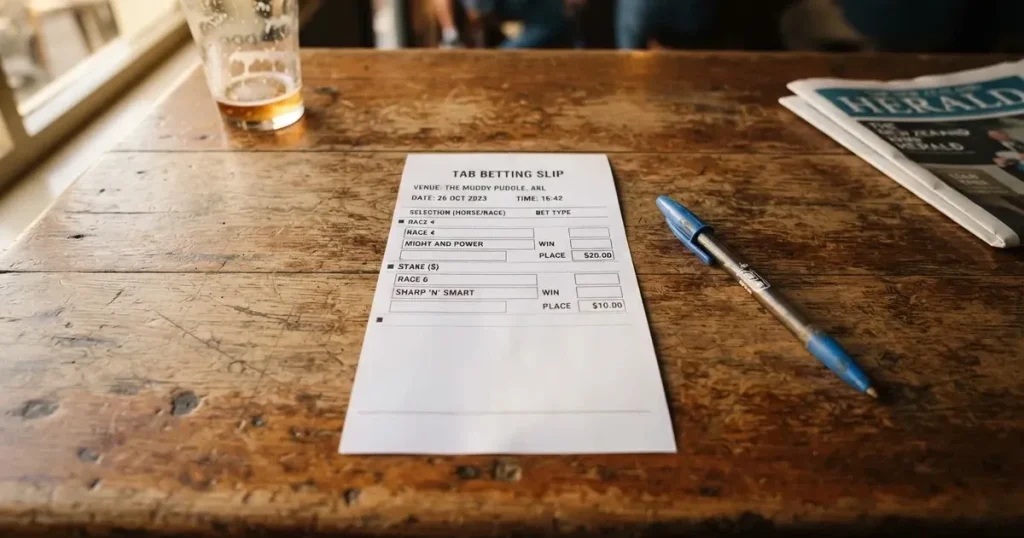
Sports betting odds in New Zealand look like a number on a screen. They are not. They are the most compressed statement a bookmaker makes about your bet: how much you get back if you win, what the bookmaker keeps if you lose, and — embedded inside the price — the slice of every dollar wagered the operator has already taken for itself. In 2026 that statement carries one extra line on top, because the law under which the bet is placed has just been rewritten. Since 28 June 2025, TAB NZ and its online sister brand Betcha are the only operators allowed to take online sports and racing bets from people in New Zealand, and the Department of Internal Affairs told unlicensed providers serving New Zealand customers to withdraw with immediate effect. Every other brand reviewed below is named for readers who meet them, not as a lawful alternative.
Current as of October 30, 2026, checked against the Racing Industry Act 2020 as amended and TAB NZ’s published betting rules.
What a price actually says
An odds line is two things at once. It is the multiple that multiplies your stake into a return, and it is also a share of a market — your share, the bookmaker’s share, the slice left unclaimed when the dust settles. A decimal price of 2.10 says: stake it, win, get 2.10 times your money back. The other 0.10 of every dollar — the gap between a fair price of 2.00 and the listed 2.10 — is the operator’s margin, and that gap is present on every selection, on every market, on every event the bookmaker offers. Once you see it, you cannot unsee it.

In New Zealand, TAB NZ and Betcha write odds in decimal form by default, and both apps list fixed-odds and tote (parimutuel) products side by side. A tote bet does not have a fixed price at the time you place it — your return is the pool divided by the unit holders after the race, declared as a dividend. Fixed-odds bets are the ones the rest of this page is about, because a fixed-odds price is the only one where a margin can be read directly off the line. A tote dividend embeds the operator’s take-out, but the take-out is set by the rules of the race rather than the price you saw on the betting slip.
The two-way market, worked once
Consider an evenly priced two-way market at decimal odds of 1.90 on either side — the kind of line a head-to-head match carries when neither side has an edge. The true probability of either outcome, with no margin, is 50%, and the fair price is 2.00 on each. The bookmaker offers 1.90 instead. To see what that costs, work out the implied probability of each outcome: 1 ÷ 1.90 is 0.5263, or 52.63%. Both outcomes together sum to 1 ÷ 1.90 + 1 ÷ 1.90, which equals 1.0526 — just over 100%, with the 5.26 percentage points above the round 100% being the overround. The margin is about 5% of the stake. The bookmaker keeps that share of every dollar wagered on this market, and the remainder, roughly 95%, is what the market returns to bettors across all outcomes combined.

That is the lesson a single illustration carries. A price never quotes the probability of winning — it quotes a probability that already contains the operator’s cut. Two ways of saying it, same number: a margin of 5% to 5.5%, or a payout share of roughly 94.5% to 95%. The two are the same market seen from opposite sides. The closer to 100% the implied probabilities sum, the thinner the margin, and the more of every bet the bookmaker returns to the pool.
A winning bet, end to end
The mechanics of a settled win are short and worth knowing once. The return on a winning fixed-odds bet equals the stake multiplied by the decimal odds; the net profit is the stake multiplied by (odds minus 1), which is the same as the return minus your stake. Stake $10 at 2.10 and the bet pays back $21 if it lands; net profit is $11. Stake $10 at 1.90, win, take $19; net profit $9. That is the arithmetic, and it is the only arithmetic a settled win contains — there is no commission, no “fee”, no further deduction on a TAB NZ fixed-odds win. What is missing from this calculation is the dozens of bets that did not land. Across a season, the gap between the prices offered and the true probability is what decides whether a punter finishes up.
What a multi does to the price
A multi combines several selections — “legs” — into one bet. The legs multiply into a single price: three legs at 1.80, 2.20 and 1.95 become a combined price of roughly 7.72. If the stake is $5 and all three legs win, the return is about $38.60, net profit $33.60. The trade is obvious — a multi pays far more than any single — and the cost is also obvious and just as multiplied. The bookmaker’s margin is embedded in each leg’s price, and the combined price carries the compounded margin of every leg at once. A market at 1.90 / 1.90 has roughly a 5% margin. Three of those markets combined have a compounded margin of closer to 15%. A multi is not a way to outflank the margin; it is a way to multiply it.
Same-game multis — sometimes called SGMs, sometimes “Same Game Multis” in TAB NZ’s own app — take all their legs from one event. A rugby match multi might combine the head-to-head winner, the total points line and a first-tryscorer market into one bet. The structure is identical, but the legs are correlated rather than independent, which means the combined price is harder for an outsider to read and easier for a bookmaker to shade. A punter who picks one leg and a punter who picks three from the same match are not paying the same effective margin.
The bet types a TAB NZ punter actually sees
TAB NZ’s published betting rules name the bet types the platform offers, and they map cleanly onto a New Zealand punter’s vocabulary. Win and Place are the everyday singles. Each Way splits a stake across a Win portion and a Place portion. Quinella picks the first two runners in a race in any order; Exacta picks them in order; Trifecta and First4 extend the pattern to three and four runners. Quaddie asks the punter to pick the winner of four nominated races; Big6 extends the same idea to six. Doubles, Trebles and Running Doubles stack win legs across consecutive races. These are racing products, settled against the tote dividend in many cases, and each carries the rules of the betting type in question rather than a margin you can read off a single number.
The sports product is the one most searchers are after, and it is closer to what a global reader pictures. Head-to-head is the basic two-way match winner. Line betting — also called handicap — gives one side a head start or a deficit in points, scored or otherwise. Totals markets ask whether the combined score in a match goes over or under a posted line. A multi stacks several of these into one bet, and a Same Game Multi keeps the legs inside one event. TAB NZ’s apps also list one-tap Popular Multis and a Place Extra option that lets punters back a runner to finish up to tenth in selected races — a longer-tail place product than the standard win/place frame.
Live betting and the in-play question
TAB NZ lists live markets in its apps and offers Trackside live race streaming with in-app betting on racing. No statutory ceiling on in-play markets has been made public; live betting is offered, odds move in real time and a punter who bets in-play pays the same kind of margin embedded in any fixed-odds price. The same arithmetic from the worked example applies: every tick the price moves, the margin embedded in the implied probabilities still sits there, and the punter pays for it in the gap between the price quoted and the true probability at that instant.
Bonus bets and the marketing word
TAB NZ’s app lists Bonus Cash that can be split across multiple bets, and a Mega Multi bonus of up to $50 in Bonus Cash if a multi of four or more legs falls short by a set number of legs. These are described here by their structure, not by their headline. A “bonus bet” in New Zealand TAB terminology is a credit that can be wagered; whether the stake of a winning bonus bet is returned alongside the profit is a question the operator’s own terms answer and one a punter checks before claiming. Marketing language built around the word “bonus” tends to dwell on the upside and skip the conditions, and the conditions are where the cost lives — minimum odds on the qualifying bet, a deadline, a market restriction, a cap on winnings. Read those before betting, not after.
The shape of the New Zealand market
The first thing to know about the New Zealand sports-betting market in 2026 is how short the lawful list is. The Racing Industry Amendment Act 2025 inserted section 74AAA into the Racing Industry Act 2020: no person other than TAB NZ may offer racing betting, sports betting or other racing or sports betting to a person in New Zealand, regardless of where that person is resident or incorporated. The change took effect on 28 June 2025, and the Department of Internal Affairs told providers serving New Zealand to withdraw with immediate effect. There is no licence to apply for and no licence register for bookmakers, because there is only this one lawful provider.
TAB NZ operates two online brands. The TAB brand is the long-established platform at the centre of New Zealand racing. Betcha is the newer online sister brand aimed at a sports-first audience, with a daily Toolbox of odds boosts and insurance tools for bets that do not land, a Bet Social section where punters chat, follow tipsters and share bets or pools, and a Playbook with tips and match analysis. The two brands share one operator, one account framework and one set of safer-gambling tools, and from a punter’s seat they are one counterparty presented two ways. Treat them as one operator group, not as two rivals.
The offshore side, plainly
The offshore market is distinct. Search results surface names licensed in Curaçao, Anjouan, Tobique, or the Union of the Comoros. None of these licences authorises the holder to accept bets from New Zealand, and the Racing Industry Act 2020 makes TAB NZ the sole lawful provider. While section 19(4) of the Gambling Act 2003 prevents criminal prosecution of individuals for using these platforms, the Department of Internal Affairs warns that users face substantial risks, including a lack of consumer safeguards, unrecoverable credits, and no local complaints process. Whether an operator honours a win depends entirely on its own terms and jurisdiction.
Greyhound racing is closing in stages from 1 August 2026, and from that date offshore operators may not take bets on greyhound races either. That makes the racing side of the offshore shelf narrower with each month that passes.
Where the operator-level facts sit
The lawful operator runs a single betting product, two brand surfaces, and one set of safer-gambling tools. The offshore shelf runs on a different logic: every brand holds its own licence, names its own operator company, and offers its own selection of sports, bet types and odds formats. The table below lists the brands this page reviews and the legal status each carries in New Zealand. Foreign brands are marked as not licensed in New Zealand by name — the only operator licensed to take a bet here is TAB NZ. The third column records what its own terms state on the key subject, where the materials carry one.
| Brand | New Zealand status | What the operator’s terms state |
|---|---|---|
| TAB | TAB NZ brand — the only lawful counterparty under the Racing Industry Act 2020, section 74AAA | Fixed-odds and tote betting, multis and Same Game Multis, live betting, Trackside live racing with in-app betting, racing form and Blackbook tools |
| Betcha | TAB NZ brand — the only lawful counterparty under the Racing Industry Act 2020, section 74AAA | Daily Toolbox with odds boosts and insurance tools, Bet Social section, Playbook with tips and match analysis, sports-first catalogue |
| Thunderpick | Not licensed in New Zealand | Curaçao Gaming Authority licence OGL/2024/677/0722, holder Paloma Media B.V.; crypto-led sportsbook and esports product |
| Rooster.bet | Not licensed in New Zealand | Tobique Gaming Commission e-gaming licence No. 0000002, holder Novatrix SRL; Live, Sports Promotions, Results, Schedule, E-sports, Predictions sections |
| Winz.io | Not licensed in New Zealand | Anjouan and Tobique licences, holder Novatrix SRL; crypto-led sportsbook |
| BetAlright | Not licensed in New Zealand | No licence that applies in New Zealand; over-18 customer policy only |
| Sportaza | Not licensed in New Zealand | Anjouan licence ALSI-202606064-FI2; cash out, Bet Builder, multiples, Asian lines, interval markets in 1, 5, 10 or 15 minute ranges |
| FunBet | Not licensed in New Zealand | No licence that applies in New Zealand; football, ice hockey, American football, basketball, volleyball, tennis, rugby, baseball, with live betting and 24/7 bookmaker availability |
| BillyBets | Not licensed in New Zealand | No licence that applies in New Zealand; decimal, American and fractional odds formats; cashback and reload bonuses on sports, coin shop for free bets, five-level VIP programme |
| BetNinja | Not licensed in New Zealand | Union of the Comoros licence, no right to take bets from people in New Zealand |
The list is descriptive, not a recommendation. The two New Zealand-licensed brands are the lawful counterparties; the rest are reference points a reader meets elsewhere and needs to be able to place.
The TAB NZ partnership and where the money goes
TAB NZ does not run the betting operation alone. Entain runs the TAB business under a 25-year agreement signed in 2023, with a 50/50 share of gross profits going to each side, and at least $150m a year to TAB NZ for the first five years. Entain pledged a one-off $100m payment to the racing sector on signing. The structure is a long-term operational partnership, not a takeover: TAB NZ remains the licensed provider in the country, Entain runs the platform and the trading on TAB NZ’s behalf, and the two share the economics of the book.
For a punter, the practical effect is that the betting product is run on Entain’s technology stack, and TAB NZ retains the regulatory standing under the Racing Industry Act 2020. Where TAB NZ and Betcha differ is in product emphasis — TAB is the long-running brand, Betcha is the sports-first online sibling — not in ownership, settlement or safer-gambling tools.
Safer gambling tools and the helpline
TAB NZ’s app lists the safer-gambling tools the operator offers: deposit limits, time-outs and self-exclusion. A self-exclusion applies across TAB NZ’s two brands (TAB and Betcha), so closing an account on one closes it on both. The free New Zealand gambling helpline is 0800 654 655, with the text line 8006. The operator lists both, and the Safer Gambling Aotearoa service sits behind them.
There is no single national online-betting exclusion register. The register that the Online Casino Gambling Act 2026 will require is for online casinos only, and does not extend to sports betting. That gap matters: a punter who self-excludes from TAB NZ and Betcha has closed the lawful route, but the offshore shelf remains accessible in the same way any other offshore site is, with no New Zealand-side exclusion mechanism to lean on. Safer gambling is a question of personal tools plus the helpline, not a question of a national register.
The age for TAB NZ betting is 18, and betting under 18 is an offence under section 89 of the Racing Industry Act 2020. TAB NZ accounts need a verified New Zealand address and identity documentation. Land-based casinos in New Zealand have a higher age of 20; the two are separate regimes, and the betting age does not move with the casino one.
TAB NZ pays a Problem Gambling Levy of 0.74% of its betting revenue, in force from 1 July 2025 to 30 June 2028. The levy funds harm-minimisation services across the country, including the helpline and Safer Gambling Aotearoa.
What the law targets
Section 74AAA targets the operator, not the punter. The Department of Internal Affairs told unlicensed providers serving New Zealand customers to withdraw with immediate effect, and the Gambling Act 2003 section 19(4) inserted in 2025 says an individual may not be convicted for placing a bet with an offshore operator in breach of section 74AAA. The Department also warns players of the risks. No published penalty for a player was found. The framing here is honest on both sides: TAB NZ and Betcha are the only lawful options, with New Zealand harm-minimisation tools, regulator oversight and a complaints framework; offshore brands are unlawful for the operator to serve New Zealand, with no New Zealand complaints route, the Department’s stated risks, and the limits of any foreign regulator that does happen to license them.
Tax, payments and the operator-side frame
For the punter, Inland Revenue guidance says recreational gambling winnings are generally not taxable, and prize money from TAB horse, dog and trotting races is not taxable. A person who bets as a business sits in a different case — general information, not tax advice. On the operator side, TAB NZ pays the Problem Gambling Levy of 0.74% of betting revenue. Overseas operators supplying New Zealand residents pay online gambling duty — 12% of profits since 1 July 2024, and 16% from 1 January 2027. The duty is payable regardless of whether the offer is lawful; payment of duty does not make an offer lawful, and a reader interprets a tax receipt as a regulatory duty payment, not a regulatory blessing. The point-of-consumption charge on offshore racing and sports bets ceased on 30 June 2026.
No statutory payment rule for betting accounts was found — card, bank, credit, prepaid or crypto are all governed by TAB NZ’s own terms rather than by a national rule. TAB NZ’s deposit methods and limits are operator-level and come only from its terms. The Department of Internal Affairs warns that overseas operators may be in jurisdictions with minimal consumer safeguards, may not return unspent credits and may not pay out large wins. No payment-blocking order or bank obligation was found, and nothing in the materials on hand states a rule on crypto or VPN use.
Advertising standards and what an ad may not do
The Advertising Standards Authority’s Gambling Advertising Code applies to betting advertisements in New Zealand. Ads must not target children under 14 or young people aged 14 to under 18, judged by context, appeal and expected audience — 25% or more of the audience counts as significant where accurate data exists. Ads must not encourage harm, and they must be truthful with terms available. There is no New Zealand equivalent of a “whistle-to-whistle” ban for betting advertising; whether one will be introduced is a question for the regulator, not for this page.
The Code does not change the underlying rule: only TAB NZ may offer betting here. Because only TAB NZ may offer betting, the Department of Internal Affairs reads the prohibition as covering the promotion of another operator’s bets to a New Zealand audience. How the Department treats betting affiliates is not established, so the framing here describes the monopoly without inviting readers to sign up with an offshore brand.
Reviewed bookmakers
The set below follows the order research fixes — TAB NZ’s two brands first, then the offshore shelf in the order set by the inputs. Every brand is named as a reviewed bookmaker; none is recommended. The two New Zealand brands are one operator group with two product surfaces, and the offshore brands are reference points for readers who meet them. Each block closes on the page’s own verdict — what the brand above it actually delivers and where it sits in the comparison.
TAB
TAB is the long-standing brand of TAB New Zealand, the only provider lawfully offering racing and sports betting to people in New Zealand under section 74AAA of the Racing Industry Act 2020. The platform offers fixed-odds and tote (pool) betting across horse, harness and greyhound racing and across the major codes — rugby union and league, football, cricket, basketball, American football, tennis, baseball and a longer tail. The app lists multis, Same Game Multis, one-tap Popular Multis and a Place Extra option that lets punters back runners to finish up to tenth in selected races. Trackside live race streaming comes with in-app betting, alongside racing form, Blackbook and Jockey Challenge tools. The platform is run on Entain’s technology stack under the 25-year agreement signed in 2023, with the profits split 50/50 and at least $150m a year to TAB NZ for the first five years.
The minimum stake, market coverage and bet-type catalogue are what a New Zealand punter expects from a long-established monopoly operator with a deep racing heritage. Safer-gambling tools — deposit limits, time-outs and self-exclusion — are present in the app, with the helpline 0800 654 655 and the text line 8006 listed. New customers receive Bonus Cash that can be split across multiple bets, and the Mega Multi bonus pays up to $50 in Bonus Cash if a multi of four or more legs falls short by a set number of legs.
The verdict: TAB is the lawful counterparty for sports and racing bets in New Zealand in 2026, and the only one a New Zealand punter uses under New Zealand law. For a reader who wants New Zealand regulatory standing, a verified-identity account, a local complaints route and a single wallet, TAB is the anchor of this comparison. The price is the price TAB NZ lists; the margin is what every price carries, and the catalogue is what the operator chooses to publish.
Betcha
Betcha is the online sister brand of TAB NZ, aimed at a sports-first audience with a more social product surface. The brand offers a daily Toolbox of odds boosts and insurance tools for bets that do not land, a Bet Social section where punters chat, follow tipsters and share bets or pools, and a Playbook with tips and match analysis. The same account framework, safer-gambling tools and minimum-age policy apply as for the TAB brand, and a self-exclusion on Betcha is a self-exclusion on TAB.
The difference is the experience layered on top of the same underlying product. A punter who wants a feed of boosted prices, a place to compare picks with other punters and a tips section alongside the betting slip gets it on Betcha in a way the TAB brand does not foreground. The catalogue and the bet types are the same; the wrapper around them is different.
The verdict: Betcha is the same lawful counterparty as TAB, with the same regulatory standing, account tools and helpline. For a reader who wants the social product, the boosted-odds feed and the tips section, Betcha is the better fit. For a reader who wants the long-running racing form and the deep catalogue of the established TAB brand, TAB is preferred. This is a product choice, not a regulatory one.
Thunderpick
Thunderpick is operated by Paloma Media B.V., a Curaçao company with company number 146988, holding licence OGL/2024/677/0722. It is not licensed in New Zealand; only TAB NZ may offer racing and sports betting under local legislation, and a Curaçao licence provides no legal basis for serving the local market. There is no local oversight or harm-minimisation framework for this operator.
The brand positions itself as a crypto-led sportsbook and esports product, with Thunderpick’s own materials framing the platform around crypto deposits and esports alongside mainstream sports. A New Zealand reader who uses the brand does so outside the New Zealand regulatory perimeter: identity checks, dispute resolution and the helpline run on the operator’s terms rather than the country’s.
The verdict: Thunderpick is an offshore brand. The local regulator offers no complaints framework for it. Its status remains that of an offshore operator.
Rooster.bet
Rooster.bet is operated by Novatrix SRL, a Costa Rican entity with registration 3-102-893958, using a Tobique Gaming Commission e-gaming licence (No. 0000002). This licence does not authorise operations in New Zealand, placing the operator outside the scope of local regulation. There is no local complaints route or harm-minimisation protection available.
The sportsbook lists Live, Sports Promotions, Results, Schedule, E-sports and Predictions sections, with odds shown in six formats. The catalogue is mainstream rather than racing-led, and the brand sits in the same offshore category as the rest of the shelf.
The verdict: Rooster.bet is named here for completeness. Its Tobique licence does not apply locally, and the New Zealand reader has no complaints route into the operator. It is an offshore reference only.
Winz.io
Winz.io holds licences from Anjouan and Tobique, with the operator identified as Novatrix SRL. Neither licence authorises operations in New Zealand. There is no local complaints route or harm-minimisation framework for this brand.
The product is a crypto-led sportsbook, with the operator’s framing built around crypto deposits alongside the standard sports catalogue. A New Zealand reader who reaches the brand does so outside the New Zealand regulatory perimeter.
The verdict: Winz.io is an offshore brand. The reader has no complaints channel for it. It does not carry local endorsement.
BetAlright
BetAlright accepts customers over 18 years of age only and has a separate partners site at partnersbetalright.com. The brand names no licence that applies in New Zealand, and section 74AAA of the Racing Industry Act 2020 applies.
The over-18 policy is the only regulatory-style commitment the materials on hand capture for the brand. There is no further licence detail, no local regulator reference and no New Zealand-facing compliance statement.
The verdict: BetAlright is named here for completeness, though it lacks an applicable licence for the New Zealand market. There is no local oversight or consumer protection framework.
Sportaza
Sportaza operates under an Anjouan licence (ALSI-202606064-FI2), which does not permit service to the New Zealand market. There is no local regulatory oversight.
The product is broad: cash out before an event or market is finalised, a Bet Builder feature where a voided selection voids the whole betslip, multiples, Asian lines and interval markets in 1, 5, 10 or 15 minute ranges. That range of bet types is wider than TAB NZ’s catalogue on the in-play side, and the absence of a New Zealand licence is the trade.
The verdict: Sportaza is a reference point for readers who meet the brand offshore, with a catalogue that is broader on in-play and Asian lines than the local shelf. The Anjouan licence is invalid locally, and the reader has no complaints channel. It exists outside the New Zealand regulatory frame.
FunBet
FunBet names no licence that applies in New Zealand, and section 74AAA of the Racing Industry Act 2020 applies.
The sportsbook offers odds on football, ice hockey, American football, basketball, volleyball, tennis, rugby and baseball, with live betting and a bookmaker described as open 24/7. The catalogue covers most of the mainstream codes a New Zealand punter follows — rugby, football, basketball, tennis, baseball — and the 24/7 framing puts it on the in-play side of the comparison.
The verdict: FunBet is a reference point for readers who meet the brand offshore, operating outside the local regulatory framework. The New Zealand reader has no local complaints route for this operator.
BillyBets
BillyBets names no licence that applies in New Zealand, and section 74AAA of the Racing Industry Act 2020 applies.
The product offers three odds formats — Decimal (2.00), American (+100) and Fractional (1/1) — and runs a coin shop where coins collected through depositing, betting, tournaments and challenges can be exchanged for free bets and free spins, with a five-level VIP programme and cashback and reload bonuses on sports. The structure is closer to a casino-with-sportsbook product than a sports-first product, and the loyalty loop is part of the offer.
The verdict: BillyBets is a reference point for readers who meet the brand offshore, with a casino-style loyalty loop layered on top of the sportsbook. The brand lacks an applicable licence locally, and the reader has no complaints channel for it. The page does not recommend it.
BetNinja
BetNinja operates under a licence from the Union of the Comoros, which does not permit service to New Zealand. There is no local regulatory oversight.
The materials on hand do not capture further detail of the sportsbook catalogue beyond the licence statement. The framing here is what the brand itself states, and the licence status is the operative fact for a New Zealand reader.
The verdict: BetNinja is named here for completeness. The Union of the Comoros licence is invalid locally, and the reader has no complaints channel for this operator. The page does not recommend it.
How to choose when the choice is mostly made
The first move is to acknowledge what the choice is. In New Zealand in 2026, the lawful choice is TAB NZ, presented as TAB or Betcha. Everything else on the shelf is named for readers who meet it; the page is not steering a reader toward an offshore brand.
For a reader who stays inside the lawful frame, the choice between TAB and Betcha is a choice of product wrapping rather than counterparty. TAB is the long-running racing-led brand with the deeper catalogue and the established form tools. Betcha is the sports-first online brand with the boosted-odds feed, the social layer and the tips section. A punter who wants the racing heritage sees its product at TAB; a punter who wants the social sportsbook sees its product at Betcha. The two share an account, a wallet, a self-exclusion framework and a helpline.
For a reader who has decided to engage with an offshore brand regardless of the legal position, the relevant comparison is the licence, the catalogue and the operator company. The licence determines which foreign regulator, if any, has oversight; the catalogue determines which sports and bet types are covered; the operator company determines who actually runs the platform. None of those choices changes the New Zealand position: the operator is on the wrong side of section 74AAA, and the New Zealand reader has no local complaints route into any of them.
Reading an offer, not the headline
An offer is described by what it costs the reader, not by the marketing word on the box. A bonus that pays back the bonus only on a win, with the stake of the bonus not returned, is worth less than the headline figure. A boosted odds line is worth the gap between the boosted price and the unboosted price the operator offers otherwise. A risk-free bet that refunds a losing stake as a free bet rather than cash is a refund in the operator’s own credit, with the same conditions on the next bet as any other bonus bet carries.
Three things to check before claiming any promotion: the minimum odds on the qualifying bet, the deadline, and the cap on winnings. Each is a way the offer costs more than the headline says. The first determines which selections count toward the promotion. The second determines how long the bonus is usable. The third determines the maximum the offer can return, regardless of how the bet lands.
Reading the catalogue like a punter, not a page
A bookmaker’s catalogue is shaped by what the bookmaker can price reliably. A deep catalogue is not automatically a better catalogue — a thin catalogue with sharper prices can return more to the bettor than a deep catalogue with shaded margins. TAB NZ’s catalogue runs across the codes New Zealand punters follow: rugby union (Super Rugby Pacific, test matches, the All Blacks), rugby league (NRL), cricket (the Black Caps and the major international competitions), basketball, football, tennis, American football, baseball and a long tail, plus the racing product that anchors the platform. The depth on racing is broader than on any other code, because racing is where TAB NZ’s heritage sits.
The Betcha brand foregrounds the sports side, with the Toolbox bringing boosted prices to selected markets. A punter who picks across the boosted prices sees the gap between the boosted line and the regular line; that gap is the value the promotion returns on a winning bet, and on a losing bet it is zero. Treat boosted odds as a price on a price — sometimes worth taking, sometimes not, never as a reason to bet.
Where the margin bites hardest
The margin compounds across legs in a multi and across correlated legs in a same-game multi. It also compounds across selections in a teaser-style bet. The closest-to-fair markets tend to be the most-bet head-to-head lines on major events — the margin there is in the 4% to 6% band in a competitive global book. The widest margins tend to be on smaller events, novelty markets and the long tail of player props, where the bookmaker cannot price as accurately. A punter who bets only on the most-bet lines pays a thinner margin; a punter who bets across the long tail pays a fatter one on average. The arithmetic is the same in both cases; the magnitude is not.
A note on in-play and the live price
A live price is a price that has already moved once. The bookmaker has had a fraction of a second to reprice, the punter has had the same fraction of a second to decide, and the margin embedded in the price is the same as on the pre-match line. In-play betting rewards faster decisions more than better ones, and the punter who bets in-play pays the same built-in margin on every click. The Trackside live race streaming that TAB NZ’s app offers is the same story on racing: the price moves, the margin stays.
When the data has a hole
This page writes around the data it does not have. The market-margin figure for any specific TAB NZ event in 2026 is not given, and the price of any specific multi leg on any specific event is not given. The arithmetic in the worked example uses a deliberately round price (1.90 / 1.90) to show what the gap between a fair price and a listed price does to the implied probability. A punter who wants the margin on a real TAB NZ market does the arithmetic on the actual prices they see on the betting slip: add up 1 ÷ odds across every outcome of the market, and the result is 1 + margin. That is the only arithmetic a margin number requires.
Where the page does not have a specific number, it does not invent one. The Mega Multi bonus is described as up to $50 in Bonus Cash; the structure of the offer is what the materials carry, and the page does not extend that into a return-on-stake calculation the inputs do not support. TAB NZ’s deposit limits and time-outs are listed as present in the platform, not given as a specific dollar figure or a specific number of days — the specifics are in the operator’s own terms, and the page points there rather than paraphrasing.
The single national helpline
The free New Zealand gambling helpline is 0800 654 655, with the text line 8006. The service behind it is Safer Gambling Aotearoa. The Problem Gambling Levy that funds the service is set at 0.74% of betting revenue and runs from 1 July 2025 to 30 June 2028. The helpline is the single number to remember; the rest of the framework follows from it.
For a punter who wants to limit or close their account, TAB NZ offers deposit limits, time-outs and self-exclusion inside the app. A self-exclusion applies across TAB and Betcha, so a single closure covers both brands. For a punter who is already engaging with an offshore brand, the New Zealand helpline is still the right number to call, even though no national exclusion register covers the offshore shelf.
What the page does and does not say
The structure of sports betting in New Zealand in 2026 focuses on the legal framework under the Racing Industry Act 2020, the bet types a punter uses, the margin embedded in the price, and the distinction between the lawful operators and the offshore shelf. The arithmetic of the margin shows what the gap between a fair price and a listed price costs, and the same calculation applies to every market a punter meets. The market in New Zealand is defined by the monopoly held by TAB NZ and its brands, with offshore offers existing outside this framework.
The two lawful brands, TAB and Betcha, are one counterparty with two product surfaces. The rest of the shelf is reference. The choice is mostly made, and the rest of the choice is product wrapping.
Frequently asked questions
How do betting odds work?
A decimal odds figure multiplies your stake into a return if the bet wins. Stake $10 at 2.10 and the bet returns $21 on a win; net profit is $11. The odds also embed the bookmaker’s margin: a price of 1.90 on either side of a two-way market implies a 52.63% probability of each outcome, summing to 105.26%, with the 5.26 percentage points above 100% being the operator’s built-in cut. The price never quotes the true probability; it quotes a probability that already contains the bookmaker’s share.
How does odds work with betting on horse racing?
TAB NZ offers fixed-odds bets on racing alongside tote (parimutuel) bets. A fixed-odds price is the same kind of number as a sports price: stake multiplied by odds, returned on a win. A tote bet has no fixed price at placement — the dividend is the pool divided by the unit holders after the race, with the operator’s take-out set by the race rules. Quinella, Exacta, Trifecta, First4, Quaddie and Big6 are tote-style bet types with their own settlement rules. The place market is a separate bet type: a stake that pays if the runner finishes in the place positions defined for the race.
How do I bet at the horse races with odds?
Open a TAB NZ or Betcha account, verify your New Zealand address and identity, deposit a stake, and place the bet through the app or at a TAB retail outlet. Choose the race, the bet type (win, place, quinella, exacta, trifecta, first four, quaddie, big6, a multi) and the stake. A fixed-odds bet locks in the price at placement; a tote bet is settled against the dividend declared after the race. The bet types, the minimum stake and the bet rules are in TAB NZ’s published betting rules.
Which bookmaker may lawfully take sports and racing bets in New Zealand?
TAB NZ is the only provider lawfully offering racing and sports betting to people in New Zealand under section 74AAA of the Racing Industry Act 2020. This section mandates that no operator other than TAB NZ may offer these bets to New Zealand residents. While offshore brands maintain their own licences, none of these give the operator a right to serve the New Zealand market. There is no New Zealand-based complaints route or harm-minimisation framework that oversees these offshore entities. The following list identifies these brands as reference points, noting that they operate outside the local regulatory perimeter.
How is the return on a bet worked out from the stake and the odds?
Return equals stake multiplied by the decimal odds; net profit equals stake multiplied by (odds minus 1). Stake $10 at 2.10, win, return $21, net profit $11. For a multi, the legs multiply into a single combined price: three legs at 1.80, 2.20 and 1.95 produce a combined price near 7.72, and the return is the stake multiplied by that combined price if all three legs land. Tote bets are settled against the dividend, not a fixed price at the time of placement.
What is the bookmaker’s margin and how can it be seen in the odds?
The margin is the share of every dollar wagered on a market that the bookmaker keeps. It is read by adding up 1 ÷ odds across every outcome of a market and calculating the overround. A two-way market priced at 1.90 / 1.90 results in an overround of 5.26%, which translates to a bookmaker margin of 5.0%. A market priced at 1.95 / 1.85 has an overround of 5.41%, or a margin of roughly 5.13%. The closer to 100% the implied probabilities sum, the thinner the margin.
Tips & strategy – bettinginfo-nz
Content created by the «bettinginfo-nz» team
